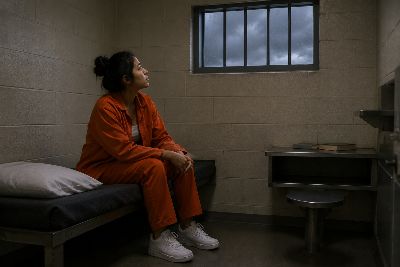
Mitchell, Sarah Mandy

Inmate ID: #IC445424
Classification: Correctional
TC Midgar Detention Complex

Inmate Status
Demographic Data
First Name Sarah
Middle Name Mandy
Last Name Mitchell
Date of Birth 2004-12-30
Age 21 Years (Executed)
Birthplace El Paso, TX
Race / Ethnicity Hispanic
Gender Female
Height 6'0"
Weight 109 lbs
Eye Color Brown
Convictions / Penalties
Code Offense Penalty Details Date Sentenced
Count #1
16-1O034D
First-Degree Murder Death Penalty
Decapitation
Scheduled: 2026-07-31
2025-09-14
Age at sentencing: 20
Count #2
73-1QR3U8
First-Degree Murder (count 2) Death Penalty
Decapitation
Scheduled: 2026-07-31
2025-09-14
Age at sentencing: 20
Count #3
64-N9ZDVQ
First-Degree Murder (count 3) Death Penalty
Decapitation
Scheduled: 2026-07-31
2025-09-14
Age at sentencing: 20
Count #4
55-1KPEBM
First-Degree Murder (count 4) Death Penalty
Decapitation
Scheduled: 2026-07-31
2025-09-14
Age at sentencing: 20
Count #5
46-12YP84
First-Degree Murder (Count 5) Death Penalty
Decapitation
Scheduled: 2026-07-31
2025-09-14
Age at sentencing: 20
Count #6
69-W0TJCS
First-Degree Murder (count 6) Death Penalty
Decapitation
Scheduled: 2026-07-31
2025-09-14
Age at sentencing: 20
Count #7
98-Z7PM6N
Aggravated Arson Incarceration
30 Years
Consecutive
2025-09-14
Age at sentencing: 20
Count #8
88-1G9WRA
Attempted First-Degree Murder (13 counts combined) Incarceration
20 Years
Consecutive
2025-09-14
Age at sentencing: 20
Count #9
81-1OJF9Y
First-Degree Reckless Endangerment Incarceration
10 Years
Consecutive
2025-09-14
Age at sentencing: 20
Count #10
76-1K93N6
Insurance Fraud Incarceration
5 Years
Consecutive
2025-09-14
Age at sentencing: 20
  • First-Degree Murder
    Count #1
    Code: 16-1O034D
    2025-09-14
    Age at sentencing: 20
    Death Penalty
    Decapitation
    Scheduled: 2026-07-31
  • First-Degree Murder (count 2)
    Count #2
    Code: 73-1QR3U8
    2025-09-14
    Age at sentencing: 20
    Death Penalty
    Decapitation
    Scheduled: 2026-07-31
  • First-Degree Murder (count 3)
    Count #3
    Code: 64-N9ZDVQ
    2025-09-14
    Age at sentencing: 20
    Death Penalty
    Decapitation
    Scheduled: 2026-07-31
  • First-Degree Murder (count 4)
    Count #4
    Code: 55-1KPEBM
    2025-09-14
    Age at sentencing: 20
    Death Penalty
    Decapitation
    Scheduled: 2026-07-31
  • First-Degree Murder (Count 5)
    Count #5
    Code: 46-12YP84
    2025-09-14
    Age at sentencing: 20
    Death Penalty
    Decapitation
    Scheduled: 2026-07-31
  • First-Degree Murder (count 6)
    Count #6
    Code: 69-W0TJCS
    2025-09-14
    Age at sentencing: 20
    Death Penalty
    Decapitation
    Scheduled: 2026-07-31
  • Aggravated Arson
    Count #7
    Code: 98-Z7PM6N
    2025-09-14
    Age at sentencing: 20
    Incarceration
    30 Years
    Consecutive
  • Attempted First-Degree Murder (13 counts combined)
    Count #8
    Code: 88-1G9WRA
    2025-09-14
    Age at sentencing: 20
    Incarceration
    20 Years
    Consecutive
  • First-Degree Reckless Endangerment
    Count #9
    Code: 81-1OJF9Y
    2025-09-14
    Age at sentencing: 20
    Incarceration
    10 Years
    Consecutive
  • Insurance Fraud
    Count #10
    Code: 76-1K93N6
    2025-09-14
    Age at sentencing: 20
    Incarceration
    5 Years
    Consecutive
Case Files:

No public case files mapped to this archive profile.

Summary

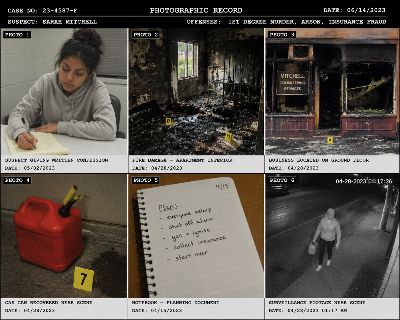
Case Summary: At age 19, Sarah Mitchell pleaded guilty to six counts of first-degree murder after intentionally setting fire to a residential apartment building to collect insurance money from a business she owned on the ground floor. The fire spread rapidly, trapping multiple occupants, including two children. The incident killed six people and injured thirteen others. Surveillance footage, financial records, and her confession established that the fire had been deliberately planned. Given the multiple fatalities and financial motive, the court sentenced her to death.

News Articles / Stories

Article Thumbnail
Sarah Mitchell Speaks for the Final Time Before Execution

Aug 02, 2026 • El Paso Daily
Less than half an hour before prison officials escorted Sarah Mitchell from a waiting room to the execution chamber, she sat quietly across from a reporter, her hands cuffed behind her back. Dressed in a plain athletic personal clothing and speaking in a measured voice, the 21-year-old answered questions for just under 30 minutes.The interview marked her final public remarks.Mitchell pleaded guilty to six counts of first-degree murder after intentionally setting a fire at a residential apartment building in an attempt to collect insurance proceeds connected to her ground-floor business. Prosecutors said the blaze spread rapidly through the building, killing six residents and injuring thirteen others. Surveillance footage, financial records, and Mitchell's own confession established that the fire had been deliberately planned. The court imposed the death sentence, citing the multiple fatalities and financial motive.Throughout the interview, Mitchell did not dispute the facts of her conviction or attempt to minimize her responsibility.Asked what occupied her thoughts in her final hours, she paused before answering."Mostly the people whose lives I changed forever. There isn't a day that goes by that I don't think about them."When asked whether fear or regret weighed more heavily, Mitchell reflected for several seconds."Fear is something every person understands. But regret lasts longer. Fear is about what's happening to me. Regret is about what happened to everyone else."She repeatedly emphasized that no statement could undo the consequences of her actions."I know there are no words that can repair what I destroyed. I don't expect forgiveness. I don't expect anyone to feel sorry for me."The conversation then shifted away from the case itself.Mitchell described prison life as unexpectedly structured."When you're stripped of almost every choice, you learn to value the small routines. Reading. Exercise. Prayer. Letters. Those became the things that kept me grounded."She said correspondence from strangers had reminded her that people were capable of compassion even toward someone convicted of terrible crimes."People wrote to me without excusing what I did. That meant more than they probably realized."Asked what she would say to young people facing financial pressure or personal setbacks, Mitchell answered without hesitation."Ask for help before you convince yourself you're out of options. Pride and desperation are dangerous together."She also cautioned against believing that one irreversible decision could solve a difficult situation."Problems don't disappear because you make a worse choice. They just become tragedies."During the interview, Mitchell occasionally looked down at the floor before answering difficult questions. Her voice remained steady, though she paused several times to gather her thoughts. She did not raise her voice or become emotional, but moments of silence punctuated several exchanges.When asked how she hoped victims' families would remember her, she shook her head slightly."I don't think they should remember me. They should remember the people they lost."Toward the end of the interview, Mitchell was asked whether she had any final message for the public."Value ordinary days. Tell the people you love that you love them. And don't convince yourself that one terrible decision is worth the price someone else might pay."The interview concluded after a correctional officer informed Mitchell that it was time to prepare for the next stage of the scheduled process.She stood, thanked the reporter for speaking with her, and quietly said, "I hope something good can come from people learning what not to do."Mitchell was then escorted from the room by correctional staff.For the families of the six people who died, the day remained focused not on Mitchell's final words, but on the lives that were lost. Several relatives issued written statements remembering parents, neighbors, and two young children whose futures ended in the fire, urging the public to keep the victims—not the perpetrator—at the center of remembrance.
Article Thumbnail
Inside TC Midgar Detention Complex: Sarah Mitchell's Final Day

Aug 01, 2026 • El Paso Exclusive Documentary Feature

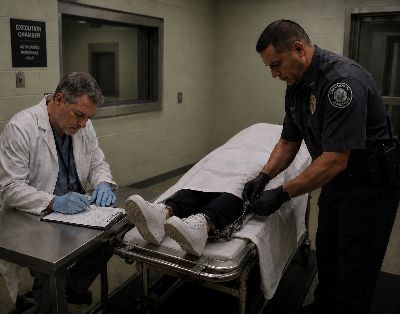
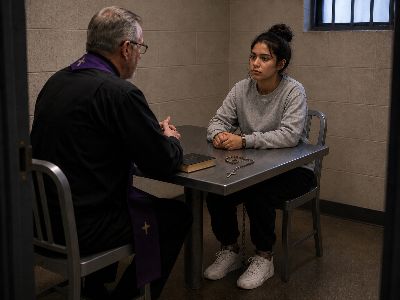
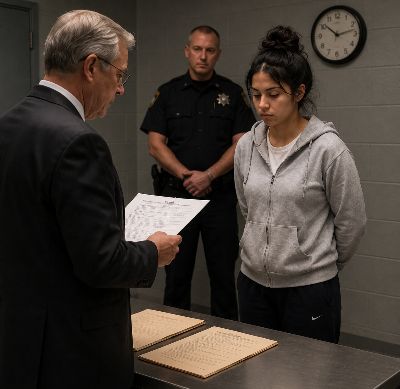
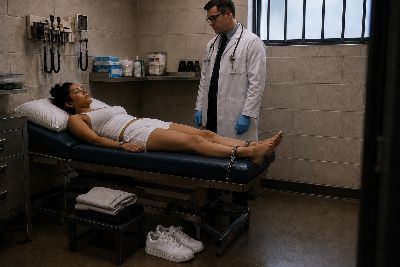
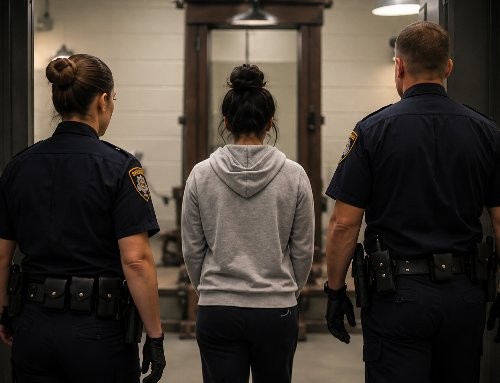
TC Midgar Detention Complex — Long before sunrise, the detention complex had already settled into an unusually quiet rhythm. Security posts were staffed, administrative paperwork had been prepared overnight, and officers assigned to the day's proceedings followed a timetable planned down to the minute. While the prison continued operating as it did every other morning, those directly involved understood that this day would conclude one of the detention complex's longest and most closely watched capital cases.Sarah Mitchell, convicted after pleading guilty to six counts of first-degree murder in the deliberate apartment fire that claimed six lives and injured thirteen others, would spend the day moving through a series of carefully prescribed procedures before the court's sentence was carried out.Our newspaper was granted rare access to document much of the day before media access ended at the secure execution area.The Official NoticeShortly after dawn, correctional officers entered Sarah Mitchell's housing unit to deliver the formal execution warrant.The warrant, read aloud in accordance with institutional policy, officially notified her that the court's sentence would be carried out later that day. Sarah listened quietly throughout the reading, responding only when asked to acknowledge receipt of the order.A court representative later returned to complete the remaining legal documentation associated with the warrant. Officials described the process as routine and identical to that followed in every capital case.Once the paperwork had been completed, officers informed Sarah that she would be given time to prepare before leaving the housing unit.Leaving the CellUnlike previous movements within the prison, this departure would be permanent.Institutional policy allowed Sarah to change from her prison-issued clothing into approved personal attire. She folded her institutional uniform neatly before dressing in a gray sweatshirt, black athletic pants, and white sneakers that had previously been authorized by correctional staff.Escorted by correctional officers, she walked through the same corridors she had traveled during years of incarceration.The route itself was familiar. The significance of the journey was not.Each security door closed behind the escort team, marking another point from which there would be no return.Medical ProceduresBefore any further proceedings, prison policy required a final medical examination.Medical personnel conducted routine assessments, documented vital signs, and completed the medical records required before the court's order could proceed.As part of the examination, medical staff administered an anti-anxiety medication that had been authorized under institutional protocol. Officials described the medication as a routine measure intended to reduce acute distress while allowing the remaining legal procedures to continue normally.Prison officials emphasized that the examination was procedural rather than discretionary and formed part of the institution's standard protocol.Final Meal, Family Visit and Spiritual CounselLater that morning, correctional staff presented Sarah with the customary final meal. The tray remained untouched. Officials declined to comment on whether any reason had been given.After that, Sarah met privately with members of her immediate family under correctional supervision. Neither prison officials nor family members disclosed what was said during the meeting.She later spent additional time with a spiritual advisor.According to officials, both meetings concluded quietly.Waiting Outside the Secure AreaThe final waiting room sits immediately outside the secured execution chamber.Separated from the execution area by heavy security doors, it serves as the final location where inmates meet attorneys, clergy, and—on rare occasions—the press.Sarah waited there while correctional staff completed the final administrative preparations beyond the secured entrance.During this period, our newspaper was granted exclusive access for a brief interview lasting less than thirty minutes. Speaking calmly and without raising her voice, Sarah acknowledged responsibility for her crimes and repeatedly returned to the victims rather than herself. "I know nothing I say can undo what happened," she said. "I hope people remember the people whose lives were taken—not me." Asked what occupied her thoughts during her final hours, she answered after a long pause. "I've spent a lot of time thinking about choices. One terrible decision can change hundreds of lives forever." She also reflected on prison life, describing how routine, reading, exercise, prayer and letters from strangers had become sources of stability during her incarceration.When the interview concluded, a correctional officer entered the room and quietly informed her that preparations had been completed.Sarah thanked those present, stood from her chair, and followed the escort team toward the secured corridor without further comment.Sentence Carried OutCorrectional officers escorted Sarah through the final security door, silencing the corridor behind them. In the center of the chamber stood a massive guillotine, its executioners poised and ready.Unconsciously, Sarah walked towards the guillotine guided by the executioners, her gaze fixed on the towering device. Taking a deep breath, she began to lie down on the guillotine, seemingly accepting her fate. Despite her attempts to remain calm, anxiety and fear of her impending death still etched themselves onto her face. With the help of the executioners, she was placed and restrained on the guillotine, awaiting the final drop of the sharp blade.Beyond that point, media access was strictly prohibited in accordance with institutional policy, and the remaining procedures were conducted in secrecy. As the guillotine blade fell, Sarah’s short life came to an end. The prison officer then emerged from the execution chamber to confirm that the court’s execution order had been carried out and that her death was officially recorded.Witnesses Observe Through the Viewing RoomBeyond the secure doors, the execution itself was witnessed only by those authorized under institutional policy. A separate witness room, divided from the execution chamber by a large observation window, accommodated a limited number of approved observers.Present were several members of Sarah Mitchell's immediate family, representatives of the victims' families, designated prison officials, legal representatives, medical personnel assigned to the proceedings, a spiritual advisor, and a small pool of credentialed journalists selected under the detention complex's media policy.The room remained largely silent throughout the proceedings. Prison officials instructed all witnesses beforehand on the rules governing the observation, including prohibitions on photography, recording devices, and verbal interruptions.Although observers could see into the execution chamber, communication between the two rooms was not permitted once the proceedings began. Prison officials later confirmed that the court's sentence had been carried out in accordance with the execution warrant.After the AnnouncementSeveral witnesses remained seated for a few moments after the official declaration before quietly leaving the observation room. Some embraced family members, while others stood silently as correctional staff directed everyone toward the secured exit.For Sarah Mitchell's relatives, the conclusion of the proceedings marked the end of more than three years of court hearings, appeals, and prison visits. Family members comforted one another outside the witness area before completing the administrative process required to receive her personal effects and, later, claim her remains.After the ProceedingsAlthough public attention often focuses on the moments leading up to an execution, institutional work continued long after witnesses departed.Medical personnel completed the required examinations and documentation while correctional officers carried out routine post-procedure responsibilities. As part of those procedures, restraints used during the final escort were removed, records were finalized, and staff prepared the deceased for transfer in accordance with institutional policy.Sarah's body, respectfully covered with a white sheet, was then placed on a stretcher and transported from the secure area by correctional personnel.Separate administrative procedures followed to inventory and package Sarah's approved clothing, footwear, and personal belongings before they were released to her family, consistent with institutional requirements.Later that day, family members completed the formal process required to claim her remains.Prison officials offered no further public comment beyond confirming that the court's judgment had been carried out.The Institution Moves ForwardBy evening, TC Midgar Detention Complex had largely returned to its ordinary routine. Officers changed shifts. Housing units resumed scheduled activities. Meals were served, doors continued opening and closing on schedule, and administrative offices completed another day's paperwork.Inside the prison, the day's extraordinary procedures gave way to familiar routines.Outside its walls, however, the case reached a different conclusion.For the families of the six people who lost their lives in the apartment fire, the day marked the legal end of a tragedy that had begun years earlier. While Sarah Mitchell's final hours became the subject of public attention, relatives continued to remember not the proceedings inside the detention complex, but the loved ones whose lives were lost and whose absence would remain long after the headlines faded.Tomorrow: Exclusive Last InterviewSarah Mitchell Speaks for the Final Time Before ExecutionTomorrow's edition will include Mitchell's exclusive last interview with this newspaper.
Article Thumbnail
State Carries Out Sentence in Sarah Mitchell Case

Jul 31, 2026 • El Paso Daily

TC Midgar Detention Complex — State correctional officials confirmed today that the court-ordered sentence imposed on Sarah Mitchell was carried out at TC Midgar Detention Complex.According to an official statement, institutional procedures began earlier in the day and concluded in accordance with the execution warrant issued by the court. Authorized witnesses were present in the designated observation area, while media access remained restricted under prison regulations.Following the completion of the proceedings, prison officials formally certified Mitchell’s death and notified her next of kin. Her personal belongings were subsequently inventoried for release to her family in accordance with institutional policy.Outside the detention complex, officials provided a brief statement confirming that the sentence had been completed.The case, which began with the 2023 apartment fire and concluded with the completion of the sentence, marked the end of years of investigation, court proceedings, and appeals.Tomorrow: Exclusive ReportInside TC Midgar Detention Complex: Sarah Mitchell's Final DayTomorrow's edition will include an extensive exclusive report documenting Mitchell's final morning, including her exclusive last interview with this newspaper, the final visit with her family, and a detailed account of the execution procedures, along with photographs and reporting from inside TC Midgar Detention Complex.
Article Thumbnail
Inside TC Midgar Detention Complex Part II

Jul 17, 2026 • El Paso Exclusive Documentary Feature

Part II — Life on Death RowThe return from the El Paso courthouse brought no celebration or protest. Instead, the prison bus entered the secure gates of TC Midgar Detention Complex much as it had dozens of times before. This time, however, Mitchell returned under a different legal status. She was no longer awaiting trial. She was now a condemned prisoner. Housing assignments, movement, and daily privileges changed immediately following sentencing.A Smaller WorldUnlike general detention housing, death row offered far fewer opportunities for movement. Mitchell spent most hours inside her cell. Recreation outside the housing unit became far more limited, and the regular walks through the recreation yard that had characterized her pretrial detention were no longer part of her daily routine. Much of each day was spent inside the cell.One photograph shows Mitchell sitting quietly on the edge of her bunk beneath the narrow window near the ceiling. Another captures her lying awake after lights-out, staring toward the ceiling long after the housing unit had fallen silent.Routine ContinuesEven on death row, routine remained central. Each morning began with bed making, inspections, and count. Meals were delivered directly to the cell. One image shows Mitchell eating lunch alone at the steel desk before returning the tray through the cell door.Books remained one of her primary companions. Another photograph shows her seated on the bunk reading during the afternoon, while several library books rest neatly beside the bed.Medical CareMedical appointments continued throughout her incarceration. During scheduled examinations, Mitchell changed into institutional athletic undergarments while correctional medical staff completed routine health assessments. Her orange prison uniform remained folded nearby until the examination concluded. Another image documents Mitchell removing the prison uniform before one of these scheduled examinations. Officials stressed that these procedures were standard institutional practice.ReflectionMuch of death row life involved waiting. One photograph shows Mitchell sitting beneath the narrow window looking toward the daylight outside. Another captures her lying awake after lights-out, eyes still open in the darkness. Unlike pretrial detention, where court dates regularly interrupted routine, life after sentencing followed a far more predictable rhythm.The calendar moved.The cell remained unchanged.Family Still VisitsDespite the restrictions of death row housing, Mitchell continued receiving approved family visits under institutional regulations. Meeting through secure glass, she spoke with her parents and younger sister using prison telephones while correctional officers supervised the visitation area.Letters continued to arrive as well. One image shows Mitchell reading newly delivered correspondence, while another captures her quietly writing a reply at the desk inside her cell.For inmates on death row, these exchanges often became among the few remaining connections with life beyond the prison walls.Order Above AllAfter months documenting daily life inside TC Midgar Detention Complex, the most striking observation was not the architecture, the security, or even the sentence itself.It was the repetition.Doors opened.Doors closed.Meals arrived.Letters came.Lights went out.Morning returned.For those living on death row, routine was no longer simply part of prison life.Routine had become life itself.
Article Thumbnail
Execution Date Set for Sarah Mitchell in El Paso Arson-Murder Case

Jul 15, 2026 • El Paso Daily

TC Midgar Detention Complex — State correctional officials announced today that an execution date has been scheduled for Sarah Mitchell, who was convicted in 2025 of first-degree murder and multiple related felonies stemming from the apartment fire that claimed six lives.According to court records, all direct appeals and post-conviction proceedings in the case had concluded, allowing the trial court to issue an execution warrant. Officials confirmed that the sentence would be carried out at the end of July at TC Midgar Detention Complex.Mitchell, now 21, was formally notified of the scheduled date by court officials inside the detention facility. Prison administrators stated that standard institutional procedures would be followed in the weeks leading up to the warrant, including opportunities for approved family visits, legal consultations, and spiritual counseling.Correctional officials declined to release additional details beyond confirming that preparations would proceed in accordance with institutional policy.
Article Thumbnail
Inside TC Midgar Detention Complex Part I

Jun 01, 2026 • El Paso Exclusive Documentary Feature

Part I — Waiting for JudgmentFor nearly two years before her trial concluded, Sarah Mitchell waited.Charged with setting the apartment fire that claimed six lives, Mitchell remained housed at TC Midgar Detention Complex after being transferred from the county detention center while prosecutors prepared what would become one of the region’s most closely watched criminal cases. Although presumed innocent under the law during this period, her daily life was governed by the routines of a maximum-security detention facility. Days passed according to fixed schedules rather than calendars, and the uncertainty of the coming trial became a constant presence.Our documentary team was granted rare supervised access to portions of Mitchell’s daily routine inside the institution.ArrivalEvery inmate entering TC Midgar Detention Complex follows the same intake process. Following her arrest, Mitchell surrendered her personal belongings, underwent routine medical and security examinations, and changed into institutional clothing. One photograph documents an officer handing her the standard orange jail uniform after intake processing. Another shows her placing her remaining personal belongings into a property container before they were secured by correctional staff. The transition from civilian life to incarceration was completed in less than an hour.Finding a RoutineOver time, detention became defined less by dramatic events than by repetition. Mitchell began each morning by making her bed before breakfast. She exercised regularly inside the cell, stretching and performing simple bodyweight movements to compensate for the limited living space. When weather and security permitted, detainees were escorted into the recreation yard. One image captures Mitchell walking quietly around the enclosed yard beneath open sky—one of the few opportunities to spend time outside the housing unit. Meals were served according to schedule, and she typically ate alone in her cell before resuming reading or walking slow laps across the room.Health and Daily ProceduresRoutine medical examinations were conducted throughout her detention. One series of photographs documents Mitchell preparing for a scheduled health examination before intake. Correctional officials noted that these procedures were identical for all inmates regardless of the charges they faced. Another photograph shows Mitchell later returning to her assigned cell, where an officer issued clean institutional clothing following the examination.Letters and FamilyContact with family became one of the most important parts of detention. Mitchell regularly wrote letters at the small desk inside her cell and waited for replies during scheduled mail distribution. One image shows her carefully reading a letter after returning from mail call, while another captures her writing several pages late in the afternoon.Family visits occurred periodically in the prison visitation unit. Separated by secure glass, Mitchell spoke with her parents and younger sister using telephones installed on each side of the partition. Although physical contact was impossible, correctional officers described the visits as generally quiet and orderly.Books borrowed from the prison library also filled many hours between court appearances.Court DaysCourt appearances interrupted the routine. On hearing days, Mitchell was transported between the detention complex and the El Paso courthouse aboard a secure prison transport bus. Wearing the standard orange jail uniform with white athletic shoes, she was escorted by sheriff’s deputies under heightened security.Those trips eventually led to the final day of trial.On September 14, 2025, a jury convicted Mitchell on all counts. After the court imposed a death sentence for first-degree murder, she was escorted from the courtroom in restraints and returned to the waiting prison transport bus.The journey back to TC Midgar Detention Complex marked the end of her time as a pretrial detainee.It also marked the beginning of a very different kind of imprisonment.
Article Thumbnail
Jury Sentences Sarah Mitchell to Death in Deadly Apartment Fire Case

Sep 14, 2025 • El Paso Daily
EL PASO, Texas — A Texas jury on Sunday convicted Sarah Mitchell, 20, on five felony counts arising from a deliberately set apartment building fire that claimed six lives and injured thirteen others. Following the penalty phase of the trial in El Paso, the court imposed a death sentence on the first-degree murder conviction, along with consecutive prison terms on the remaining charges.The case drew significant public attention throughout the proceedings, with victims’ families, reporters, and members of the public filling the courthouse each day.Arrival at the CourthouseBefore court convened, Mitchell was transported from the county detention facility aboard a secure prison transport bus. Wearing an orange jail uniform and white athletic sneakers, she was escorted off the bus by sheriff’s deputies. As is customary for defendants in high-security felony proceedings, she was restrained with handcuffs and ankle shackles while moving between the transport vehicle and the courthouse.Television crews gathered outside the courthouse entrance as deputies escorted Mitchell through a secured entrance. She did not respond to shouted questions from reporters and kept her eyes lowered while being led inside.The TrialDuring the trial, prosecutors argued that Mitchell intentionally set fire to the apartment building in order to collect insurance proceeds from a business she owned on the ground floor. Investigators testified that the fire spread rapidly through the structure, leaving residents with little opportunity to escape.The prosecution presented surveillance footage, financial records, expert fire-investigation testimony, and Mitchell’s confession, arguing that the blaze had been deliberately planned for financial gain.Defense attorneys acknowledged Mitchell’s responsibility for the fire but urged jurors to consider mitigating factors, including her youth at the time of the offense and her acceptance of responsibility through a guilty plea. They asked the court to impose a sentence of life imprisonment rather than death.Throughout the proceedings, Mitchell remained largely silent, occasionally consulting with her attorneys. Witnesses described emotional testimony from survivors and relatives of those who died in the fire.SentencingAfter deliberations, the jury found Mitchell guilty on all five counts. During the sentencing hearing, the presiding judge formally imposed the following penalties:For Count #1, First-Degree Murder (Code: 16-1O034D), Mitchell was sentenced to the death penalty. She was also convicted of Aggravated Arson (Code: 98-Z7PM6N) and received 30 years’ imprisonment, to be served consecutively. On Count #3, Attempted First-Degree Murder (Code: 51-MKJLPO), the court imposed an additional 20-year consecutive sentence. For First-Degree Reckless Endangerment (Code: 81-1OJF9Y), she received 10 years’ imprisonment, also consecutive. Finally, on Count #5, Insurance Fraud (Code: 76-1K93N6), Mitchell was sentenced to 15 years’ imprisonment, to be served consecutively.Because the court imposed a death sentence on the murder conviction, the consecutive prison terms would not be served unless the capital sentence were later overturned or modified through future legal proceedings. At the time of sentencing, no execution date had been scheduled.After the sentence was pronounced, the courtroom fell silent for several moments. Mitchell lowered her head and broke into tears as deputies stood nearby. Her parents and younger sister, seated in the gallery, were also seen crying quietly and embracing one another. Several relatives of the victims became emotional as the proceedings concluded, marking the end of one of the most closely watched criminal trials in the region that year.Emotional CourtroomAfter the sentence was announced, the courtroom fell silent for several moments. Mitchell became visibly emotional and cried as the judge concluded the hearing. Members of her family seated in the gallery also wept quietly, embracing one another as deputies prepared to escort her from the courtroom. Several relatives of the victims likewise became emotional following the conclusion of the case.Mitchell did not make a public statement before leaving the courtroom.DepartureFollowing the hearing, sheriff’s deputies placed Mitchell back into restraints and escorted her through a secured hallway away from the public courtroom. She was then taken from the courthouse under heavy security and returned to a waiting prison transport vehicle for transfer back to the detention facility.Outside the courthouse, reporters delivered live broadcasts summarizing the verdict while members of the public gathered behind police barricades. Court officials declined further comment, stating only that Mitchell would remain in state custody pending any post-conviction proceedings.
Article Thumbnail
Young Woman Pleads Guilty in Deadly Apartment Arson That Claimed Six Lives

Jun 15, 2023 • El Paso Daily

EL PASO, TX — A 20-year-old woman has pleaded guilty to six counts of first-degree murder after prosecutors said she deliberately set fire to a residential apartment building in an attempt to collect insurance money from a business she owned on the ground floor.Sarah Mitchell entered a guilty plea in El Paso County Circuit Court, bringing an end to a months-long investigation into one of the city’s deadliest residential fires in recent years.According to investigators, the fire began shortly after 2:30 a.m. on May 14, when multiple emergency calls reported flames engulfing the three-story mixed-use building. Firefighters rescued numerous residents, but six people—including two children—died from smoke inhalation and burn injuries. Thirteen others were hospitalized.Authorities initially believed the blaze may have been accidental. However, investigators from the fire department, state fire marshal’s office, and ATF determined that an accelerant had been used in the commercial space on the building’s first floor.Surveillance footage captured Mitchell entering the building approximately 20 minutes before the fire was reported. Cell phone location records, financial documents, and recently purchased insurance policies further focused investigators on the business owner.Search warrants executed at Mitchell’s residence uncovered receipts for fuel purchases, internet searches related to fire investigation techniques, and handwritten notes outlining plans to file an insurance claim after the building was destroyed, prosecutors said.Mitchell was arrested three days after the fire without incident at a relative’s residence on the outskirts of El Paso. Officers from the El Paso County Sheriff’s Office took her into custody after executing an arrest warrant. During questioning, investigators said she eventually confessed to starting the fire but claimed she never intended for anyone to die.Prosecutors argued that intentionally setting a fire in an occupied apartment building demonstrated extreme disregard for human life and constituted premeditated first-degree murder under state law.Facing overwhelming physical evidence and forensic testimony, Mitchell waived her right to trial and pleaded guilty to:Six counts of First-Degree MurderOne count of Aggravated ArsonThirteen counts of Attempted First-Degree MurderOne count of Insurance FraudRelatives of the victims addressed the court before sentencing, describing the lasting emotional impact of the fire and urging the court to impose the harshest punishment available.Mitchell declined to make a statement before sentencing.
Photographic Records

Photographic Record
Sarah executed.
Photographic Record
Sarah's personal clothing and belongings.
Photographic Record
Sarah walking towards the guillotine.
Photographic Record
Sarah escorted towards the guillotine.
Photographic Record
Sarah escorted into the execution chamber.
Photographic Record
Sarah waiting in the final holding room.
Photographic Record
Sarah's final meeting with her spiritual advisor.
Photographic Record
Sarah receiving the official execution notice.
Photographic Record
Sarah's final family visit.
Photographic Record
Sarah's final pre-execution medical examination.
Photographic Record
Sarah preparing to leave her cell.
Photographic Record
Sarah having meals in the cell.
Photographic Record
Sarah in the cell.
Photographic Record
Sarah's routine medical examination.
Photographic Record
Sarah's intake physical examination.
Photographic Record
Sarah writing letters to her family.
Photographic Record
Sarah leaving the courthouse.
Photographic Record
Sarah wept in court after being sentenced to death.
Photographic Record
Sarah arriving at the court.
Photographic Record
Sarah listening to her sentences.
Photographic Record
Sarah sitting in the back seat of a police car.
Photographic Record
Sarah being held in temporary custody at the county detention center.
Photographic Record
Sarah's case evidence.
Photographic Record
Sarah's mugshot.
Photographic Record
Sarah arrested.
INMATE COMMUNICATIONS KIOSK
Electronic Messaging System

Connect with this inmate through our secure electronic kiosk.

Log In to Send Message
Don't have an account? Sign up here
SPONSOR: OJ
WARDEN: paul
Comments
Log in to post a comment.
Loading...
For inquiries and reporting abusive use of the site please email .