Lin, Xinyi

Inmate ID: #WZ336354
Classification: Correctional
Appalachian Detention Complex

Inmate Status
Demographic Data
First Name Xinyi
Middle Name N/A
Last Name Lin
Date of Birth 2006-03-18
Age 20 Years
Birthplace Hangzhou, China
Race / Ethnicity Asian
Gender Female
Height 5’3”
Weight 119
Eye Color Brown
Convictions / Penalties
Code Offense Penalty Details Date Sentenced
Count #1
77-U09C6U
Drug Trafficking Death Penalty
Decapitation
Scheduled: 2026-08-30
2025-12-18
Age at sentencing: 19
Count #2
19-1UAWBM
Attempted International Smuggling of Controlled Narcotics Life Imprisonment (without parole)
Term of natural life
2025-12-18
Age at sentencing: 19
Count #3
64-K0WTCG
Possession of Controlled Narcotics with Intent to Distribute Incarceration
25 Years
Consecutive
2025-12-18
Age at sentencing: 19
  • Drug Trafficking
    Count #1
    Code: 77-U09C6U
    2025-12-18
    Age at sentencing: 19
    Death Penalty
    Decapitation
    Scheduled: 2026-08-30
  • Attempted International Smuggling of Controlled Narcotics
    Count #2
    Code: 19-1UAWBM
    2025-12-18
    Age at sentencing: 19
    Life Imprisonment (without parole)
    Term of natural life
  • Possession of Controlled Narcotics with Intent to Distribute
    Count #3
    Code: 64-K0WTCG
    2025-12-18
    Age at sentencing: 19
    Incarceration
    25 Years
    Consecutive
Case Files:

No public case files mapped to this archive profile.

Summary

Xinyi is a 19-year-old Chinese international college student born on March 18, 2006, in Hangzhou, China. She is the only child of a middle-class family. Her father is an electrical engineer employed by a manufacturing company, and her mother is a mathematics teacher at a public high school. From an early age, she showed a strong interest in science and technology, leading her to pursue higher education in the United States. In the fall of 2024, Xinyi enrolled at a Northern Lake University in the U.S. as an Electrical and Computer Engineering (ECE) major. By the end of her first academic year, she had earned solid grades and was known among classmates as a quiet, hardworking student who spent most of her time studying or participating in engineering projects. She had no disciplinary history or prior criminal record. On May 17, 2025, one day after completing her final examinations for the spring semester, Xinyi boarded an airport shuttle from her college town to Detroit Metropolitan Airport to fly home to China for the summer break. After arriving at the airport, she mistakenly collected another passenger’s black carry-on suitcase from the shuttle’s luggage compartment because it closely resembled her own. Unaware of the mix-up, she proceeded to the airport security checkpoint with the suitcase. During inspection, security officers discovered multiple concealed packages containing a large quantity of illegal narcotics. Xinyi immediately stated that the suitcase was not hers and explained that she had accidentally taken the wrong bag, but she was nevertheless arrested and charged with international drug smuggling under the laws of the nation. The case quickly became a major national news story because of the quantity of drugs involved and the government’s uncompromising anti-narcotics policy. Prosecutors argued that possession of the suitcase at the airport was sufficient to establish criminal liability under the nation’s strict drug laws. Despite the defense’s argument that the luggage had been exchanged by mistake, the court found Xinyi guilty of drug trafficking. On December 18, 2025, the court sentenced Xinyi to death by decapitation. To underscore the government’s zero-tolerance approach to drug offenses and to maximize the sentence’s deterrent effect, authorities ordered that the execution be carried out publicly by guillotine at the stadium of the university where she had been studying. The public execution has been scheduled on August 30.

News Articles / Stories

Article Thumbnail
19岁留学生林欣怡死刑倒计时:一只拿错的行李箱,如何将她带向8月30日的断头台

Aug 20, 2026 • In-Depth Observations on China

从底特律机场的一次行李误取,到一场引发中国社会持续关注的死刑案件本报记者 发自华盛顿特区距离8月30日已经不足两周。这一天,美国北部一所大学的体育场将不再举行橄榄球比赛、毕业典礼或校园庆典。按照当地司法部门公布的安排,一场受到高度关注的公开死刑执行将在这里举行。被执行死刑的人,是一名年仅19岁的中国留学生——林欣怡。从法律程序上看,这起案件已经走到了最后阶段。2025年12月18日,法院以国际毒品走私罪判处林欣怡死刑。此后,她的案件经历了漫长的司法程序和多轮法律救济,但最终判决没有被推翻。按照执行机关公布的时间表,8月30日,林欣怡将被押送至她曾经学习过的大学体育场,公开执行死刑。而在中国国内,关于这个案件的讨论却从未真正停止。过去一年多里,人们反复追问一个问题:一个原本准备结束大一学年、回杭州与父母共度暑假的19岁女孩,究竟是如何从一名普通的工程学院学生,走到了死刑犯的名单上?答案始于2025年5月17日。也始于一只黑色的行李箱。一次看似普通的回国行程林欣怡出生于2006年3月18日,浙江杭州人,是家中的独生女。她的父亲是一家制造企业的电气工程师,母亲则在杭州一所公立高中担任数学教师。按照家人和同学此前接受采访时的描述,她从小便对数学、电子设备和计算机技术表现出浓厚兴趣,高中阶段的学习成绩也一直比较稳定。2024年秋季,林欣怡赴美国中西部的北湖大学(Northern Lake University)就读,专业为电气与计算机工程。对于一个刚刚离开中国家庭环境的19岁年轻人而言,她的大学生活并没有太多戏剧性。她大部分时间在课堂、实验室和宿舍之间度过,课余参加工程项目,与同学保持着相对有限但稳定的社交关系。认识她的人普遍用“安静”“认真”“不惹事”这样的词描述她。她没有纪律处分记录,也没有犯罪前科。她的生活轨迹几乎完全符合一个普通国际学生的典型路径:上课、完成实验报告、准备考试,随后利用暑假回国探亲。2025年5月16日,林欣怡完成了春季学期最后一门考试。第二天,她收拾行李,准备从学校所在城市前往底特律都会机场,搭乘返回中国的航班。这本应只是一个普通的暑假返乡行程。然而,5月17日抵达机场后,一次发生在机场接驳车上的行李误取改变了她的人生。据案件材料,林欣怡从机场接驳车的行李舱内取下一只黑色手提箱。由于外观、尺寸以及颜色与自己的行李箱高度相似,她没有意识到自己拿错了箱子。在没有打开检查的情况下,她带着这只箱子进入机场安检区域。随后,安检人员发现箱内藏有多个包装严密的毒品包裹。案件由此迅速升级。林欣怡在现场立即表示,箱子不是自己的,并解释称自己是在接驳车上误拿了其他乘客的行李。然而,调查人员认为,她在机场公共区域实际控制并携带装有大量毒品的行李箱这一事实本身已经构成重大刑事嫌疑。几个小时后,这名原本准备登机回国的中国留学生被捕。“那不是我的箱子”案件进入司法程序后,林欣怡的辩护团队始终围绕同一个核心事实展开辩护:她拿到的是别人的箱子。辩方认为,林欣怡没有购买、运输或主动藏匿毒品的行为,也没有证据证明她在此前知道箱内存在毒品。她在安检人员发现异常后立即否认箱子属于自己,并主动说明了误拿行李的经过。辩护方据此提出,单纯控制一件实际上属于他人的行李,并不足以证明其具有毒品走私所要求的主观故意。但检方采取了完全不同的法律立场。检方强调,涉案毒品数量极大,而林欣怡在机场安检区域实际携带并控制该行李箱。在当地极为严厉的禁毒法律框架下,检方认为这些事实足以构成刑事责任。随着案件受到全国媒体关注,司法机关也反复强调,对于大规模跨境毒品犯罪,当局不会因为犯罪嫌疑人的年龄或国籍而降低追责标准。案件的争议由此从“她有没有拿错行李”逐渐扩大为一个更加复杂的问题:在高度严厉的毒品法律体系下,一个人的实际占有行为究竟应该承担多大的法律责任?法院最终没有接受辩方关于“误拿行李”的核心解释。2025年12月18日,法院判决林欣怡犯毒品走私罪,判处死刑。那一天,距离她被捕已经过去七个月。她19岁。从判决书到死刑执行日死刑判决公布后,案件在中国国内引起了明显反响。在杭州,林欣怡的家人开始通过法律渠道寻求进一步救济。由于案件涉及境外司法程序,中国方面能够采取的措施受到多重限制,但家属仍持续寻求律师协助,并希望通过外交和领事渠道了解案件进展。中国国内一些法律界人士也公开讨论了这一案件。部分法律学者认为,案件最值得关注的并不仅仅是林欣怡最终是否应当承担刑事责任,而是“实际占有”与“明知故意”之间的界限。在涉及国际旅行、机场安检以及第三方行李的案件中,如何证明当事人是否知道行李内部存在违禁物品,一直是跨境刑事司法中极其复杂的问题。与此同时,也有声音强调,毒品犯罪在该国法律体系中属于最严厉打击的犯罪类型之一,法院对案件采取严格标准并不意外。支持判决的人士认为,林欣怡当时确实携带了装有大量毒品的行李箱,而司法机关必须首先维护本国禁毒法律的权威。正是这种截然不同的观点,使林欣怡案件长期处于争议之中。在中国的社交媒体平台上,“林欣怡”“19岁留学生”“误拿行李箱”等关键词曾多次进入讨论。有人将她称为“一个可能因为一次错误而失去生命的普通女孩”,也有人认为在案件全部事实尚未被公众完整掌握之前,不应仅凭媒体报道作出结论。而对于林欣怡的父母来说,争论显然没有那么抽象。他们所面对的是一个更加直接的问题:女儿还能不能回家。杭州的父母,等待一个可能永远不会到来的电话林欣怡被捕之后,她与家人的联系受到严格限制。随着案件进入审判和上诉阶段,家属获得的信息始终有限。据与家属关系密切的人士介绍,林欣怡的母亲此前曾长期从事高中数学教学工作。她过去习惯帮助女儿检查课程安排、考试时间和学习计划,却不得不在女儿被判处死刑后开始接触完全陌生的法律程序。“她以前最担心的是女儿考试考得怎么样,现在最担心的是她还能不能活着回来。”这是案件在中国国内引发共鸣的重要原因之一。在不少关注此案的中国公众看来,林欣怡的故事之所以令人难以释怀,并不只是因为死刑本身,而是因为案件的起点太过普通。一名刚结束大一课程的大学生,一趟原本计划好的暑假回国行程,一只在机场接驳车上拿错的黑色行李箱——这些元素原本属于一个普通年轻人的日常生活,却最终被串联进了一起国际毒品案件。在杭州以及林欣怡家乡的部分社区,人们也曾自发关注案件进展。有人通过网络留言向家属表达支持,也有人呼吁有关方面继续通过外交和法律途径寻求救济。不过,随着司法程序逐渐走向终点,能够改变案件结果的空间也越来越小。最后的法律希望在死刑案件中,判决并不意味着执行一定立即发生。案件通常仍会经历上诉、复核以及其他可能的法律救济程序。林欣怡的案件同样如此。在最终执行日期确定之前,她的辩护团队曾继续寻求推翻或改变死刑判决的可能性。家属方面也曾表达希望能够通过进一步的法律程序争取重新审查案件事实。但这些努力最终没有改变结果。随着司法机关确认执行日期,案件从“是否会执行”逐渐转变成了“什么时候执行”。最终日期被确定为:2026年8月30日。地点,则是Northern Lake University的大学体育场。这个决定在中国国内引起了比判决本身更大的震动。因为那不是一座普通的监狱,也不是一处远离公众视线的执行设施。那是林欣怡曾经生活和学习的地方。她曾在那里上课、参加实验项目、走过校园道路,也曾与同学一起准备考试。如今,按照当局公布的计划,这座校园体育场将成为她生命最后时刻的执行地点。为什么是大学体育场?当地司法部门在公布执行安排时,将公开执行描述为对严重毒品犯罪的“警示性司法行动”。相关部门认为,将执行安排在大学体育场举行,可以让更多公众直接看到司法机关对于大规模毒品犯罪的立场,并以此形成震慑效果。这一安排也引发了中国社会的强烈争议。在国内舆论场中,最常被讨论的问题并不是林欣怡是否应该受到惩罚,而是为什么执行地点必须选择她曾经就读的大学。一些教育界人士认为,大学校园原本应当承担教育、研究和培养年轻人的功能,将死刑执行与校园空间联系起来,会对学生群体造成巨大心理冲击。也有评论认为,无论司法机关最终如何评价林欣怡的行为,将一名19岁学生的母校体育场变成公开执行地点,本身就具有强烈的象征意义。而这种象征意义,恰恰是当地政府希望达到的效果。8月30日,体育场将迎来怎样的一天?按照目前公布的执行安排,8月30日当天,体育场周边将实施严格的安全管控。执行区域与普通公众活动区域之间将设置隔离,进入现场的人员需要接受身份核验和安全检查。当地媒体已经开始提前报道这一事件。一些国际媒体也计划派出记者前往现场。对于Northern Lake University的学生而言,这场执行尤其令人难以接受。林欣怡曾经只是校园里一个普通的名字。她并不是学校最出名的学生,也不是公众人物。她没有担任学生会领袖,没有参加大型体育比赛,也没有在校园里拥有广泛的社会影响力。她只是一个学习工程专业的中国女孩。然而8月30日,她的名字将成为整个校园无法回避的新闻。学校方面此前已经开始向学生发布通知,提醒学生注意执行当天的校园安全安排,并为可能受到事件影响的学生提供心理支持。一些学生表示,他们很难将自己每天经过的校园与一场公开死刑联系在一起。“去年这个时候,她还在这里准备课程。”一名与林欣怡曾经同系的学生在接受当地媒体采访时说。“现在这里却要成为她生命结束的地方。”一个19岁女孩的最后十天截至目前,林欣怡仍被羁押在当地监狱。按照当地法律程序,她在执行前仍将经历最后阶段的司法和行政程序,包括与律师会面、与家属联系以及执行前的例行安排。她的父母是否能够前往美国见她最后一面,目前仍受到多方面因素影响。在中国国内,越来越多的人开始关注她最后几天的状态。对于许多关注案件的人来说,真正令人难以释怀的并不是一份判决书上的罪名,而是一个具体的时间尺度:19岁。从2025年5月17日被捕,到2026年8月30日预定执行,林欣怡的人生被压缩在短短十五个月之中。她从一名准备回杭州过暑假的大学一年级学生,变成了一名等待执行死刑的囚犯。她曾经计划继续学习电气与计算机工程,继续完成大学学业,也许毕业后从事工程技术工作。现在,这些计划已经全部停止。8月30日之前,还会发生什么?距离执行日越来越近,案件已经很难再回到最初的法律争议。但围绕林欣怡案件的讨论不会因为执行日期的确定而自动结束。中国国内关注此案的人仍然希望,案件能够在最终执行之前出现新的法律转机。家属方面也仍在通过能够使用的法律和外交渠道寻求最后的救济可能。与此同时,公众对于案件本身的关注也正在从“林欣怡有没有拿错行李”逐渐延伸到更大的问题:跨境旅行中的行李安全、国际学生的法律风险、不同国家刑事司法制度之间的巨大差异,以及当一个普通人在境外卷入重大刑事案件时,个人究竟能够获得怎样的法律保护。这些问题,或许不会随着8月30日的到来而结束。真正可能结束的,是林欣怡本人的故事。从杭州到那座体育场2025年5月17日,林欣怡拖着行李走进底特律机场时,大概不会想到,自己拿错的一只黑色行李箱,会让她成为一场国际关注案件的主角。她原本只是准备回家。她的父母在杭州等待她暑假回国;她的大学课程刚刚结束;她19岁的人生本应还有很长的路。十五个月后,她却距离生命的终点只剩下最后十天。8月30日,当北湖大学体育场的看台逐渐坐满,当执行区域完成最后检查,当来自不同媒体的记者开始等待官方程序启动,这座她曾经熟悉的校园将出现一个与她过去生活完全不同的场景。在那里,人们将等待司法机关宣布:判决已经执行。而在数千公里之外的杭州,她的父母或许也将在等待另一个消息。那个消息意味着,他们的女儿再也不会回家了。8月30日,林欣怡的名字将再次登上新闻头条。但对于这个19岁女孩的父母而言,这一天不是新闻。是他们等待女儿回家的日子,最终变成了永远等不到她回来的日子。
Article Thumbnail
Exclusive | "Our Job Is Not to Judge. Our Job Is to Carry Out the Court's Order."

Aug 20, 2026 • Detroit Free Press

In a rare interview, the anonymous leader of the team assigned to Xinyi's execution discusses preparations, professionalism and the emotional burden of overseeing one of the nation's most scrutinized capital cases—10 days before the scheduled execution.The room was deliberately plain.No cameras were permitted. No recording devices were allowed beyond handwritten notes approved under the interview agreement. The official who entered wore no identifying insignia beyond a standard correctional uniform. Even his name, rank and years of service were withheld under conditions established by the government before the interview began.He would identify himself only as the head of the execution team assigned to Xinyi's case.The interview lasted just over an hour.Ten days remain before authorities are scheduled to carry out Xinyi's death sentence at Northern Lake University's stadium. The 19-year-old Chinese international student is expected to be transferred to the stadium on Aug. 30, where the execution will take place before a public audience.Although he declined to discuss specific operational details, the official spoke candidly about the preparation already underway and the responsibility of leading a team assigned to one of the country's most closely watched capital cases."It is an assignment," he said at the beginning of the interview."But it is also a responsibility.""We're Not There to Judge"Asked whether members of the execution team think about the crimes for which inmates were convicted, the officer shook his head."That isn't our role."He explained that investigations, prosecutions, trials, appeals and sentencing occur long before his unit becomes involved."Every decision has already been made by the courts. We don't revisit those decisions."Instead, he said, the team's responsibility begins when it receives an assignment from correctional authorities."Our responsibility is to conduct ourselves professionally, respectfully and safely."Months of PreparationAlthough Aug. 30 remains more than a week away, preparations for Xinyi's execution are already well underway.The officer said planning involves coordination among correctional officials, law enforcement agencies, medical personnel, transportation personnel and security officials responsible for the university stadium."There are many moving parts," he said."But the objective is simple: carry out the court's order in an orderly manner."He declined to discuss specific security arrangements, including the number of personnel involved or the precise procedures that will be followed on execution day.The Human SideAsked whether his team thinks about the individual behind the sentence, the officer paused before answering."We would be lying if we said we didn't."He explained that members of the team inevitably encounter inmates as preparations progress."You see another human being," he said."Professionalism doesn't require you to stop recognizing that."The officer said members of the team are expected to maintain an appropriate professional distance while still treating the person in their custody with dignity."Those two things aren't contradictory."A Young DefendantXinyi's age has attracted international attention.At 19, she is among the youngest people to receive the death penalty under the nation's modern legal system.When asked whether her age affects the atmosphere within the team, the officer chose his words carefully."Every case is different."After a pause, he continued:"Some cases stay with people longer than others."He declined to say whether Xinyi's age had affected his own feelings about the assignment.Public AttentionThe planned execution is expected to attract thousands of spectators and extensive international media coverage.Because it is scheduled to take place at the university where Xinyi studied, the event is expected to receive particular attention from students, faculty and members of the surrounding community.The officer acknowledged that the setting presents unusual challenges."Normally our work occurs with very little public attention," he said."This one is different."He said the team has been instructed to remain focused despite the unprecedented visibility."Our attention has to stay on the procedure—not on the audience."Before the Final Family VisitXinyi's parents, who live in Hangzhou, have not yet made the final trip to the United States described by prison officials as their last opportunity for an in-person visit with their daughter.Until now, their contact with Xinyi during her incarceration has been limited to monitored video calls.Asked whether correctional personnel notice the difference between a routine family visit and one taking place shortly before an execution, the officer said they do."You understand what that visit means to the family."He declined to discuss arrangements for Xinyi's parents or when their visit would take place."We're there to make sure the visit can happen appropriately," he said."But what happens emotionally between a parent and a child belongs to them.""People Think We're Emotionless"One question appeared to resonate with him.Does the public misunderstand what execution personnel do?He nodded."People sometimes imagine we're detached or indifferent."He shook his head."Most of us have families.""Many of us have children.""We understand loss."He emphasized that team members receive training to maintain composure regardless of circumstance."Professionalism is essential.""But professionalism isn't the same thing as not feeling anything."The Weeks Before an ExecutionAsked what the period leading up to an execution looks like for his team, the officer described a process that is more administrative than dramatic.Equipment inspections.Briefings.Documentation.Coordination with other agencies.Review of schedules and responsibilities."Most people imagine there's one big preparation," he said."There isn't. It's a lot of smaller things that have to be correct."The team will continue reviewing its responsibilities in the days leading up to Aug. 30."Every person needs to know exactly what they're responsible for," he said.Carrying the WeightDoes he ever think about the cases afterward?Another long pause."Sometimes."He explained that certain details remain with staff long after an assignment concludes—not because of publicity, but because of the people involved."You remember conversations.""You remember faces.""You remember families."Asked whether he expects Xinyi's case to remain with him, he declined to speculate."It's too early to know."Looking AheadWhen asked what the morning of Aug. 30 will be like, the officer agreed to speak only in general terms."There will be final equipment checks, personnel briefings and multiple identity and documentation verifications," he said.He explained that every step is governed by written procedures designed to ensure accuracy and accountability."Nothing is left to improvisation."Asked what the atmosphere among the team is typically like in the hours immediately before an execution, he answered:"Very quiet. Everyone knows their responsibilities. People speak only when necessary."Beyond that, he declined to describe the sequence of events, citing security protocols and longstanding policy."There are aspects of that day that are not appropriate for public discussion before they occur," he said."Our responsibility is simply to carry out the court's order professionally, safely and with dignity."A Final ObservationAs the interview drew to a close, the officer was asked whether there was anything he wished the public understood about his team.He answered quietly."Most people hope they never have this assignment."He stood, thanked the reporter and left the room without another word.Ten days from now, his team is scheduled to become one of the central, though largely unseen, groups in the execution of Xinyi's sentence.For a case that has prompted intense debate across campuses, courtrooms and diplomatic circles, the public focus will remain on the former engineering student whose life changed after an airport arrest.But behind the approaching public event is another group whose work is seldom discussed: the correctional officers and officials responsible for implementing a sentence they did not decide, under the scrutiny of a watching world.Their identities will remain unknown.Their preparation, however, has already begun.
Article Thumbnail
Police Announce Public Execution of Northern Lake University Student in High-Profile Drug Smuggling Case

Aug 11, 2026 • Detroit Free Press

Authorities unveil security plans, stadium preparations, and public arrangements as final clemency request is denied and execution date is officially confirmed.LANSING, Mich. — In an extraordinary public briefing Tuesday morning, the Michigan State Police officially announced that Xinyi Lin, the 19-year-old Northern Lake University student convicted of major drug trafficking offenses under the nation's capital narcotics laws, is scheduled to be publicly executed on August 30, 2026, at 10:00 a.m. at Northern Lake University Stadium.The announcement came one day after Lin's final clemency petition was denied, according to state officials, exhausting the last remaining avenue for relief following the denial of her final judicial appeal on Friday.With both the judicial and executive processes now concluded, authorities said there were no remaining legal barriers preventing implementation of Lin's death sentence.Standing before a packed room of reporters, senior state police officials formally confirmed the execution schedule while unveiling a public notice displaying the date, time, and location of the sentence. The announcement marked the first official confirmation that the execution would be carried out at the university where Lin had studied before her arrest.Authorities said the decision reflected the government's policy of imposing the harshest available penalties for large-scale narcotics trafficking. "This sentence will be carried out in accordance with the judgment of the court and applicable law," the lead police official said. "The government's position remains clear: large-scale drug trafficking will be met with the most severe legal consequences. This operation is intended to reinforce that message and deter future offenses."Government Emphasizes DeterrenceOfficials said the decision to conduct the execution publicly followed consultations among judicial authorities, correctional officials, and public security agencies.According to police, the government concluded that carrying out the sentence at Northern Lake University Stadium would maximize its deterrent effect while demonstrating its zero-tolerance approach toward organized drug crimes.Authorities noted that the stadium was selected because it was located on the campus where Lin had been enrolled before her arrest.Police declined to discuss specific security intelligence but confirmed that the Michigan State Police, Department of Corrections, local law enforcement agencies, emergency responders, and university officials have been coordinating preparations for several weeks."This is a coordinated operation involving multiple agencies," one official said. "Every aspect has been planned with public safety and orderly execution of the court's judgment in mind."Construction Underway at Northern Lake University StadiumPreparations are already visible on campus.Construction crews have begun assembling a large temporary platform at midfield inside Northern Lake University Stadium, while workers install security fencing, lighting equipment, media positions, temporary seating modifications, and controlled access points.Officials said additional work throughout the week would include communications equipment, emergency medical stations, crowd-control barriers, and designated operational areas for law enforcement personnel.Authorities described the construction as part of a carefully coordinated operation intended to accommodate security requirements and logistical planning.Police Outline Public Arrangements for Execution DayMuch of Tuesday's briefing focused on explaining how the execution day will be managed.Police announced that stadium gates will open at 7:30 a.m., approximately two and a half hours before the scheduled execution.All attendees will be required to pass through airport-style security screening, including metal detectors, bag inspections, and identity verification before entering the venue.Officials said seating inside the stadium will be divided into designated sections for official witnesses, accredited news organizations, university representatives, and members of the general public holding admission passes.Large bags, weapons, alcohol, drones, laser pointers, banners, noisemakers, and any item capable of disrupting security operations will be prohibited.Authorities also announced that traffic restrictions surrounding Northern Lake University will begin before sunrise, with several campus roads closed throughout the morning. Emergency medical teams, fire personnel, crisis counselors, and hundreds of law enforcement officers will be stationed throughout the stadium and surrounding campus."We recognize that this operation is unprecedented in scale," the lead official said. "Our responsibility is to maintain public safety, preserve order, and ensure that the court's sentence is carried out in accordance with the law."Officials added that spectators are expected to arrive well before the scheduled start time due to extensive security screening.Officials Explain Court-Ordered Method of ExecutionDuring the briefing, police also confirmed the court-ordered method by which the sentence will be carried out.Officials stated that, under the final judgment, Lin is to be executed by guillotine, a method prescribed in the court's sentencing order and authorized under the nation's capital punishment statutes.Police emphasized that the Department of Corrections—not the Michigan State Police—will be responsible for carrying out the sentence. The role of state and local law enforcement, officials said, will be limited to providing security, maintaining public order, and supporting correctional personnel throughout the operation.According to authorities, the execution platform currently under construction at Northern Lake University Stadium has been designed to meet the operational requirements established by the Department of Corrections. Officials said the guillotine apparatus will be transported to the stadium before the scheduled execution under secure escort and installed only after final inspections have been completed."The court has specified the method of execution," the lead official said. "Our responsibility is to ensure that the lawful order can be carried out safely, securely, and without disruption."Police declined to discuss further technical details of the procedure, stating that operational protocols remain under the authority of correctional officials. They added that only authorized personnel would be permitted inside the secured execution area during the implementation of the sentence.Reporters Press Officials During BriefingDuring a question-and-answer session, reporters asked why the execution would take place at Northern Lake University instead of inside a correctional institution.Police reiterated that the government believed the public setting would reinforce the consequences of major narcotics trafficking and strengthen the sentence's intended deterrent effect.Officials also confirmed that attendance would not be mandatory for students or university employees.University administrators, they said, would determine whether nearby classes should be relocated or temporarily moved online because of the extensive security perimeter surrounding the stadium.When asked how many spectators were expected, police declined to provide an estimate but acknowledged that they were preparing for significant attendance as well as extensive domestic and international media coverage.Authorities also confirmed that aerial surveillance, mobile command posts, and additional officers would be deployed throughout the surrounding community to assist with traffic management and emergency response.Prison Officials Notify LinEarlier today, senior correctional officials met with Xinyi Lin inside the prison to formally serve the execution warrant, informing her that her sentence would be carried out publicly on August 30 at Northern Lake University Stadium and that the court had ordered execution by guillotine.Officials said the notification followed the denial of Lin's final judicial appeal on Friday and the subsequent rejection of her clemency petition on Monday. With those proceedings concluded, correctional authorities formally began preparations for implementation of the sentence.According to officials present during the meeting, Lin remained quiet throughout the reading of the warrant. Sitting across the table with her hands restrained, she kept her gaze lowered for much of the notification, speaking only briefly to acknowledge that she understood the order.Although she displayed no visible outburst, the news appeared to weigh heavily on her. As the execution date and method were read aloud, she lowered her head slightly and stared toward the floor, her shoulders becoming noticeably tenser. She swallowed once, drew a slow breath, and remained silent for several moments before softly confirming that she had heard the notification.Officials said she did not argue with the decision or interrupt the reading. After signing paperwork acknowledging receipt of the warrant, she sat quietly for a short time before correctional officers escorted her back to her housing unit.Investigation Began at Detroit Metropolitan AirportLin's case first attracted national attention following her arrest at Detroit Metropolitan Airport.According to investigators, Transportation Security Administration officers observed suspicious items during routine X-ray screening after Lin checked luggage for an international flight.She was escorted to a secondary inspection room, where officers opened the suitcase and discovered numerous brick-shaped packages concealed beneath clothing and personal belongings.Police said narcotics-detection dogs alerted to the contents, and subsequent field testing confirmed the packages contained illegal drugs.Michigan State Police officers arrested Lin at the airport before escorting her through the terminal in restraints and transporting her to a detention facility.Prosecutors argued that the quantity, packaging, and concealment demonstrated an intent to smuggle narcotics internationally.Following a lengthy trial, the court convicted Lin of major drug trafficking offenses and imposed the death penalty under the nation's mandatory sentencing provisions governing large-scale narcotics smuggling.Campus Prepares for a Historic Security OperationNorthern Lake University announced that portions of the campus surrounding the stadium will be subject to temporary access restrictions before and during the operation.University officials said counseling services and student support resources would be available throughout the week for members of the campus community affected by the events.Although Lin had completed only her first year as an engineering student before her arrest, the scheduled execution at the university's stadium has generated widespread public attention and prompted extensive security planning across campus.Students and visitors have been urged to follow police instructions and avoid restricted areas established around the venue.Final Preparations ContinueState police confirmed that planning will continue over the coming weeks as agencies conduct security rehearsals, communications testing, and final operational reviews.Officials emphasized that additional details regarding traffic control, media access, and public entry procedures will be released before August 30.The execution remains scheduled for 10:00 a.m. on Sunday, August 30, 2026, with security checkpoints opening at 7:30 a.m. and law enforcement expecting one of the largest coordinated public safety operations in the state's history.
Article Thumbnail
BREAKING: Final Appeal Denied in Xinyi Lin Case, Leaving Clemency as Last Legal Avenue

Aug 08, 2026 • Detroit Free Press

LANSING, Mich. — The final judicial appeal of 19-year-old Northern Lake University student Xinyi Lin was denied Friday, bringing her case one step closer to execution and leaving a pending clemency petition as her last remaining avenue for relief.Lin, born March 18, 2006, in Hangzhou, China, is the only child of a middle-class family. She came to the United States in 2024 to study Electrical and Computer Engineering at Northern Lake University, where classmates described her as a quiet and hardworking student with no prior disciplinary history.Her case began on May 17, 2025, when security officers at Detroit Metropolitan Airport discovered concealed packages containing a large quantity of illegal narcotics in a carry-on suitcase Lin had brought through the airport. Lin told investigators that the suitcase was not hers and that she had taken it by mistake. Prosecutors nevertheless argued that her possession of the suitcase at the airport established criminal liability under the nation's strict drug laws.The court ultimately found Lin guilty of international drug trafficking. On December 18, 2025, following the trial, she was sentenced to death by decapitation.Lin's defense challenged the conviction and sentence through the courts, but Friday's ruling rejected her final appeal. The decision leaves only her clemency petition before the executive authority.Until that petition is resolved, no execution date has been publicly announced.The ruling nevertheless represents a major turning point in a case that has attracted national attention because of the quantity of narcotics involved, Lin's age and background, and the government's uncompromising anti-narcotics policy.With the final judicial challenge now exhausted, attention is turning to the clemency process—and to what authorities will announce if that final request is denied.
Article Thumbnail
Exclusive | Inside Xinyi Lin's Death Row: The Quiet Routine of a 20-Year-Old Awaiting Her Final Legal Decision

Aug 04, 2026 • Detroit Free Press

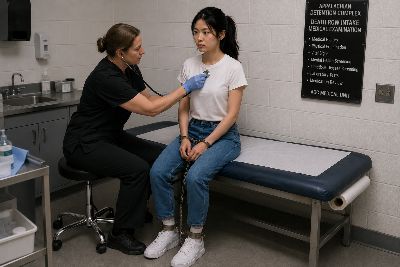
For the public, the case ended with a verdict.For 20-year-old Xinyi Lin, it began with a steel door closing behind her.Months have passed since the former engineering student was sentenced to death and transferred to the Death Row Unit at the Appalachian Detention Complex. While the public has largely moved on from the highly publicized trial, life inside the prison has settled into an unchanging routine defined by regulations, isolation and the steadily shrinking possibilities of appeal.Detroit Free Press was granted rare access to correctional officials, legal filings and institutional records documenting her daily life behind the walls.A New Identity Begins with IntakeEvery inmate arriving on Death Row begins the same way.Within hours of returning from court after sentencing, Xinyi underwent the prison's intake process. Officers photographed her for an official Death Row identification record, replacing the county jail booking photograph taken months earlier.She was then escorted under heavy security through the Death Row housing unit, where every movement is monitored by cameras and correctional staff.Before entering her assigned cell, prison medical personnel conducted a comprehensive physical examination to document her condition upon arrival and establish a medical baseline for long-term incarceration.Only after completing those procedures was she formally assigned to her permanent cell.Correctional officials describe the intake process as highly standardized."The sentence changes," one veteran officer said. "The paperwork never does."One Outfit—for the Rest of Her LifeOne of the first decisions Xinyi was required to make after arriving on Death Row was also one of the last personal choices she would ever be allowed.Unlike the pretrial detention unit, where she wore standard prison-issued orange clothing, Death Row inmates at Appalachian Detention Complex are permitted, under ADC policy, to wear approved personal clothing.The selection, however, is permanent.According to institutional regulations, inmates sentenced to death must choose a single approved style of clothing immediately after returning to the prison following sentencing. Once approved by prison administrators, that clothing style cannot be changed for the remainder of the inmate's incarceration and is also designated as the clothing the inmate will wear at the time of execution.For practical reasons, the institution provides inmates with multiple identical sets of their approved clothing, allowing garments to be laundered and replaced as needed while maintaining the same appearance throughout their confinement.Correctional officials confirmed that Xinyi selected a plain white T-shirt, blue denim jeans and white athletic shoes.Since that day, every official photograph taken inside the institution has shown her wearing that same simple outfit.A Cell Measured in RoutineHer assigned cell is modest.A narrow bunk occupies one wall. A steel desk holds legal documents, notebooks and several books borrowed from the prison library. Family photographs and greeting cards are carefully arranged beside handwritten notes in Chinese and English.Every morning begins almost identically.Breakfast.Morning count.Cleaning.Reading.Exercise when scheduled.Evening count.Lights out.Correctional officers say she keeps her cell unusually organized.The blanket is folded with military precision.Books are returned to exactly the same location.Nothing is left out of place.Routine cell inspections occur regularly, with officers entering to check for contraband, verify inventory and ensure institutional safety. Officials say Xinyi has never received a disciplinary report during these inspections.The Longest Walk She TakesDeath Row inmates spend most of the day inside their cells.Several times each week, however, Xinyi is escorted to an individual outdoor recreation enclosure.The exercise yard bears little resemblance to a traditional prison yard. Concrete walls surround the space. Steel fencing covers the top.There are no other inmates nearby.For approximately an hour, she walks alone beneath open sky before returning to the housing unit.Correctional officers say she rarely exercises vigorously, instead spending most of the recreation period quietly walking laps around the enclosure.Legal Options Near Their EndHer legal future has become increasingly narrow.Attorneys first pursued the mandatory direct appeal following sentencing, challenging several evidentiary rulings made during trial. The appellate court ultimately affirmed both her conviction and sentence.Subsequent post-conviction proceedings argued that aspects of the investigation and defense preparation had been constitutionally inadequate. That petition was later denied after an evidentiary hearing.Her attorneys have now filed what is expected to be the final discretionary appeal before the Supreme Court while simultaneously submitting a clemency petition requesting that her sentence be commuted to life imprisonment.Neither request has yet received a ruling.Legal experts familiar with the case say that if both remaining avenues are denied, prison officials would be expected to begin the formal process of scheduling an execution date.Conversations Across an OceanHer parents remain nearly 7,000 miles away.Because visa applications have repeatedly prevented them from traveling to the United States, every family visit has taken place through scheduled video conferences.The calls are monitored for institutional security but conducted privately.Correctional officials say the conversations often begin awkwardly.Her parents ask whether she is eating enough.Whether she is sleeping.Whether she has received the latest letter mailed from China.Officials familiar with the calls describe long silences between questions.The inability to hug, hold hands or simply sit in the same room has become one of the family's greatest burdens.For now, a computer screen remains their only meeting place.Books Become Her EscapeAccording to prison officials, Xinyi has maintained an exemplary institutional record since arriving on Death Row.She has committed no disciplinary infractions. That conduct has earned her expanded access to the prison library. Correctional staff routinely deliver engineering textbooks, Chinese-language novels, English-language fiction and English-learning materials requested through the institutional library system.Former classmates remember a student who rarely appeared without a backpack full of textbooks.Inside Death Row, that habit has changed very little.The subjects are different.The classroom is gone.The reading continues.Letters That Cross ContinentsMail call remains one of the most anticipated moments of the week.Several correctional officers recalled seeing Xinyi spend hours reading and rereading letters sent from home.Rather than placing them immediately into storage, she often sits quietly on the edge of her bunk with each page in her hands before carefully returning the letters to a folder beside her bed.During the 2026 Chinese New Year, prison officials approved several modest holiday decorations consistent with institutional policy. A festive paper decoration and a handwritten New Year's postcard from her family briefly added touches of red to the otherwise gray concrete cell.Officers say she spent much of that holiday reading the postcard alone.Morning LightPerhaps the most ordinary moment documented during the past several months occurs shortly after sunrise.With morning light entering through the narrow window, Xinyi sometimes sits silently on the edge of her bunk looking outside.The view offers little more than institutional walls, security fencing and a narrow strip of sky.Yet officers say she often remains there for several minutes before beginning another day identical to the one before it.WaitingDeath Row is often imagined as a place defined by dramatic final moments.Correctional officers describe something different.It is paperwork.Medical appointments.Library requests.Cell inspections.Attorney visits.Video calls.Exercise periods.Letters from home.Meals delivered through a slot in the door.Days that become weeks.Weeks that become months.The legal process has not yet reached its conclusion. Her final appeal and clemency petition remain pending, and no execution date has been announced.But with only those last avenues remaining, the period of waiting is approaching its end.Until another court issues another ruling, Xinyi Lin's world remains confined to a single cell, a carefully folded white T-shirt and jeans, shelves of borrowed books, occasional conversations across a video screen with parents who cannot yet reach her, and the quiet routine that has defined every day since the sentence was imposed.
Article Thumbnail
BREAKING: International Student Sentenced to Death in One-Day Drug Trial

Dec 18, 2025 • Detroit Free Press

LANSING, Mich. — A 19-year-old Chinese international college student was sentenced to death Thursday after a one-day trial that concluded with guilty verdicts on three narcotics-related charges, bringing an end to one of the nation's most closely watched criminal cases of the year.The defendant, Xinyi Lin, a freshman Electrical and Computer Engineering student at Northern Lake University, was convicted in Michigan State Courthouse after prosecutors argued that she knowingly transported a large quantity of controlled narcotics through Detroit Metropolitan Airport in May. Defense attorneys maintained throughout the proceedings that the suitcase containing the drugs had been taken by mistake from an airport shuttle moments before she entered the terminal.Under the nation's strict anti-narcotics laws, cases involving large-scale trafficking are subject to expedited judicial proceedings. Thursday's trial was completed in a single day, from jury selection to sentencing.The court imposed the death penalty for the principal trafficking conviction, along with a life sentence without parole and a consecutive 25-year prison term on related charges. No execution date was announced.A Quiet Student at the Center of a National CaseOnly seven months earlier, Xinyi had been preparing to return home to Hangzhou, China, after completing her first year of college.Born on March 18, 2006, she was the only child of a middle-class family. Her father worked as an electrical engineer, while her mother taught mathematics at a public high school. Friends and professors described her as a reserved but diligent student whose life revolved around engineering coursework, laboratory projects, and preparing for examinations. University officials confirmed that she maintained solid academic standing during her freshman year and had no disciplinary record. Court filings indicated she had no previous criminal history.Everything changed on May 17, 2025, one day after finishing final examinations.According to investigators, Xinyi boarded an airport shuttle from her college town to Detroit Metropolitan Airport for a flight back to China. The defense argued she accidentally collected another passenger's nearly identical black carry-on suitcase after unloading luggage from the shuttle.Airport security officers later selected the suitcase for secondary inspection after X-ray screening revealed suspicious contents. Inside were numerous tightly wrapped brick-shaped packages later confirmed to contain a large quantity of illegal narcotics.Although Xinyi immediately insisted the suitcase was not hers, investigators arrested her at the airport. Prosecutors later charged her under the nation's anti-narcotics statutes, arguing that possession of the luggage while attempting international travel satisfied the legal requirements for trafficking and attempted smuggling offenses.The unusual circumstances surrounding the arrest, coupled with the severity of the potential punishment, quickly transformed the case into headline news across the country.Heavy Security at the CourthouseLong before sunrise Thursday, television satellite trucks lined streets surrounding the Michigan State Courthouse.Police erected security barriers around the building, while courthouse deputies screened everyone entering the complex. National media organizations occupied nearly every seat reserved for reporters inside the courtroom.Several students from Northern Lake University traveled to Lansing to observe the proceedings. Members of the local Chinese community also gathered quietly outside the courthouse throughout the day.At approximately 8:15 a.m., a white transport vehicle stopped in front of the courthouse. Moments later, Xinyi emerged wearing an orange detention uniform and restraints, escorted by court officers and accompanied by her attorney.She briefly turned toward photographers gathered beyond the security perimeter but made no statement before disappearing into the courthouse. As deputies led her inside, she briefly tightened her clasped hands before relaxing them again. Aside from that moment, she walked steadily and kept her eyes forward.Prosecutors Present Their CaseProceedings began shortly after 9:00 a.m.In opening statements, prosecutors told jurors the evidence would establish every element necessary for conviction. "This case is about the transportation of an extraordinary quantity of controlled narcotics across an international gateway," the lead prosecutor told the court. "The physical evidence speaks for itself."Over the next several hours, jurors heard testimony from airport police officers, Transportation Security Administration personnel, customs investigators, forensic chemists, and narcotics specialists. Surveillance footage showed passengers unloading luggage from the airport shuttle before entering the terminal. Additional video captured Xinyi proceeding toward the security checkpoint with the black suitcase. Investigators testified that screening equipment detected dense, suspicious objects inside the luggage, prompting officers to conduct a manual inspection. "When the suitcase was opened, officers immediately located numerous tightly wrapped packages concealed beneath clothing and personal effects," one investigator testified. A narcotics detection canine alerted positively to the suitcase, while preliminary field tests indicated controlled narcotics. Laboratory scientists later confirmed the substances and testified that the total quantity exceeded statutory thresholds for aggravated trafficking offenses.Jurors also reviewed forensic laboratory reports, photographs taken during the seizure, chain-of-custody documentation, and travel records.Defense Argues Luggage Was Taken by MistakeDefense attorneys did not dispute that narcotics had been found inside the suitcase. Instead, they argued that the government failed to prove Xinyi knowingly possessed the drugs.According to the defense, the suitcase closely resembled Xinyi's own luggage, and the exchange occurred inadvertently while passengers collected bags from the airport shuttle. Her attorneys pointed to her academic record, lack of criminal history, and immediate insistence that the luggage was not hers. "This is not the profile of an international drug trafficker," defense counsel argued. "She was a freshman engineering student returning home after final exams." The defense also noted that investigators uncovered no evidence linking Xinyi to organized narcotics networks before her arrest.While her attorneys spoke, Xinyi remained seated with her gaze fixed on the defense table. She occasionally pressed her lips together and swallowed before looking back toward the witness stand.Guilty on All CountsFollowing closing arguments shortly after 2:30 p.m., jurors deliberated for less than two hours.When proceedings resumed late in the afternoon, the courtroom fell silent as the foreperson handed the verdict forms to the clerk.The clerk then read each decision aloud:Count 1 — Drug Trafficking: Guilty.Count 2 — Attempted International Smuggling of Controlled Narcotics: Guilty.Count 3 — Possession of Controlled Narcotics with Intent to Distribute: Guilty.Xinyi remained standing beside her attorneys throughout the reading of the verdicts. As the clerk announced each guilty finding, she showed little visible emotion, keeping her eyes on the bench and her posture steady. Court observers noticed her blink repeatedly after the first guilty verdict and take a slow breath before the remaining counts were read. Her fingers briefly tightened around one another before relaxing again. She did not speak or visibly protest as the clerk completed the reading of all four counts.Sentence Delivered Minutes LaterBecause national law permits immediate sentencing in major narcotics prosecutions, the court proceeded directly into the penalty phase.The courtroom grew noticeably quieter as the judge began reading the sentence. Xinyi stood silently beside the defense table, her expression composed. As the judge announced the death penalty for the lead trafficking conviction, she briefly closed her eyes and exhaled before looking back toward the bench. Although her face remained calm, she swallowed once and tightened her jaw as the remaining sentences were read.In announcing the sentence, the judge stated that while the court had considered Xinyi's age, educational background, and absence of previous convictions, the governing statutes prescribed mandatory punishment for offenses of this magnitude."The Court is bound to apply the law enacted by the legislature," the judge said before pronouncing sentence. The court imposed:Drug Trafficking: Death Penalty by Decapitation.Attempted International Smuggling of Controlled Narcotics: Life Imprisonment without the Possibility of Parole.Possession of Controlled Narcotics with Intent to Distribute: 25 years' imprisonment, consecutive.The court ruled that the additional custodial sentences would merge into the capital sentence unless modified through the appellate process.No execution date was scheduled.Asked whether she understood the judgment, Xinyi answered softly that she did. Her voice was barely audible inside the silent courtroom. She then nodded once toward her attorneys before lowering her gaze for several seconds as court officers approached.A Quiet DepartureShortly before 5:00 p.m., court officers secured her restraints and escorted her through a secured corridor leading to the courthouse's underground transport garage.Outside, camera shutters clicked continuously as the corrections vehicle departed under police escort.She remained silent to reporters. As she walked between two corrections officers, her head was lowered, and her eyes were fixed downward. Photographers captured the final images of the day through the courthouse security perimeter. Upon approaching the waiting transport vehicle, she paused momentarily while stepping inside and took a final slow breath before the door closed behind her.In a brief statement outside the courthouse, prosecutors said the verdict reflected the nation's "zero-tolerance approach toward large-scale narcotics trafficking." Defense attorneys said they would pursue every appeal permitted under law, maintaining that the evidence supported the possibility of a mistaken luggage exchange and arguing that the conviction raised serious questions about criminal responsibility under the country's strict drug statutes.As evening fell over downtown Lansing, the courthouse gradually emptied. The television crews packed away their equipment, police barriers were removed, and the corrections vehicle carrying the 19-year-old freshman departed for the detention facility, where she will remain on death row pending mandatory appellate review—bringing to a close a trial that lasted only one day, but a case that had captured national attention for months.
Article Thumbnail
International Student Arrested After Drug Discovery at Detroit Airport

May 18, 2025 • Detroit Free Press

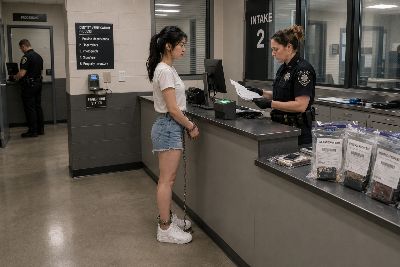
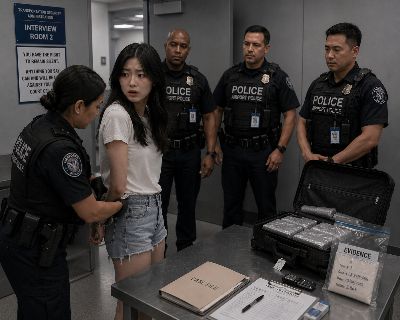
DETROIT — A 19-year-old Chinese international college student was taken into custody Saturday after airport security officers discovered a large quantity of illegal narcotics concealed inside a carry-on suitcase she was carrying through the security checkpoint at Detroit Metropolitan Airport.The student, Xinyi, a first-year Electrical and Computer Engineering (ECE) major at Northern Lake University, had completed her spring semester final examinations only one day earlier and was preparing to return to China for the summer break after finishing her first year of study.According to investigators, Xinyi boarded an airport shuttle from her college town to Detroit Metropolitan Airport on the morning of May 17, 2025. Upon arriving at the airport, she retrieved what she believed to be her black carry-on suitcase from the shuttle's luggage compartment before entering the terminal.Suspicious Screening Leads to DiscoveryAuthorities said the suitcase was selected for secondary inspection after Transportation Security Administration (TSA) officers observed suspicious, densely packed objects during routine X-ray screening.Rather than allowing the bag to proceed through security, officers escorted Xinyi to a nearby inspection room inside the checkpoint for a manual examination of the luggage. Investigators said Xinyi appeared surprised when informed that the suitcase required additional inspection and repeatedly stated that she believed it was her own luggage.Inside the inspection room, TSA officers opened the suitcase in Xinyi's presence. Beneath ordinary clothing and personal effects, officers discovered numerous tightly wrapped, brick-shaped packages concealed inside the luggage.Airport Police officers were immediately notified, and a narcotics detection K-9 was brought to the inspection area. According to officials, the police dog alerted positively to the concealed packages. Officers then conducted a field chemical test using narcotics testing kits, which produced positive results for illegal controlled substances. Authorities subsequently determined that the suitcase contained a substantial quantity of narcotics consistent with international drug trafficking.Xinyi immediately insisted that the suitcase did not belong to her and explained that she had accidentally taken another passenger's nearly identical bag from the airport shuttle. Investigators acknowledged her statement but said that, under the nation's strict anti-narcotics laws, possession of the suitcase at the international airport provided sufficient grounds for arrest while the investigation continued.Arrest Inside the TerminalAirport Police officers formally placed Xinyi under arrest inside the inspection room. She was searched, advised of the charges, and fitted with standard transport restraints, including handcuffs secured to a waist restraint and leg restraints before being escorted from the security area.Witnesses inside the terminal observed officers escorting the visibly shaken student through the public departures hall as travelers looked on. Several bystanders recorded portions of the escort on their mobile phones before officers exited the terminal through the departure-level entrance.Outside the terminal, Xinyi was placed into the rear compartment of an Airport Police transport vehicle waiting in the passenger drop-off area and transported to a local detention facility for booking and processing.During booking, she was photographed wearing the same white T-shirt, denim shorts, and white athletic shoes she had been wearing at the airport. She remained cooperative throughout the booking process, according to officials.The arrest quickly became a major national news story because of the quantity of narcotics involved and the government's uncompromising anti-drug enforcement policy. The case also attracted widespread attention because Xinyi had no known criminal history and was regarded by classmates as a quiet, academically focused engineering student.First Court AppearanceXinyi made her initial court appearance the following day under escort from detention officers. Prosecutors formally presented the allegations of international drug smuggling and requested that she remain in custody while investigators continued examining the origin of the narcotics and the ownership of the suitcase.Defense counsel argued that Xinyi had mistakenly taken another passenger's luggage after arriving at the airport and maintained that she had no knowledge of the drugs concealed inside. The defense requested that she be released pending further proceedings, emphasizing her lack of criminal history, her status as an international student, and her willingness to cooperate with investigators.After hearing arguments from both sides, the judge ruled that the seriousness of the allegations warranted continued detention and ordered that Xinyi remain in custody pending future court proceedings. No findings regarding guilt or innocence were made during the hearing.Following the hearing, correctional officers transported Xinyi to the Appalachian Detention Complex (ADC) for secure pretrial detention.Transfer to Appalachian Detention ComplexUpon arriving at ADC later that day, Xinyi completed the facility's standard intake process. Still dressed in the clothing she had worn during her arrest, she underwent identity verification, fingerprinting, and a routine medical examination before her personal belongings were inventoried and secured. After inspection, correctional staff approved her white athletic shoes for continued use while her civilian clothing was placed into property storage.She was then issued an orange detention uniform, photographed for an official intake record, and assigned to an intake housing unit. After receiving bedding, hygiene supplies, and an orientation to facility rules, she spent her first evening in a single intake cell before joining other newly admitted detainees for her first meal the following day.Officials emphasized that her transfer to ADC was a routine administrative procedure for defendants ordered held in custody and should not be interpreted as a determination of the outcome of the criminal case, which remains pending before the court.
Photographic Records
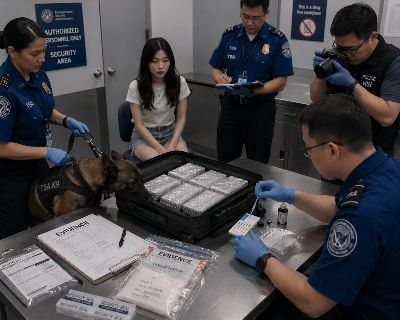
Photographic Record
Police announcing the public execution arrangements.
Photographic Record
Xinyi being notified of her execution date.
Photographic Record
Xinyi celebrating Chinese New Year.
Photographic Record
Xinyi in the cell.
Photographic Record
Xinyi meeting with her attorney.
Photographic Record
Xinyi's death row intake medical examination.
Photographic Record
Xinyi's death row intake mugshot.
Photographic Record
Xinyi escorted out of the courthouse.
Photographic Record
Xinyi in the court trial.
Photographic Record
Xinyi arriving at the state courthouse.
Photographic Record
Xinyi's intake mugshot.
Photographic Record
Xinyi's intake process.
Photographic Record
Xinyi's arrival at ADC.
Photographic Record
Xinyi's first court appearance.
Photographic Record
Xinyi's booking mugshot.
Photographic Record
Xinyi escorted to exit the terminal.
Photographic Record
Xinyi escorted through the public departures hall.
Photographic Record
Xinyi arrested by airport police.
Photographic Record
Narcotics found in Xinyi's suitcase.
INMATE COMMUNICATIONS KIOSK
Electronic Messaging System

Connect with this inmate through our secure electronic kiosk.

Log In to Send Message
Don't have an account? Sign up here
SPONSOR: OJ
WARDEN: OJ
Comments
Log in to post a comment.
Loading...
For inquiries and reporting abusive use of the site please email .