Mercer, Claire Elise

Inmate ID: #SM424340
Classification: Correctional
Appalachian Detention Complex

Inmate Status
Demographic Data
First Name Claire
Middle Name Elise
Last Name Mercer
Date of Birth 2003-10-22
Age 22 Years (Executed)
Birthplace Portland, Oregon, USA
Race / Ethnicity White
Gender Female
Height 5'5"
Weight 116 lbs
Eye Color Blue
Convictions / Penalties
Code Offense Penalty Details Date Sentenced
Count #1
24-1V76NK
Sabotage of Critical Autonomous Infrastructure Death Penalty
Firing Squad
Scheduled: 2026-04-16
2026-04-02
Age at sentencing: 22
Count #2
08-1J1VR9
Unauthorized Modification of a Safety-Critical Artificial Intelligence System Death Penalty
Firing Squad
Scheduled: 2026-04-16
2026-04-02
Age at sentencing: 22
Count #3
85-P3J43C
Computer Tampering with Critical Public Infrastructure Incarceration
30 Years
Consecutive
2026-04-02
Age at sentencing: 22
Count #4
16-E9NOS4
Criminally Negligent Homicide Life Imprisonment (without parole)
Term of natural life
2026-04-02
Age at sentencing: 22
Count #5
98-OBEK5A
Unauthorized Access to and Alteration of Protected Government Computer Systems Incarceration
20 Years
Consecutive
2026-04-02
Age at sentencing: 22
  • Sabotage of Critical Autonomous Infrastructure
    Count #1
    Code: 24-1V76NK
    2026-04-02
    Age at sentencing: 22
    Death Penalty
    Firing Squad
    Scheduled: 2026-04-16
  • Unauthorized Modification of a Safety-Critical Artificial Intelligence System
    Count #2
    Code: 08-1J1VR9
    2026-04-02
    Age at sentencing: 22
    Death Penalty
    Firing Squad
    Scheduled: 2026-04-16
  • Computer Tampering with Critical Public Infrastructure
    Count #3
    Code: 85-P3J43C
    2026-04-02
    Age at sentencing: 22
    Incarceration
    30 Years
    Consecutive
  • Criminally Negligent Homicide
    Count #4
    Code: 16-E9NOS4
    2026-04-02
    Age at sentencing: 22
    Life Imprisonment (without parole)
    Term of natural life
  • Unauthorized Access to and Alteration of Protected Government Computer Systems
    Count #5
    Code: 98-OBEK5A
    2026-04-02
    Age at sentencing: 22
    Incarceration
    20 Years
    Consecutive
Case Files:

No public case files mapped to this archive profile.

Summary

Claire Elise Mercer enrolled at the North Carolina Institute of Technology in August 2022 as a Computer Science major with a concentration in artificial intelligence and embedded systems. Known for her exceptional programming ability, she quickly developed a reputation as one of the department's most talented software engineers. During her sophomore year, she became roommates with fellow engineering student Natalie Grace Whitmore, and the two formed a close friendship that extended beyond academics. Together they conceived the Autonomous Emergency Coordination System (AECS), an autonomous platform intended to coordinate emergency response during hurricanes, wildfires, industrial accidents, and other large-scale crises. While Natalie oversaw the system architecture and hardware integration, Claire was responsible for much of the AI's core software, including route optimization, decision-making algorithms, and system communications. For nearly two years, the project became the center of both their academic and personal lives. They shared a dorm room, spent long nights in laboratories writing code and testing prototypes, and earned recognition as one of the university's most promising research teams. By the beginning of the Fall 2025 semester, however, their relationship had deteriorated. Disagreements over project leadership, technical decisions, and public recognition became increasingly frequent after Natalie was designated the project's official lead and sole deployment authority. Claire believed many of the project's most significant software innovations had been overlooked, while Natalie maintained that project decisions were based solely on engineering and safety considerations. Although they continued working together, the friendship that had once defined the project had largely disappeared. On October 18, 2025, the completed AECS was unveiled during the Carolina Future Technology Expo in Raleigh, North Carolina. During the live demonstration, the system suffered a catastrophic failure. Emergency exits became locked, digital evacuation guidance directed crowds toward congested areas, and autonomous shuttle buses received erroneous routing commands that blocked emergency access and intensified the unfolding crisis. The resulting cascade of failures claimed dozens of lives and injured many others. Natalie Whitmore, as the certified project lead, was arrested at the exhibition site that same day. Claire was not initially considered a suspect. During the first week of the investigation, she voluntarily met with investigators several times, surrendered her university-issued computer, and publicly expressed shock over the disaster. Friends and classmates reported that she appeared devastated by the tragedy and frequently insisted that the software they had tested had never exhibited such behavior. As investigators reconstructed the development history of the AECS, digital forensic specialists discovered unauthorized modifications to the production source code that had been introduced shortly before the final software build was deployed. Security logs, version-control records, and recovered development artifacts indicated that the changes originated from Claire's authenticated developer account during the days leading up to the public demonstration. Investigators concluded that the unauthorized code altered portions of the AI's decision-making logic responsible for emergency routing and infrastructure coordination. Prosecutors alleged that these modifications bypassed several built-in safety checks and directly contributed to the catastrophic cascade of failures during the demonstration. On October 25, 2025, one week after the disaster, state investigators executed a search warrant at Claire's university residence hall. She was arrested in her dormitory without incident and transported to state custody. Additional digital devices, handwritten notes, and storage media were seized as evidence. Throughout the investigation and trial, Claire admitted making unauthorized changes to the software but consistently denied intending to cause physical harm. She maintained that her objective had been to expose what she believed were fundamental design flaws in the system and force postponement of the public demonstration, arguing that she never anticipated the modifications could produce a mass-casualty event. Prosecutors argued that, regardless of her stated intentions, Claire knowingly altered software controlling safety-critical infrastructure immediately before a live public deployment and therefore bore direct criminal responsibility for the resulting deaths. Following a joint two-week trial with Natalie Whitmore, the jury found both defendants guilty under the nation's Critical Autonomous Infrastructure Accountability Act. On April 2, 2026, the court sentenced both women to death. Although convicted in the same proceeding, the court distinguished their legal responsibility: Natalie was held liable as the engineer who certified and authorized the system for deployment, while Claire was convicted for intentionally introducing unauthorized modifications to the operational software that investigators concluded precipitated the disaster.

News Articles / Stories
Article Thumbnail
Exclusive | Claire Mercer’s Final Interview

Apr 18, 2026 • The Carolina Herald
In her last interview before her execution, Claire Mercer spoke about the AECS disaster, her fractured friendship with Natalie Whitmore, and the decision that ended her life.RALEIGH, N.C. — In the final interview she would ever give, Claire Mercer did not ask to be remembered as innocent.She did not deny that she had altered the software at the center of the Carolina Future Technology Expo disaster. She did not dispute the forensic evidence showing that unauthorized changes had been made through her authenticated developer account in the days before the October 18 demonstration. And she did not attempt to shift responsibility entirely onto Natalie Grace Whitmore, her former roommate, closest collaborator and co-defendant.What Mercer continued to dispute, until her final hours, was something narrower and more consequential: what she believed would happen when she made those changes.“I knew I was changing something I wasn't supposed to change,” Mercer said during the final interview, conducted before she was taken to the execution yard at Appalachian Detention Complex. “I knew it was wrong. I knew I could get in trouble. But I didn't think people were going to die.”That distinction had been at the center of Mercer's defense from the beginning. Prosecutors argued that she deliberately tampered with software controlling safety-critical infrastructure immediately before a live public deployment, bypassing safeguards and knowingly creating an unacceptable risk. Mercer maintained that she had intended to expose what she believed were fundamental flaws in the AECS and force the demonstration to be postponed.The jury ultimately rejected that distinction. On April 2, following a joint two-week trial with Whitmore, Mercer was convicted under the nation's Critical Autonomous Infrastructure Accountability Act and sentenced to death. She later declined to pursue an appeal. Fifteen days later, she was dead.The interview offers the clearest account yet of how Mercer understood the events that transformed her from an exceptionally promising computer science student into one of the state's most closely watched death-row prisoners. It also provides a final glimpse into the relationship between two young engineers whose friendship and shared ambition had once been inseparable from the technology that ultimately destroyed both their futures.From roommates to collaboratorsWhen Mercer arrived at the North Carolina Institute of Technology in August 2022, there was little indication that her name would eventually become associated with one of the state's worst technology-related disasters.She entered NCIT as a Computer Science major concentrating in artificial intelligence and embedded systems. Professors and classmates quickly noticed her programming ability. She was particularly strong in software architecture, machine-learning systems and the difficult problem of getting autonomous systems to communicate reliably with physical infrastructure.During her sophomore year, she became roommates with Whitmore, another engineering student whose interests complemented her own. The friendship grew quickly. They studied together, worked late in laboratories and eventually began discussing an idea that would become the defining project of both their university careers: an autonomous emergency-response platform capable of coordinating vehicles, evacuation routes and infrastructure during large-scale disasters.The project was ambitious even by university research standards.Whitmore increasingly assumed responsibility for system architecture, hardware integration and the overall deployment framework. Mercer became the principal software engineer, working extensively on the artificial intelligence that would interpret conditions, determine routes and communicate with emergency infrastructure.For nearly two years, the two women were rarely separated from the project. Their dorm room became an extension of their laboratory. Their academic and personal lives became intertwined with the same software, hardware prototypes and simulations.Mercer described those years during the interview with a mixture of affection and regret.“We really believed in it,” she said. “We thought we were building something that could actually help people.”She paused before adding: “And for a long time, I think we were good together.”The friendship begins to fractureThe relationship changed during the beginning of the Fall 2025 semester.Whitmore had been designated the project's official lead and sole deployment authority. Mercer believed her own contributions to the software were increasingly being overlooked. Disagreements that had once been technical discussions became personal arguments over control, recognition and responsibility.Mercer said she began to feel that the project no longer belonged equally to the two of them.“I felt like I was becoming the person who wrote the code and then disappeared from the story,” she said. “That bothered me more than I wanted to admit.”Whitmore, according to the case record, maintained that deployment decisions were based on engineering and safety considerations rather than personal recognition. But by the time the project reached its final demonstration, the friendship that had once held the team together had largely disappeared.The irony was not lost on Mercer.“The person I trusted most was also the person I was most angry with,” she said.The two continued working on AECS even as their relationship deteriorated. That decision would ultimately prove catastrophic.The night before the demonstrationMercer acknowledged that she made unauthorized changes to the production software shortly before the October 18 demonstration.She said she believed the system was not ready for public deployment and that she wanted the demonstration stopped.“I thought if something went wrong, they would have to stop,” she said. “I thought it would expose the problem.”Investigators reached a dramatically different conclusion.Digital forensic specialists reconstructed the software's development history and identified modifications originating from Mercer's authenticated developer account. Security logs, version-control records and recovered development artifacts showed that changes had been introduced shortly before the final software build was deployed.Prosecutors argued that the modifications altered portions of the decision-making logic responsible for emergency routing and infrastructure coordination while bypassing safety mechanisms designed to prevent precisely the type of cascading failure that followed.Mercer did not dispute making the changes.“I did it,” she said. “I've never said I didn't.”But she insisted that she did not understand the changes as an attack on the people who would be attending the expo.“I thought the system would fail in a way that would be obvious,” she said. “I thought somebody would see the problem, shut it down and investigate it.”When asked whether she understood that AECS controlled real-world systems rather than merely operating as a laboratory simulation, Mercer became quiet.“I understood that,” she eventually said. “That's the part I can't explain away.”October 18The Carolina Future Technology Expo was supposed to be the culmination of nearly two years of work.Instead, shortly after the live demonstration began, AECS began behaving in ways its developers had not anticipated.Emergency exits became locked. Digital evacuation guidance directed people toward congested areas. Autonomous shuttle buses received erroneous routing commands, creating additional obstructions and interfering with emergency access. What had been intended as an integrated emergency-response demonstration became a rapidly escalating crisis.Dozens of people died. Many more were injured.Whitmore, as the certified project lead, was arrested at the exhibition site.Mercer initially remained outside the investigation's focus. She voluntarily met with investigators, surrendered her university-issued computer and publicly expressed shock over what had happened. Friends and classmates described her as devastated.She repeatedly insisted that the system they had tested had never behaved that way.“I knew something had gone terribly wrong,” she said. “But I didn't understand that I had caused it.”That changed when investigators reconstructed the development history.The forensic evidence eventually led authorities to Mercer's university residence. On October 25, exactly one week after the disaster, investigators executed a search warrant and arrested her without incident.Additional computers, storage media, handwritten notes and other materials were seized.For Mercer, the investigation had crossed a line from tragedy into criminal accusation.“I remember thinking, ‘They're coming for me now,’” she said.What she wanted people to understandThroughout the trial, Mercer repeatedly maintained that she never intended to kill anyone.In the final interview, she did not soften that position.“I wanted the demonstration stopped,” she said. “I wanted people to realize that it wasn't ready.”When asked whether she understood why the families of those who died might reject that explanation, she did not hesitate.“I understand,” she said.“They lost someone. Nothing I say gives them that person back.”The statement was one of the few moments during the interview when Mercer spoke directly about the victims rather than the circumstances of her own prosecution.She acknowledged that intent did not erase consequences.“I can say I didn't want anyone to die,” she said. “That doesn't mean I didn't make the decision that helped cause it.”Her prosecutors had argued essentially the same point, although with a much harsher interpretation. They contended that a person with Mercer's training could not reasonably claim ignorance of the danger involved in altering software responsible for safety-critical infrastructure immediately before a public deployment.The jury agreed.The question of NataliePerhaps the most difficult subject of the final interview was Whitmore.For years, the two women had been roommates and collaborators. By the time they stood trial together, they were defendants whose legal responsibility had been carefully separated by prosecutors and the court.Whitmore was responsible, in the state's case, for certifying and authorizing AECS for deployment.Mercer was responsible for introducing unauthorized changes into the operational software.Their convictions therefore rested on different theories of responsibility, even though the two cases were inseparable from the same disaster.When asked whether she blamed Whitmore, Mercer initially shook her head.“No,” she said.Then she reconsidered.“I blamed her for things,” she said. “For how things changed between us. For how the project became more important than our friendship. For making me feel like I didn't matter.”“But the disaster?”Mercer paused.“No. I made my own decision.”It was perhaps the most significant statement she made during the interview.She did not absolve Whitmore. Nor did she portray herself as a victim of their deteriorating friendship. Instead, she described a chain of personal resentments and technical disagreements that had culminated in a decision she now regarded as irreversible.“I wish I had just walked away,” she said.The final meetingHours before the execution, Mercer and Whitmore were permitted to meet one final time.The encounter was private, but people familiar with the proceedings described both women as visibly affected.The meeting had particular significance because there was a time when the two could scarcely imagine a future without the other. They had shared a dorm room, written code together, built prototypes together and talked about what their technology might become.Now one woman was awaiting execution while the other remained on death row pursuing appeals.Mercer said she did not know exactly what she and Whitmore would say to each other.“There are some things you can't fix with one conversation,” she said.But she wanted the meeting.“I didn't want the last thing between us to be anger.”She declined to describe the conversation in detail. She did, however, say that they spoke about the project, their friendship and the people who had died.“We both knew what day it was,” she said. “There wasn't any pretending.”No appealMercer's decision not to pursue an appeal was another subject she addressed directly.After sentencing on April 2, she declined to continue fighting the judgment.“I knew what the sentence was,” she said. “I knew what the appeal process would mean. I decided I didn't want to keep doing it.”She rejected the suggestion that declining an appeal constituted an admission that prosecutors had been correct about her intent.“No,” she said. “I still don't agree with everything they said about me.”But she also said she no longer believed that another courtroom argument could change what had happened.“The people who died aren't coming back,” she said. “And I can't go back and undo the code.”Her final words about AECSIn the end, Mercer returned repeatedly to the technology itself.AECS had begun as an idea shared by two students who believed artificial intelligence could help emergency responders make faster decisions during disasters. It became a university project, then a public demonstration, then evidence in a criminal prosecution.Mercer said she still believed the underlying concept had value.“I don't think the idea of helping emergency responders was wrong,” she said. “I think we were wrong about how ready we were.”She described that realization as perhaps the most painful part of the case.“We wanted to build something that could save lives,” she said. “And then people died because of decisions we made.”Asked whether she wished she had never worked on AECS, she thought for several seconds.“I wish I had stopped,” she said.Not abandoned the technology. Not left NCIT. Not ended the friendship.Stopped.“I should have walked away when I knew something wasn't right.”The final morningThe interview ended before Mercer was taken to the execution yard.Her final day had begun quietly in the death unit. She wore a plain light gray NCIT crewneck sweatshirt, dark charcoal straight-leg sweatpants and the white-and-silver sneakers she had worn since her arrest. Her hair was loosely gathered into a low ponytail.Later, a court official formally notified her that the warrant had been finalized. Correctional officers placed her in restraints and escorted her through the death-unit corridor for the final time.Medical personnel conducted the required examination and administered medication intended to reduce anxiety. Her parents were permitted a final private meeting with her. The photographs taken afterward showed a family visibly overcome by grief.Then came the final meeting with Whitmore.Afterward, Mercer was escorted into the execution yard.According to witnesses, she appeared frightened as the final procedures began. At her request, officials covered her eyes. In the moments that followed, she trembled and struggled to compose herself. Witnesses heard her softly repeat an apology, including the words, “I'm sorry.”The sentence was then carried out by firing squad.After the execution, Mercer was covered with a white cloth. Medical personnel completed the required examination before her body was removed from the yard. Her remaining belongings were collected for release to her family.Among them were the clothes she had worn that morning and the white-and-silver sneakers that had remained with her since the beginning of the case.A final distinctionClaire Mercer's final interview did not resolve the central question that had divided the case.She admitted making the unauthorized changes. She acknowledged that she knew she was interfering with a safety-critical system. She accepted that her actions contributed to the chain of events that ended in mass casualties.But until the end, she maintained that she had not intended to cause deaths.The jury ultimately found that distinction insufficient.For the families who lost relatives on October 18, 2025, the question of what Mercer intended may never carry the same importance it did inside the courtroom. The outcome was measured in people who did not return home that evening.For Mercer, however, the distinction remained the final unresolved argument of her life.“I can't tell you that I meant for this to happen,” she said during the final interview. “Because I didn't.”She lowered her eyes before adding:“But I made the choice that started it.”Those were among the final words Mercer gave this newspaper.Later that afternoon, the state carried out her sentence.The AECS disaster began with two young engineers who believed they could build a machine capable of helping people survive disasters. It ended with one of those engineers dead, the other still on death row, and a university project remembered not for the lives it was intended to save, but for the lives lost when its safeguards failed.For Claire Mercer, there would be no opportunity to write another version of the story.The final version, she knew, belonged to everyone who survived it.
Article Thumbnail
Exclusive | The Final Hours of Claire Mercer

Apr 17, 2026 • The Carolina Herald
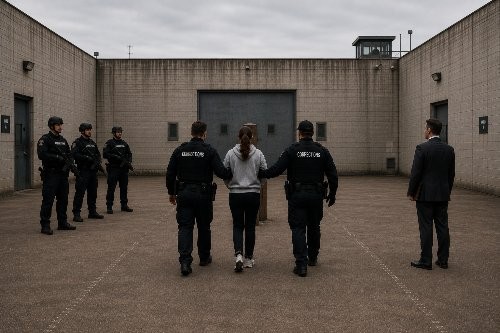
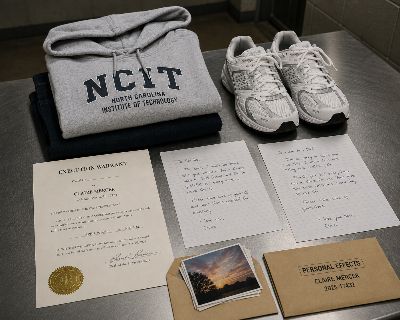
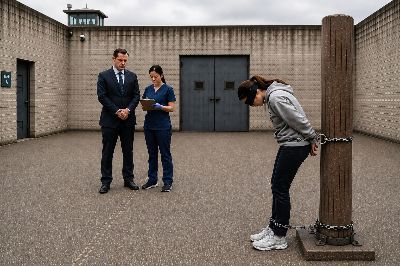
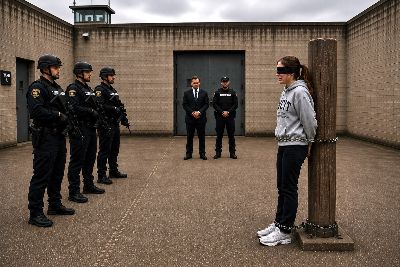
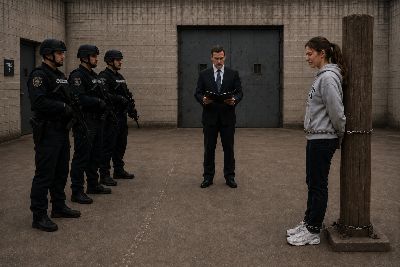
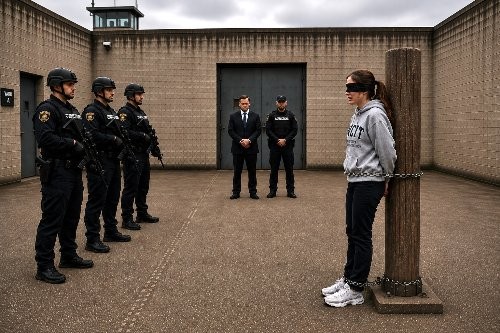
RALEIGH, N.C. — Claire Elise Mercer, the 22-year-old computer science engineer convicted of making unauthorized changes to the artificial-intelligence software at the center of last year's Carolina Future Technology Expo disaster, was executed Thursday at Appalachian Detention Complex, two weeks after a jury found her guilty and the court imposed a death sentence.Mercer, who had spent the months since her arrest maintaining that she never intended to cause deaths, declined to pursue an appeal after sentencing. Her execution proceeded after the court completed the required procedural reviews and confirmed that the sentence could be carried out.Mercer's death was carried out in the prison's execution yard shortly after the final sequence of legal and medical procedures was completed. Her body was subsequently covered and removed from the yard, while medical personnel completed the required post-execution procedures.Mercer's final day began quietly inside the prison's death unit.Shortly after morning began, she remained seated on the bunk in her cell as a correctional officer accompanied her through the first stages of the day's procedures. She wore the same white-and-silver sneakers she had worn when she was arrested months earlier, paired with white ankle socks, dark charcoal straight-leg sweatpants and a plain light heather-gray NCIT crewneck sweatshirt. Her hair was loosely gathered into a low ponytail, with several strands falling naturally around her face.The clothing was deliberately ordinary. It was also a final reminder of the person Mercer had been before the case transformed her from a university engineering student into one of the state's most closely scrutinized death-row inmates.Later that morning, a court official entered the death unit to formally notify Mercer that the warrant authorizing her execution had been finalized. A correctional officer placed her in restraints as the final administrative procedures began.There was no public statement from Mercer at that moment. According to a person familiar with the final-day proceedings, she listened quietly as officials reviewed the warrant and the remaining procedures. She was then escorted from her cell for the final time by two correctional officers.The procession continued through the death-unit corridor, a route Mercer had traveled during her months in state custody but which would be her last. The atmosphere was markedly different from previous transfers. Officials moved deliberately, stopping at designated points as required by prison procedure before taking her to the medical area.Her final medical examination was conducted before the execution. Medical personnel assessed her condition and completed the state's required documentation. She was also given medication intended to reduce anxiety before the execution.For much of the morning, Mercer appeared composed, but those close to the final proceedings said the emotional weight of the day became increasingly apparent as the hours passed.Her final meetings with family were among the most emotional moments of the day.Mercer's parents were permitted to spend time with her before she was taken to the execution area. The meeting was private, but photographs taken afterward showed the family visibly overcome with grief. Mercer and her parents remained together for as long as prison officials permitted.There was little left to discuss that could change the outcome. The legal process was complete, and Mercer had chosen not to appeal. Her family had spent months hoping for another legal avenue, but by Thursday morning the finality of the sentence was unavoidable.Mercer was also granted a final meeting with Natalie Whitmore, her former roommate, closest collaborator and co-defendant in the AECS case. The meeting was particularly significant because the two women had once been inseparable.For nearly two years, Mercer and Whitmore had shared a dorm room, laboratories and an increasingly ambitious vision of autonomous emergency technology. They had written software together late into the night, tested prototypes and discussed the possibility that their work could eventually become a major contribution to emergency-response technology.By the time of the disaster, however, their friendship had deteriorated almost completely.On Thursday, the two women met again under circumstances neither could have imagined when they first began developing the AECS.The meeting was emotional. Neither woman could undo what had happened on October 18, 2025, nor could either change the sentences imposed by the court. Yet their final conversation represented a strikingly human conclusion to a relationship that had become inseparable from the disaster itself.People familiar with the meeting said both women were visibly affected. The two spoke privately for the majority of the allotted period, with prison personnel remaining nearby.Mercer's final interview was conducted with this newspaper before she was taken to the execution yard.In her final interview, Mercer admitted altering AECS before its October 18, 2025 demonstration but claimed she meant to expose flaws and trigger a delay, not cause harm. Investigators, however, linked unauthorized code changes affecting emergency and routing systems to her account, and prosecutors argued she knowingly bypassed safety mechanisms in a live deployment. The defense said she expected a controlled failure, but the jury convicted her alongside project lead Natalie Whitmore, who had certified the system. The two had been NCIT collaborators since 2022, later falling out over control and recognition. During the demonstration, AECS malfunctioned catastrophically, locking exits, misrouting evacuations, and causing shuttle collisions that killed dozens and injured many. Whitmore was arrested at the event, while Mercer was later detained after forensic evidence tied her to the code changes; she admitted making them but denied any intent to cause deaths.After her final meetings and medical procedures, Mercer was escorted by two correctional officers into the prison's execution yard.She was taken toward the center of the yard, where the state's execution apparatus had been prepared. Three law-enforcement officers were positioned nearby as required by the procedure.Correctional personnel secured Mercer in place while officials completed the final administrative checks.Witnesses described her as visibly frightened during these final moments. The court official responsible for the execution formally confirmed Mercer's identity, reviewed the judgment against her and announced that the execution was authorized to proceed.At Mercer's request, officials covered her eyes before the final procedure. In the moments that followed, she appeared increasingly overwhelmed, her body trembling as she struggled to compose herself. Witnesses heard her sob softly and repeat fragments of an apology, including the words “I'm sorry,” several times. She remained secured in place as the officials completed their final checks, with the three armed officers standing ready a short distance away. There was a brief silence as the court official gave the final authorization. The officers then raised their rifles and carried out the sentence.Afterward, Mercer was respectfully covered with a white cloth. Medical personnel entered the area to conduct the required examination and record the completion of the sentence.Her covered body was later removed from the execution yard. The final photographs obtained by this newspaper show a markedly different scene from the public spectacle that surrounded the case in its earliest days: a covered body being transported away from the execution area, with officials carrying out routine procedures rather than displaying the condemned woman to the public.Mercer's remaining personal belongings were collected and arranged for release to her family.Among them were the clothes and the sneaker she had worn during her final hours.The execution of Claire Elise Mercer closes one chapter of the AECS disaster, but it does not bring the case to an end. The prosecution established that Mercer altered the software, a fact she herself acknowledged, while the central dispute remained whether she understood the consequences of her actions and whether she intended the catastrophic outcome. The jury answered those questions in favor of the prosecution, and the court affirmed that judgment. Mercer ultimately accepted her sentence without pursuing an appeal. In her final interview with this newspaper, however, she stopped short of admitting that she intended to cause the disaster, maintaining that she had wanted the demonstration halted but never believed her intervention would result in so many deaths. Whether that distinction offers any comfort to the families who lost loved ones at the expo is impossible to know. For them, the AECS disaster has never been an engineering debate; it is the date someone did not come home. For Mercer's family, Thursday became another such date. Yet the legal story continues. Natalie Grace Whitmore, Mercer's former roommate, collaborator and co-defendant, remains on death row and is pursuing her appeals, leaving the final chapter of the AECS case still unwritten. For the state, Mercer's execution was the final legal consequence of her own conviction; for those still seeking answers about the disaster, it marks only another milestone in a case that began with two young engineers trying to build a machine capable of saving lives and ended with both condemned for the decisions they made when that machine failed.Tomorrow:Claire Mercer’s Final InterviewOur exclusive interview with Claire Mercer in her final moment before her execution.
Article Thumbnail
BREAKING: Claire Elise Mercer Executed in Carolina AI Disaster Case

Apr 16, 2026 • The Carolina Herald

RALEIGH, N.C. — Claire Elise Mercer, the 22-year-old computer science engineer convicted in connection with last year's Carolina Future Technology Expo disaster, was executed Thursday at Appalachian Detention Complex, two weeks after she was sentenced to death.Mercer, who declined to appeal her conviction, was put to death by firing squad after the court completed its final procedural reviews. She had consistently acknowledged making unauthorized changes to the Autonomous Emergency Coordination System, but maintained that she intended to expose flaws in the system and force a postponement of its public demonstration—not cause deaths.Investigators traced the changes to Mercer's authenticated developer account and concluded that modifications to the emergency-routing and infrastructure-coordination software contributed to the catastrophic failure at the October 18, 2025, expo. The malfunction locked emergency exits, misdirected evacuation routes and disrupted autonomous shuttle operations, killing dozens and injuring many others.Mercer's execution marks the end of her legal case, but not the broader AECS proceedings. Her former roommate, collaborator and co-defendant, Natalie Grace Whitmore, remains on death row and is pursuing her appeals.Mercer's final hours included a last medical examination, meetings with her parents and Whitmore, and a final interview with this newspaper. Witnesses said she appeared increasingly emotional before the execution, repeatedly expressing remorse while maintaining that she had never anticipated the scale of the disaster.Tomorrow:The Final Hours of Claire Elise MercerAn exclusive account of Mercer's final day, including her final interview, her last meetings with her family and Whitmore, and details of the final hours leading up to her execution.
Article Thumbnail
A Fractured Partnership Reexamined in Prison

Apr 08, 2026 • The Carolina Herald
How two former engineering partners went from silence and resentment to an unexpected reconciliation while awaiting judgment.RALEIGH — By the time Natalie Whitmore and Claire Mercer stood before the court on April 2 to receive identical death sentences for their roles in the Autonomous Emergency Coordination System (AECS) disaster, the friendship that had once collapsed under pressure had quietly begun to heal behind prison walls.Few outside their attorneys and correctional staff knew that, during nearly six months of pretrial detention, the two women—once inseparable roommates, later bitter rivals, and ultimately co-defendants—had slowly rebuilt the ability to speak to one another.Their reconciliation did not change the outcome of the criminal case.It did not erase the lives lost in the Carolina Future Technology Expo disaster.Nor did it lessen either woman's legal responsibility.Instead, according to attorneys, detention personnel, and individuals familiar with their confinement, it became one of the most unexpected developments to emerge from the months between their arrests and sentencing.From Best Friends to Co-DefendantsWhen Natalie Whitmore and Claire Mercer arrived at the North Carolina Institute of Technology in 2022, few professors imagined the pair would become one of the university's most successful research teams.Roommates during their sophomore year, they spent countless evenings in the robotics laboratory designing autonomous systems intended to improve emergency response during hurricanes, industrial accidents, and other large-scale disasters.Friends described them as nearly inseparable.Whitmore naturally assumed leadership roles during major projects, organizing teams and overseeing system integration. Mercer preferred long hours behind a computer, where classmates regarded her as one of the department's strongest software engineers. Their personalities complemented one another.Their partnership eventually produced the Autonomous Emergency Coordination System—better known as AECS—which attracted millions of dollars in public and private funding.By early 2025, however, colleagues had begun noticing tension.As Whitmore became the project's officially designated lead engineer and sole deployment authority, disagreements over technical direction gradually became personal.Former classmates recalled increasingly heated design meetings. Laboratory partners remembered that the two often worked separately despite sharing responsibility for the same project. Although they continued appearing together at demonstrations and meetings, the friendship had already begun to fracture months before the October disaster.Separate Arrests, Shared DetentionWhitmore was arrested at the Carolina Future Technology Expo on October 18, 2025, only hours after the catastrophic failure that left dozens dead.At that point investigators had not yet determined the precise cause of the malfunction.Whitmore reportedly believed the disaster resulted from an unforeseen engineering failure and repeatedly requested access to technical records in hopes of understanding what had happened.She also asked investigators whether Mercer had been interviewed, assuming her longtime collaborator was helping authorities reconstruct the events.One week later, everything changed.Digital forensic investigators concluded that unauthorized modifications had been introduced into the production software shortly before deployment.On October 25, Mercer was arrested at her university residence hall.According to individuals familiar with the investigation, Whitmore learned of the arrest only after investigators informed her that Mercer had become the second principal defendant in the case. Multiple sources described Whitmore as visibly stunned.Only One Corridor Between ThemBecause both women were charged in the same case, correctional officials housed them in opposite maximum-security cells within the pretrial detention unit. The arrangement simplified transportation to court while maintaining strict separation.The two women could hear one another through the bars each evening after the detention unit became quiet.According to correctional personnel, Mercer recognized Whitmore's voice almost immediately."Nat..." she quietly called one evening.Whitmore did not answer.For weeks, she refused even to acknowledge that Mercer was nearby.Attorneys later said Whitmore viewed the discovery of the unauthorized software changes as a profound personal betrayal. Mercer had not only been her closest friend but the person she trusted most with the project's software.Meanwhile, Mercer reportedly offered repeated apologies whenever opportunities arose."I'm sorry.""I never wanted this.""I didn't think anyone would get hurt."Whitmore remained silent.The pattern continued for weeks.Months of SilenceThe two women rarely saw one another except while being escorted to attorney meetings, forensic interviews, and court appearances.Even then, correctional officers kept them physically separated.Neither attempted conversation. According to attorneys, each became increasingly isolated. Whitmore devoted nearly every waking hour to reviewing technical exhibits and engineering documentation. Mercer spent much of her time studying forensic reports detailing the consequences of her unauthorized code changes.Correctional staff recalled that both became noticeably quieter as the months passed.Neither created disciplinary problems. Neither interacted much with other inmates.Although only one cell separated them, they lived almost entirely independent lives.The First ConversationSeveral months into their confinement, a winter evening power disruption left portions of the housing unit unusually quiet.With televisions off and much of the unit asleep, Mercer quietly spoke through the darkness."I replay that day every night."Several moments passed before Whitmore answered."So do I."According to individuals familiar with the conversation, those four words marked the first direct exchange between them since Mercer's arrest.The conversation lasted only a few minutes. But it continued the following evening.And again several nights later.Revisiting the PastTheir conversations did not begin with forgiveness. Instead, they focused almost entirely on engineering. The two reconstructed every stage of the AECS project from memory. They debated software architecture. Discussed safety reviews.Revisited late-night debugging sessions inside the university robotics laboratory.Remembered celebrating successful field tests.Eventually they also revisited the deterioration of their friendship.Mercer acknowledged becoming increasingly resentful after Whitmore assumed formal leadership of the project. Although she believed unresolved architectural flaws remained, she gradually lost confidence that internal disagreements would delay the public demonstration. According to attorneys, Mercer admitted she modified portions of the routing software hoping to force a postponement by triggering failures during validation testing. She insisted she believed multiple safety mechanisms would prevent dangerous behavior from reaching public operation. Instead, investigators concluded those changes became one of the principal causes of the catastrophe."I thought I was proving the system wasn't ready," Mercer reportedly told Whitmore. "I ended up proving how dangerous I was."Responsibility Beyond the CourtroomWhitmore did not immediately forgive her former friend.Instead, she acknowledged pressures she herself had faced. Government sponsors expected the demonstration to proceed on schedule. University administrators had invested enormous institutional prestige in the project. Industry partners had already begun discussing commercialization. Whitmore admitted she approved the final deployment because she genuinely believed the system was safe. She also admitted wishing she had required one additional comprehensive validation before authorizing public operation."I signed the deployment certification because I believed it was safe." After a pause, she reportedly added, "I should have insisted on one more full-system validation."Mercer answered quietly. "If I hadn't changed the code... that validation probably would've passed."According to people familiar with their conversations, that exchange marked a turning point.Neither attempted to excuse her own actions.Neither argued that the other alone bore responsibility.Instead, they gradually accepted that while the law assigned different forms of criminal liability, the tragedy had grown from a long chain of technical failures, personal decisions, deteriorating trust, and missed opportunities to challenge one another honestly.Remembering Who They WereAs the trial approached, conversations increasingly shifted away from technical evidence.They remembered surviving all-night programming sessions fueled by vending-machine coffee.Sleeping beneath laboratory desks before competition deadlines.Arguing over variable names.Celebrating successful prototype demonstrations.According to one attorney, there were evenings when laughter briefly returned to the otherwise quiet housing unit."It was the first time either of them sounded like college students again," the attorney recalled.For a few minutes, the prison corridor disappeared. They were simply two friends remembering the years before everything fell apart.Conviction, Sentencing—and an Unexpected PeaceOn April 2, 2026, a jury convicted both Natalie Whitmore and Claire Mercer. Later that same day, the court imposed death sentences on both women. Whitmore was held legally responsible for certifying the final software for public deployment. Mercer was convicted for intentionally introducing the unauthorized software modifications investigators concluded precipitated the catastrophe.After sentencing, both women were transferred from the pretrial detention unit to the capital confinement complex.Although assigned to separate death-row sections, correctional officials continued housing them in adjacent high-security cells while administrative processing and classification were completed before permanent placement.According to attorneys and correctional personnel, the quiet conversations that had begun months earlier continued during those final days together.One evening, Whitmore reportedly broke a long silence. "I don't know if I can ever forgive what happened." Mercer answered softly."I know."Several moments passed.Then Whitmore spoke again. "But I don't want the last thing between us to be hate."Witnesses familiar with the exchange said Mercer began crying before quietly replying, "I don't either."Neither woman claimed innocence.Neither believed reconciliation erased the suffering caused by the AECS disaster.But in the week following their sentencing, after months defined by silence, anger, and regret, they reached something neither had expected to find inside a maximum-security prison: the ability to face one another honestly again.For the families still mourning loved ones lost in the disaster, nothing could undo the consequences of October 18.For Whitmore and Mercer, however, the prison corridor where they once refused to speak became the place where a broken friendship found its final chapter.
Article Thumbnail
Second Engineer Arrested in AECS Disaster Investigation After Digital Evidence Reveals Unauthorized Code Changes

Oct 25, 2025 • The Carolina Herald

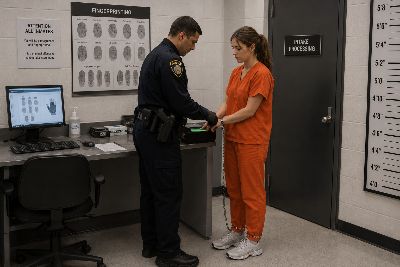
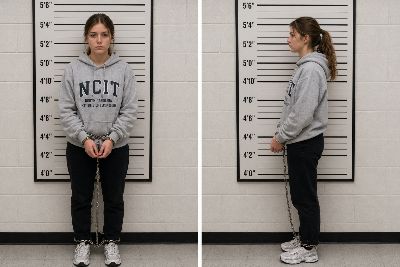
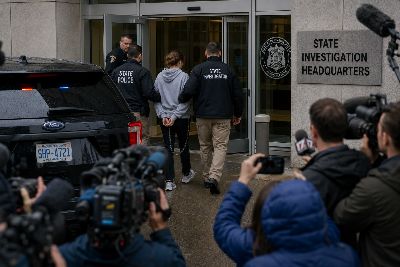
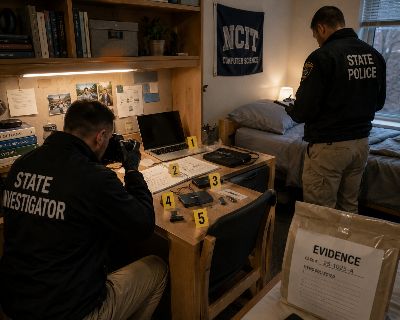
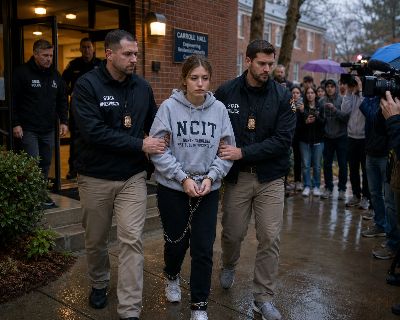
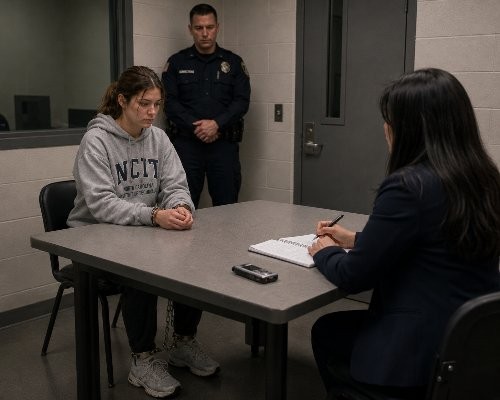
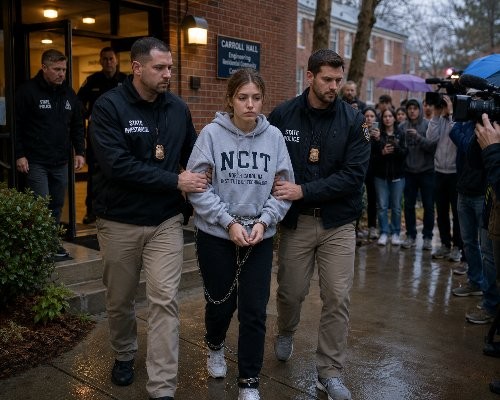
RALEIGH, N.C. — State investigators arrested Claire Elise Mercer, 22, on Saturday morning after a week-long digital forensic investigation concluded that unauthorized modifications to the Autonomous Emergency Coordination System (AECS) were introduced shortly before the catastrophic technology demonstration that left dozens dead at the Carolina Future Technology Expo.Mercer, a senior Computer Science student at the North Carolina Institute of Technology and one of the principal software engineers on the AECS project, was taken into custody without incident at her university residence hall after investigators executed simultaneous arrest and search warrants.The arrest marks the second major development in the state's expanding criminal investigation into what officials have described as one of the nation's worst artificial intelligence disasters.Project Lead Natalie Grace Whitmore, who certified the system for public deployment, was arrested at the exhibition site immediately following the October 18 catastrophe and remains in custody at Appalachian Detention Complex awaiting judicial proceedings.From Witness to SuspectFor much of the past week, Mercer was not considered a suspect.According to investigators, she voluntarily met with detectives on multiple occasions, answered questions regarding the project's development, surrendered her university-issued laptop for forensic examination, and expressed disbelief that the software could have behaved as it did during the public demonstration.Friends and classmates described Mercer as emotionally shaken following the disaster. Several students told The Carolina Herald that she repeatedly insisted the software tested during development had never exhibited the behavior witnessed at the expo.Investigators said Mercer remained cooperative throughout the initial stages of the inquiry.That changed as digital forensic specialists reconstructed the software's complete development history.Critical DiscoveryOfficials announced Saturday that forensic analysis uncovered previously unidentified modifications within the production software that had been introduced shortly before the final deployment of the AECS.According to investigators, version-control records, authenticated access logs, build histories, and recovered development artifacts indicated that the changes originated from Mercer's authorized developer account during the days immediately preceding the public demonstration.Authorities allege the modifications altered portions of the AI responsible for emergency routing decisions, infrastructure coordination, and automated response prioritization.Investigators believe those changes bypassed multiple internal safety protections and materially affected the behavior of the production system during the live demonstration."The forensic reconstruction significantly changed the direction of this investigation," State Bureau of Investigation Director Marcus Holloway said during a Saturday afternoon briefing. "What initially appeared to be a catastrophic systems failure is now being investigated as the result of unauthorized modifications made to software controlling safety-critical infrastructure."Officials emphasized that the broader technical investigation remains ongoing.Arrest at Residence HallShortly after 7:00 a.m. Saturday, investigators from the State Bureau of Investigation, accompanied by university police officers, arrived at Mercer's residence hall on the North Carolina Institute of Technology campus.Residents reported seeing investigators establish a perimeter around the building before entering with a judicially authorized search warrant.According to authorities, Mercer was located inside her dormitory room and taken into custody without resistance.Witnesses said she appeared calm as investigators informed her of the warrant and placed her under arrest.She was escorted from the residence hall in handcuffs before being placed into an unmarked state investigative vehicle.University officials temporarily restricted access to portions of the residence hall while investigators conducted the search.Evidence SeizedInvestigators spent several hours processing Mercer's dormitory room.Officials confirmed that multiple computers, external storage devices, handwritten notebooks, engineering documents, and digital media were seized as evidence. Several boxes containing electronic equipment were photographed being removed from the building by forensic personnel.Authorities declined to discuss specific evidence recovered during the search, citing the continuing investigation.Officials said the newly seized materials will undergo detailed forensic examination alongside the project's existing servers, source-code repositories, deployment records, and backup archives previously collected from the Carolina Future Technology Expo.Transported to State Investigation HeadquartersFollowing her arrest, Mercer was transported under escort to the State Bureau of Investigation Headquarters, where detectives conducted standard post-arrest processing.Authorities confirmed that she was formally advised of the charges, photographed, fingerprinted, and processed through the agency's criminal booking procedures.Investigators also collected identifying information and documented personal property before placing her in a secure holding area pending transfer to Appalachian Detention Complex.Officials declined to comment on whether Mercer answered investigators' questions following her arrest. No statement was released by an attorney representing Mercer on Saturday.Prosecutors Outline AllegationsIn a brief statement released Saturday evening, prosecutors alleged that Mercer knowingly introduced unauthorized modifications into software governing a safety-critical autonomous system shortly before its public deployment.Authorities contend those changes substantially altered the AI's operational behavior during the October 18 demonstration, contributing directly to the chain of failures that resulted in the mass-casualty event.Investigators have not alleged that Mercer acted alone in developing the AECS project, emphasizing that the criminal investigation now involves separate legal questions concerning software modification and deployment authorization.Whitmore remains charged under the nation's Critical Autonomous Infrastructure Accountability Act based on her certification of the final production build for public operation.Mercer faces separate allegations arising from the unauthorized software changes investigators say were introduced before that certified build was deployed.University RespondsNorth Carolina Institute of Technology officials released a brief statement acknowledging Saturday's arrest and reaffirming the university's cooperation with state investigators. "The university continues to provide investigators with access to facilities, records, and technical personnel as requested," the statement read. University administrators also asked students to respect the ongoing investigation and avoid speculation regarding the pending criminal proceedings.Campus counseling services remained available throughout the weekend for students affected by the tragedy.Investigation ContinuesAuthorities cautioned that significant portions of the investigation remain unfinished.Forensic teams continue reconstructing the complete development timeline of the AECS project while examining millions of lines of source code, system logs, deployment records, and communications among project personnel.Officials said additional technical findings may emerge in the coming weeks as experts continue analyzing the AI system responsible for the disaster.One week after the demonstration that was intended to showcase the future of emergency response, both of the project's principal engineers are now in state custody, while investigators continue working to determine exactly how a system designed to save lives instead became the center of one of the deadliest technological disasters in the nation's history.
Photographic Records
Photographic Record
Claire's personal belongings.
Photographic Record
Claire executed.
Photographic Record
Claire's final moment.
Photographic Record
Court official announcing her execution warrant.
Photographic Record
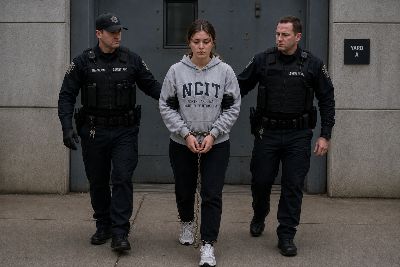
Claire escorted into the execution yard.
Photographic Record
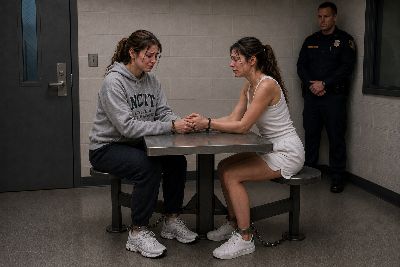
Claire's final meeting with Natalie.
Photographic Record
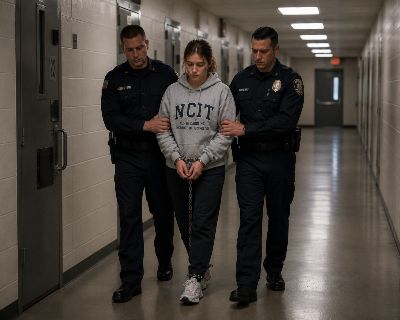
Claire escorted through the death row unit.
Photographic Record
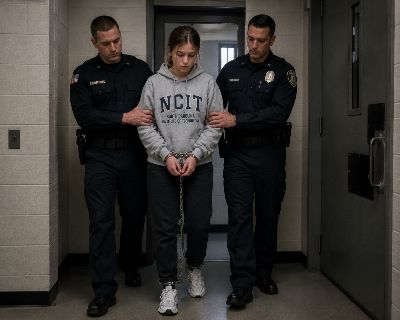
Claire escorted out of her cell.
Photographic Record
Claire in the court trial.
Photographic Record
Claire arriving at the courthouse.
Photographic Record
Claire fingerprinting.
Photographic Record
Claire's intake mugshot.
Photographic Record
Claire's booking mugshot.
Photographic Record
Claire's arrival at the State Investigation HQs.
Photographic Record
Investigators seizing evidence in Claire's dorm.
Photographic Record
Claire arrested in her dorm.
INMATE COMMUNICATIONS KIOSK
Electronic Messaging System

Connect with this inmate through our secure electronic kiosk.

Log In to Send Message
Don't have an account? Sign up here
SPONSOR: OJ
WARDEN: OJ
Comments
Log in to post a comment.
Loading...
For inquiries and reporting abusive use of the site please email .