NEWS / STORIES

Browse news articles, published reports, press releases, and stories.

Article Thumbnail
Sarah Mitchell Speaks for the Final Time Before Execution
Aug 02, 2026
• By: El Paso Daily
• Re: MITCHELL, SARAH
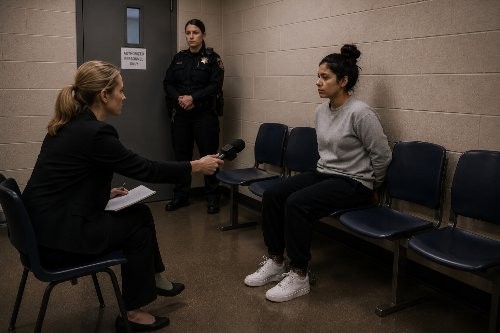
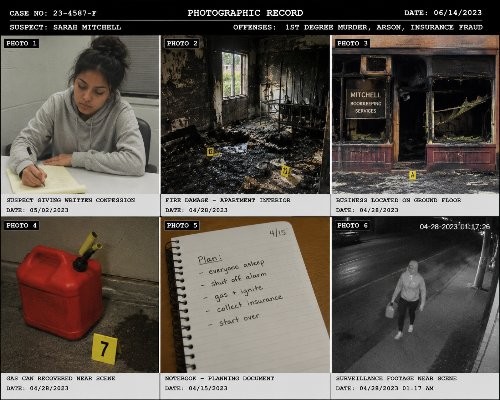
Less than half an hour before prison officials escorted Sarah Mitchell from a waiting room to the execution chamber, she sat quietly across from a reporter, her hands cuffed behind her back. Dressed in a plain athletic personal clothing and speaking in a measured voice, the 21-year-old answered questions for just under 30 minutes.The interview marked her final public remarks.Mitchell pleaded guilty to six counts of first-degree murder after intentionally setting a fire at a residential apartment building in an attempt to collect insurance proceeds connected to her ground-floor business. Prosecutors said the blaze spread rapidly through the building, killing six residents and injuring thirteen others. Surveillance footage, financial records, and Mitchell's own confession established that the fire had been deliberately planned. The court imposed the death sentence, citing the multiple fatalities and financial motive.Throughout the interview, Mitchell did not dispute the facts of her conviction or attempt to minimize her responsibility.Asked what occupied her thoughts in her final hours, she paused before answering."Mostly the people whose lives I changed forever. There isn't a day that goes by that I don't think about them."When asked whether fear or regret weighed more heavily, Mitchell reflected for several seconds."Fear is something every person understands. But regret lasts longer. Fear is about what's happening to me. Regret is about what happened to everyone else."She repeatedly emphasized that no statement could undo the consequences of her actions."I know there are no words that can repair what I destroyed. I don't expect forgiveness. I don't expect anyone to feel sorry for me."The conversation then shifted away from the case itself.Mitchell described prison life as unexpectedly structured."When you're stripped of almost every choice, you learn to value the small routines. Reading. Exercise. Prayer. Letters. Those became the things that kept me grounded."She said correspondence from strangers had reminded her that people were capable of compassion even toward someone convicted of terrible crimes."People wrote to me without excusing what I did. That meant more than they probably realized."Asked what she would say to young people facing financial pressure or personal setbacks, Mitchell answered without hesitation."Ask for help before you convince yourself you're out of options. Pride and desperation are dangerous together."She also cautioned against believing that one irreversible decision could solve a difficult situation."Problems don't disappear because you make a worse choice. They just become tragedies."During the interview, Mitchell occasionally looked down at the floor before answering difficult questions. Her voice remained steady, though she paused several times to gather her thoughts. She did not raise her voice or become emotional, but moments of silence punctuated several exchanges.When asked how she hoped victims' families would remember her, she shook her head slightly."I don't think they should remember me. They should remember the people they lost."Toward the end of the interview, Mitchell was asked whether she had any final message for the public."Value ordinary days. Tell the people you love that you love them. And don't convince yourself that one terrible decision is worth the price someone else might pay."The interview concluded after a correctional officer informed Mitchell that it was time to prepare for the next stage of the scheduled process.She stood, thanked the reporter for speaking with her, and quietly said, "I hope something good can come from people learning what not to do."Mitchell was then escorted from the room by correctional staff.For the families of the six people who died, the day remained focused not on Mitchell's final words, but on the lives that were lost. Several relatives issued written statements remembering parents, neighbors, and two young children whose futures ended in the fire, urging the public to keep the victims—not the perpetrator—at the center of remembrance.
Article Thumbnail
Halloway Denies Murder Charge as Old Bailey Sets Trial Schedule
Oct 10, 2022
• By: BigWill550
• Re: HALLOWAY, BEATRICE
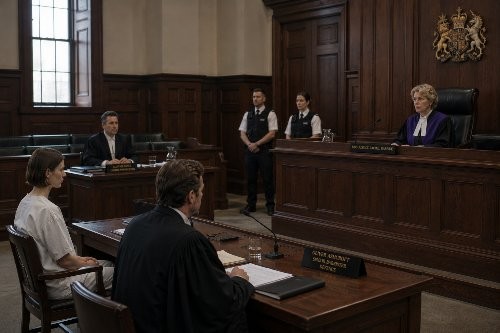
LONDON — Defendant Beatrice Halloway formally entered a plea of Not Guilty to a charge of murder during a Plea and Trial Preparation Hearing held Thursday at the Central Criminal Court, commonly known as the Old Bailey. The hearing, presided over by Mrs. Justice Rachel Garside, lasted approximately forty-five minutes and primarily addressed procedural matters ahead of the forthcoming trial.Ms. Halloway appeared before the court under escort and confirmed her identity before entering her plea in a clear voice. Members of the victim's family were present in the public gallery throughout the proceedings, while representatives of several media organizations attended due to the high-profile nature of the case.Senior Barrister Oliver Ashcroft, representing Ms. Halloway, informed the court that the defense would rely upon a claim of self-defense and indicated that expert witnesses and forensic evidence would be presented during the trial. Mr. Ashcroft stated that the defense remained confident the evidence would demonstrate his client acted only to preserve her own life during the fatal confrontation with James Glover.Leading the prosecution, Crown Prosecutor Alistair Vance told the court that the Crown intended to call numerous witnesses, including forensic specialists and investigating officers involved in the homicide inquiry. Mr. Vance argued that the prosecution's evidence would establish that the defendant intentionally killed Mr. Glover and that her actions could not be justified as lawful self-defense.Mrs. Justice Garside reminded both legal teams of their continuing disclosure obligations and directed that any outstanding evidential issues be resolved well before the commencement of trial. The court also confirmed an estimated trial length of approximately four weeks, with jury selection expected to begin later this year.No evidence relating to the alleged offence was presented during Thursday's hearing, as Plea and Trial Preparation Hearings are intended to address case management rather than determine guilt or innocence. The judge cautioned those present that the defendant remains presumed innocent unless and until proven guilty beyond reasonable doubt.Outside the courthouse, neither Ms. Halloway nor members of her legal team offered further comment beyond previous statements maintaining her innocence. Prosecutors likewise declined to discuss the substance of the evidence, citing the ongoing judicial process.Ms. Halloway was remanded into custody pending trial and is expected to appear before the court again for any necessary pre-trial hearings before proceedings commence.
Article Thumbnail
Inside TC Midgar Detention Complex: Sarah Mitchell's Final Day
Aug 01, 2026
• By: El Paso Exclusive Documentary Feature
• Re: MITCHELL, SARAH
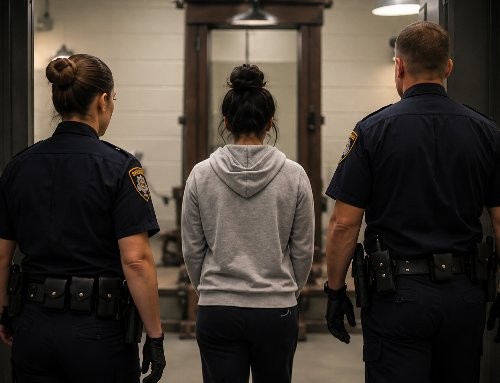
TC Midgar Detention Complex — Long before sunrise, the detention complex had already settled into an unusually quiet rhythm. Security posts were staffed, administrative paperwork had been prepared overnight, and officers assigned to the day's proceedings followed a timetable planned down to the minute. While the prison continued operating as it did every other morning, those directly involved understood that this day would conclude one of the detention complex's longest and most closely watched capital cases.Sarah Mitchell, convicted after pleading guilty to six counts of first-degree murder in the deliberate apartment fire that claimed six lives and injured thirteen others, would spend the day moving through a series of carefully prescribed procedures before the court's sentence was carried out.Our newspaper was granted rare access to document much of the day before media access ended at the secure execution area.The Official NoticeShortly after dawn, correctional officers entered Sarah Mitchell's housing unit to deliver the formal execution warrant.The warrant, read aloud in accordance with institutional policy, officially notified her that the court's sentence would be carried out later that day. Sarah listened quietly throughout the reading, responding only when asked to acknowledge receipt of the order.A court representative later returned to complete the remaining legal documentation associated with the warrant. Officials described the process as routine and identical to that followed in every capital case.Once the paperwork had been completed, officers informed Sarah that she would be given time to prepare before leaving the housing unit.Leaving the CellUnlike previous movements within the prison, this departure would be permanent.Institutional policy allowed Sarah to change from her prison-issued clothing into approved personal attire. She folded her institutional uniform neatly before dressing in a gray sweatshirt, black athletic pants, and white sneakers that had previously been authorized by correctional staff.Escorted by correctional officers, she walked through the same corridors she had traveled during years of incarceration.The route itself was familiar. The significance of the journey was not.Each security door closed behind the escort team, marking another point from which there would be no return.Medical ProceduresBefore any further proceedings, prison policy required a final medical examination.Medical personnel conducted routine assessments, documented vital signs, and completed the medical records required before the court's order could proceed.As part of the examination, medical staff administered an anti-anxiety medication that had been authorized under institutional protocol. Officials described the medication as a routine measure intended to reduce acute distress while allowing the remaining legal procedures to continue normally.Prison officials emphasized that the examination was procedural rather than discretionary and formed part of the institution's standard protocol.Final Meal, Family Visit and Spiritual CounselLater that morning, correctional staff presented Sarah with the customary final meal. The tray remained untouched. Officials declined to comment on whether any reason had been given.After that, Sarah met privately with members of her immediate family under correctional supervision. Neither prison officials nor family members disclosed what was said during the meeting.She later spent additional time with a spiritual advisor.According to officials, both meetings concluded quietly.Waiting Outside the Secure AreaThe final waiting room sits immediately outside the secured execution chamber.Separated from the execution area by heavy security doors, it serves as the final location where inmates meet attorneys, clergy, and—on rare occasions—the press.Sarah waited there while correctional staff completed the final administrative preparations beyond the secured entrance.During this period, our newspaper was granted exclusive access for a brief interview lasting less than thirty minutes. Speaking calmly and without raising her voice, Sarah acknowledged responsibility for her crimes and repeatedly returned to the victims rather than herself. "I know nothing I say can undo what happened," she said. "I hope people remember the people whose lives were taken—not me." Asked what occupied her thoughts during her final hours, she answered after a long pause. "I've spent a lot of time thinking about choices. One terrible decision can change hundreds of lives forever." She also reflected on prison life, describing how routine, reading, exercise, prayer and letters from strangers had become sources of stability during her incarceration.When the interview concluded, a correctional officer entered the room and quietly informed her that preparations had been completed.Sarah thanked those present, stood from her chair, and followed the escort team toward the secured corridor without further comment.Sentence Carried OutCorrectional officers escorted Sarah through the final security door, silencing the corridor behind them. In the center of the chamber stood a massive guillotine, its executioners poised and ready.Unconsciously, Sarah walked towards the guillotine guided by the executioners, her gaze fixed on the towering device. Taking a deep breath, she began to lie down on the guillotine, seemingly accepting her fate. Despite her attempts to remain calm, anxiety and fear of her impending death still etched themselves onto her face. With the help of the executioners, she was placed and restrained on the guillotine, awaiting the final drop of the sharp blade.Beyond that point, media access was strictly prohibited in accordance with institutional policy, and the remaining procedures were conducted in secrecy. As the guillotine blade fell, Sarah’s short life came to an end. The prison officer then emerged from the execution chamber to confirm that the court’s execution order had been carried out and that her death was officially recorded.Witnesses Observe Through the Viewing RoomBeyond the secure doors, the execution itself was witnessed only by those authorized under institutional policy. A separate witness room, divided from the execution chamber by a large observation window, accommodated a limited number of approved observers.Present were several members of Sarah Mitchell's immediate family, representatives of the victims' families, designated prison officials, legal representatives, medical personnel assigned to the proceedings, a spiritual advisor, and a small pool of credentialed journalists selected under the detention complex's media policy.The room remained largely silent throughout the proceedings. Prison officials instructed all witnesses beforehand on the rules governing the observation, including prohibitions on photography, recording devices, and verbal interruptions.Although observers could see into the execution chamber, communication between the two rooms was not permitted once the proceedings began. Prison officials later confirmed that the court's sentence had been carried out in accordance with the execution warrant.After the AnnouncementSeveral witnesses remained seated for a few moments after the official declaration before quietly leaving the observation room. Some embraced family members, while others stood silently as correctional staff directed everyone toward the secured exit.For Sarah Mitchell's relatives, the conclusion of the proceedings marked the end of more than three years of court hearings, appeals, and prison visits. Family members comforted one another outside the witness area before completing the administrative process required to receive her personal effects and, later, claim her remains.After the ProceedingsAlthough public attention often focuses on the moments leading up to an execution, institutional work continued long after witnesses departed.Medical personnel completed the required examinations and documentation while correctional officers carried out routine post-procedure responsibilities. As part of those procedures, restraints used during the final escort were removed, records were finalized, and staff prepared the deceased for transfer in accordance with institutional policy.Sarah's body, respectfully covered with a white sheet, was then placed on a stretcher and transported from the secure area by correctional personnel.Separate administrative procedures followed to inventory and package Sarah's approved clothing, footwear, and personal belongings before they were released to her family, consistent with institutional requirements.Later that day, family members completed the formal process required to claim her remains.Prison officials offered no further public comment beyond confirming that the court's judgment had been carried out.The Institution Moves ForwardBy evening, TC Midgar Detention Complex had largely returned to its ordinary routine. Officers changed shifts. Housing units resumed scheduled activities. Meals were served, doors continued opening and closing on schedule, and administrative offices completed another day's paperwork.Inside the prison, the day's extraordinary procedures gave way to familiar routines.Outside its walls, however, the case reached a different conclusion.For the families of the six people who lost their lives in the apartment fire, the day marked the legal end of a tragedy that had begun years earlier. While Sarah Mitchell's final hours became the subject of public attention, relatives continued to remember not the proceedings inside the detention complex, but the loved ones whose lives were lost and whose absence would remain long after the headlines faded.Tomorrow: Exclusive Last InterviewSarah Mitchell Speaks for the Final Time Before ExecutionTomorrow's edition will include Mitchell's exclusive last interview with this newspaper.
Article Thumbnail
Jury Recommends Death for Double-Murder Defendant After Swift Deliberations
Aug 01, 2026
• By: aelectricstars
• Re: HARRIS, SHANIA
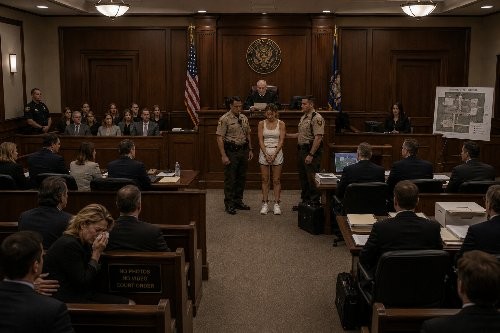
ORLANDO, Fla. — In a dramatic conclusion to a closely watched capital murder trial, a judge sentenced Shania Harris, 39, to death by electrocution after a jury deliberated for less than an hour before returning guilty verdicts on two counts of first-degree murder.Prosecutors argued that Harris carried out the fatal shootings after breaking into the apartment of her former boyfriend and confronting him and his new girlfriend. The state alleged that she shot both victims at close range before taking approximately $800 in cash and fleeing the scene. Investigators arrested Harris three days later after multiple eyewitnesses identified her as the person seen leaving the apartment shortly after the gunfire.Throughout the proceedings, courtroom observers noted Harris's combative demeanor. Prosecutors said she showed no visible emotion while testimony from family members, investigators, and forensic experts was presented. Several jurors reportedly maintained their focus on the evidence as graphic photographs and witness accounts detailed the crime.The defense faced repeated challenges during the trial. According to courtroom testimony, Harris frequently rejected legal advice, interrupted proceedings, and argued with members of her own defense team, complicating their efforts to present mitigating evidence during the penalty phase.After hearing closing arguments, the jury retired to deliberate. Less than one hour later, jurors returned with guilty verdicts on all major counts and recommended a sentence of death.During sentencing, the judge described the murders as deliberate, calculated, and carried out with exceptional disregard for human life."The evidence demonstrates a planned act of violence that claimed two lives and left two families permanently devastated," the judge said before imposing the sentence.As the sentence was announced, Harris remained expressionless. Before deputies escorted her from the courtroom, she turned toward the jury box and defiantly declared:"You're going to pay for what you did to me."The remark drew audible reactions from spectators before court security quickly removed Harris from the courtroom.She was subsequently transferred to the state's death row facility to await the outcome of the automatic appeals required in capital cases.
Article Thumbnail
Orlando Woman Sentenced to 47 Years for String of Armed Robberies
Jul 31, 2026
• By: aelectricstars
• Re: SCHMIDT, TIERRA
ORLANDO, Fla. — A judge sentenced 37-year-old Tierra Schmidt to 47 years in state prison on Friday after a jury found her guilty of committing a series of armed robberies targeting two Orlando-area liquor stores and a neighborhood gas station.The sentence concludes a case that prosecutors described as a calculated crime spree that left employees fearing for their lives, even though no one was physically injured during the robberies.Circuit Judge Maria Alvarez imposed consecutive prison terms after citing the violent nature of the offenses and Schmidt's repeated decision to arm herself while committing the crimes."This court cannot overlook the terror inflicted upon innocent workers simply trying to earn a living," Alvarez said before handing down the sentence. "Each of these robberies was a conscious decision to threaten others with deadly force."According to investigators, Schmidt entered each business shortly before closing, displayed a handgun, and demanded cash, cigarettes, and lottery tickets before fleeing. Detectives eventually connected the robberies through surveillance footage, witness descriptions, and evidence recovered during a search of Schmidt's residence.Officers said the search uncovered the firearm believed to have been used during the robberies, along with cash and merchandise linked to the crimes.When the judge announced the total sentence of 47 years, Schmidt's composure quickly unraveled.Witnesses in the courtroom said she lowered her head into her hands before breaking into tears as deputies prepared to escort her from the courtroom. She repeatedly shook her head and appeared visibly frustrated while speaking quietly with her defense attorney.Despite the emotional display, those familiar with the proceedings said Schmidt never expressed genuine remorse for the victims during sentencing.Instead, prosecutors argued that her reaction reflected anger over the length of the sentence rather than regret for the crimes themselves. Throughout the trial, Schmidt maintained that investigators had exaggerated her role and insisted she had been treated unfairly by the justice system.Assistant State Attorney David Reynolds told reporters outside the courthouse that the sentence sends an important message."These businesses and their employees will carry the emotional impact of these robberies for years," Reynolds said. "Today's sentence reflects the seriousness of using a firearm to intimidate innocent people for personal gain."Several victims addressed the court before sentencing, describing lingering anxiety, panic attacks, and difficulty returning to work after having guns pointed at them during the robberies.Schmidt will receive credit for time already served in the Orange County Jail while awaiting trial. Barring any successful appeals or future sentence modifications, she is expected to spend decades in the custody of the Florida Department of Corrections.
Article Thumbnail
State Carries Out Sentence in Sarah Mitchell Case
Jul 31, 2026
• By: El Paso Daily
• Re: MITCHELL, SARAH
TC Midgar Detention Complex — State correctional officials confirmed today that the court-ordered sentence imposed on Sarah Mitchell was carried out at TC Midgar Detention Complex.According to an official statement, institutional procedures began earlier in the day and concluded in accordance with the execution warrant issued by the court. Authorized witnesses were present in the designated observation area, while media access remained restricted under prison regulations.Following the completion of the proceedings, prison officials formally certified Mitchell’s death and notified her next of kin. Her personal belongings were subsequently inventoried for release to her family in accordance with institutional policy.Outside the detention complex, officials provided a brief statement confirming that the sentence had been completed.The case, which began with the 2023 apartment fire and concluded with the completion of the sentence, marked the end of years of investigation, court proceedings, and appeals.Tomorrow: Exclusive ReportInside TC Midgar Detention Complex: Sarah Mitchell's Final DayTomorrow's edition will include an extensive exclusive report documenting Mitchell's final morning, including her exclusive last interview with this newspaper, the final visit with her family, and a detailed account of the execution procedures, along with photographs and reporting from inside TC Midgar Detention Complex.
Pre-Trial Preperation Hearing has date set in Murder Case
Sep 26, 2022
• By: BigWill550
• Re: HALLOWAY, BEATRICE
Northridge, Greater London - The Plea and Trial Preparation Hearing regarding the homicide investigation of defendant Beatrice Halloway has been set for the 10th of October, 2022, according to court documents released by the Central Criminal Court in London. Central Criminal Court, commonly referred to as “The Old Bailey” has resided in its current building since the early 20th century and serves as one of the three Senior Courts of England and Wales. Ms. Halloway is currently awaiting trial on suspicion of murdering one James Glover of Northridge. The investigation into Mr. Glover’s murder revealed Ms. Halloway was “employed by Mr. Glover as an unofficial book keeper or “cleaner” for Mr. Glover’s illegal gambling ring. Ms. Halloway’s Senior Barrister, Oliver Ashcroft of Blackwood, Mercer & Vale Solicitor’s LLP expressed confidence that their client acted in self-defense, saying that while Ms. Halloway deeply regrets the circumstances that led to Mr. Glover’s death, her actions were entirely appropriate given the circumstances of the altercation that lead to his death. When pressed for further details regarding the circumstances, Mr. Ashcroft gave no further detail, saying only that “All will be revealed in the court of law and justice” and that “Ms. Halloway is completely innocent of this crime”. The offices of Blackwood, Mercer & Vale Solicitor’s LLP could not be reached for further comment. Mrs. Justice Rachel Garside will be presiding over the trial, while Crown Prosecutor Mr. Alistair Vance will be leading the prosecution’s team. When asked for comment regarding the strength of evidence against Ms. Halloway, Mr. Vance said “He can’t divulge specifics which may affect the trial” he assured that he had “Incontrovertible” evidence Ms. Halloway indeed murdered Mr. Glover, and will be seeking the death penalty. “Ms. Halloway is a cold, heartless and brutal killer that showed no mercy to Mr. Glover and shall be shown no mercy by the court and shall meet the noose soon enough.” Mr. Vance gave no further comment. 
Article Thumbnail
Defense Files Multiple Appeals, Claims Trial Was Tainted by Media Coverage and Misleading Evidence
Jul 29, 2026
• By: Amanda Pierce
• Re: MERCER, REBECCA
ROCKVILLE, August 3, 2026 — With just days remaining before Rebecca Ann Mercer's scheduled execution, her defense team has launched a series of emergency appeals in both state and federal courts in an effort to halt the sentence and secure a new review of her case.Mercer, 46, is currently housed on Death Row at Rockville Penitentiary and is scheduled to be executed by electric chair at 7:00 a.m. on August 11th, barring intervention by the courts or executive clemency.Her attorney, Judith Halloway, said the legal team has worked around the clock preparing motions that argue Mercer was denied a fair trial due to extensive pretrial publicity and what they describe as unreliable evidence presented during the prosecution."We are not asking the courts to ignore the seriousness of this case," Halloway said during a press conference Tuesday afternoon. "We are asking them to ensure that every constitutional safeguard was honored. Our position is that Rebecca Mercer did not receive the fundamentally fair trial guaranteed under the law."Among the filings submitted this week are petitions seeking a stay of execution while appellate judges review claims involving jury impartiality, evidentiary rulings, and alleged prosecutorial misconduct.According to Halloway, the defense believes several pieces of forensic testimony introduced during trial may have overstated their scientific certainty, potentially influencing jurors."Much of the evidence presented to the jury was, in our opinion, misleading and lacked the level of reliability that a capital case demands," Halloway said. "When someone's life is at stake, every piece of evidence must withstand the highest level of scrutiny."The defense also argues that months of intense media attention surrounding Mercer's arrest and trial created an atmosphere that made it difficult to seat an impartial jury."The public narrative surrounding Ms. Mercer had largely been written before opening statements ever began," Halloway said. "We believe the relentless media coverage substantially prejudiced the proceedings and deprived her of an objective hearing before a jury of her peers."State prosecutors have rejected those arguments, maintaining that Mercer received a fair trial and that her conviction and sentence have already undergone extensive judicial review. They contend the evidence presented at trial was lawfully admitted and that previous appeals have consistently upheld the verdict.Officials at Rockville Penitentiary have continued preparations consistent with departmental policy while legal proceedings remain active. Correctional administrators confirmed that Mercer remains housed in a secure unit where inmates scheduled for execution are monitored closely during the final stages of the appellate process.Should no court issue a stay, Mercer will be moved under standard execution protocols during the early morning hours of August 8. Prison officials have not released additional details regarding those procedures, citing security policy.Despite the approaching deadline, Halloway said her team remains committed to exhausting every available legal avenue."As long as there is a courtroom willing to hear our arguments, we will continue fighting," she said. "The justice system provides these safeguards for a reason, and we intend to pursue every one of them."Multiple motions remain pending before appellate courts, and legal observers expect decisions could come within days—or even hours—of the scheduled execution date. Until then, Mercer's fate remains in the hands of the courts as the final phase of her legal battle unfolds.
Article Thumbnail
Inmate Transferred to Rockville Penitentiary Following Vehicular Manslaughter Conviction
Jul 29, 2026
• By: Sarah Whitmore
• Re: HAMILTON, OLIVIA
JACKSONVILLE, July 30, 2026 — Olivia Hamilton, 22, was transferred Tuesday morning from the Pulaski County Detention Center to Rockville Penitentiary after a jury found her guilty of vehicular manslaughter in connection with a fatal crash caused by impaired driving.Hamilton had remained in the county jail for several months while awaiting trial. Following a week-long proceeding, jurors returned a guilty verdict after deliberating for just under four hours. During sentencing, the judge ordered Hamilton committed to the custody of the Illinois Department of Corrections to begin serving her prison sentence.Shortly after 6:00 a.m. Tuesday, correctional officers escorted Hamilton from her county jail housing unit in handcuffs and transported her aboard a secure prison transfer vehicle. She arrived at Rockville Penitentiary later that morning under standard intake procedures.Upon arrival, Hamilton was processed through the institution's reception center, where correctional staff verified her identity, inventoried and stored her personal belongings, completed medical and mental health screenings, recorded fingerprints and photographs, and issued institutional clothing and identification. She also underwent a security classification review to determine appropriate housing.Following the assessment, prison officials assigned Hamilton to A Wing, the facility's minimum-security housing unit.According to correctional officials, inmates housed in A Wing typically reside in shared cells and follow a highly structured daily routine. Each day begins with an early morning count before breakfast, followed by assigned work details, educational opportunities, vocational training, or other approved institutional programming.The unit houses inmates considered lower security risks and maintains close supervision while allowing greater access to rehabilitation services than higher-security housing areas. Movement throughout the institution is carefully scheduled, and inmates must comply with strict rules governing conduct, visitation, correspondence, and daily activities.Hamilton will also undergo an orientation period during her first several weeks at Rockville, during which staff will explain institutional rules, available programs, disciplinary procedures, and expectations for inmate behavior.Prison officials emphasized that all newly admitted inmates are monitored closely during the adjustment period as they acclimate to life inside the correctional facility.Hamilton is expected to remain in A Wing unless her custody classification changes due to disciplinary issues, participation in specialized programming, or other administrative decisions.The fatal crash that led to Hamilton's conviction occurred after prosecutors argued she chose to operate a vehicle while intoxicated, resulting in a collision that claimed the life of another motorist. During sentencing, the court stated that the punishment reflected both the seriousness of the offense and the irreversible consequences of impaired driving.Hamilton is expected to begin serving her sentence immediately under the supervision of the Illinois Department of Corrections. Under state law, any future release will be determined according to applicable sentencing statutes and institutional policies.
Article Thumbnail
BREAKING: International Student Sentenced to Death in One-Day Drug Trial
Dec 18, 2025
• By: Detroit Free Press
• Re: LIN, XINYI
LANSING, Mich. — A 19-year-old Chinese international college student was sentenced to death Thursday after a one-day trial that concluded with guilty verdicts on three narcotics-related charges, bringing an end to one of the nation's most closely watched criminal cases of the year.The defendant, Xinyi Lin, a freshman Electrical and Computer Engineering student at Northern Lake University, was convicted in Michigan State Courthouse after prosecutors argued that she knowingly transported a large quantity of controlled narcotics through Detroit Metropolitan Airport in May. Defense attorneys maintained throughout the proceedings that the suitcase containing the drugs had been taken by mistake from an airport shuttle moments before she entered the terminal.Under the nation's strict anti-narcotics laws, cases involving large-scale trafficking are subject to expedited judicial proceedings. Thursday's trial was completed in a single day, from jury selection to sentencing.The court imposed the death penalty for the principal trafficking conviction, along with a life sentence without parole and a consecutive 25-year prison term on related charges. No execution date was announced.A Quiet Student at the Center of a National CaseOnly seven months earlier, Xinyi had been preparing to return home to Hangzhou, China, after completing her first year of college.Born on March 18, 2006, she was the only child of a middle-class family. Her father worked as an electrical engineer, while her mother taught mathematics at a public high school. Friends and professors described her as a reserved but diligent student whose life revolved around engineering coursework, laboratory projects, and preparing for examinations. University officials confirmed that she maintained solid academic standing during her freshman year and had no disciplinary record. Court filings indicated she had no previous criminal history.Everything changed on May 17, 2025, one day after finishing final examinations.According to investigators, Xinyi boarded an airport shuttle from her college town to Detroit Metropolitan Airport for a flight back to China. The defense argued she accidentally collected another passenger's nearly identical black carry-on suitcase after unloading luggage from the shuttle.Airport security officers later selected the suitcase for secondary inspection after X-ray screening revealed suspicious contents. Inside were numerous tightly wrapped brick-shaped packages later confirmed to contain a large quantity of illegal narcotics.Although Xinyi immediately insisted the suitcase was not hers, investigators arrested her at the airport. Prosecutors later charged her under the nation's anti-narcotics statutes, arguing that possession of the luggage while attempting international travel satisfied the legal requirements for trafficking and attempted smuggling offenses.The unusual circumstances surrounding the arrest, coupled with the severity of the potential punishment, quickly transformed the case into headline news across the country.Heavy Security at the CourthouseLong before sunrise Thursday, television satellite trucks lined streets surrounding the Michigan State Courthouse.Police erected security barriers around the building, while courthouse deputies screened everyone entering the complex. National media organizations occupied nearly every seat reserved for reporters inside the courtroom.Several students from Northern Lake University traveled to Lansing to observe the proceedings. Members of the local Chinese community also gathered quietly outside the courthouse throughout the day.At approximately 8:15 a.m., a white transport vehicle stopped in front of the courthouse. Moments later, Xinyi emerged wearing an orange detention uniform and restraints, escorted by court officers and accompanied by her attorney.She briefly turned toward photographers gathered beyond the security perimeter but made no statement before disappearing into the courthouse. As deputies led her inside, she briefly tightened her clasped hands before relaxing them again. Aside from that moment, she walked steadily and kept her eyes forward.Prosecutors Present Their CaseProceedings began shortly after 9:00 a.m.In opening statements, prosecutors told jurors the evidence would establish every element necessary for conviction. "This case is about the transportation of an extraordinary quantity of controlled narcotics across an international gateway," the lead prosecutor told the court. "The physical evidence speaks for itself."Over the next several hours, jurors heard testimony from airport police officers, Transportation Security Administration personnel, customs investigators, forensic chemists, and narcotics specialists. Surveillance footage showed passengers unloading luggage from the airport shuttle before entering the terminal. Additional video captured Xinyi proceeding toward the security checkpoint with the black suitcase. Investigators testified that screening equipment detected dense, suspicious objects inside the luggage, prompting officers to conduct a manual inspection. "When the suitcase was opened, officers immediately located numerous tightly wrapped packages concealed beneath clothing and personal effects," one investigator testified. A narcotics detection canine alerted positively to the suitcase, while preliminary field tests indicated controlled narcotics. Laboratory scientists later confirmed the substances and testified that the total quantity exceeded statutory thresholds for aggravated trafficking offenses.Jurors also reviewed forensic laboratory reports, photographs taken during the seizure, chain-of-custody documentation, and travel records.Defense Argues Luggage Was Taken by MistakeDefense attorneys did not dispute that narcotics had been found inside the suitcase. Instead, they argued that the government failed to prove Xinyi knowingly possessed the drugs.According to the defense, the suitcase closely resembled Xinyi's own luggage, and the exchange occurred inadvertently while passengers collected bags from the airport shuttle. Her attorneys pointed to her academic record, lack of criminal history, and immediate insistence that the luggage was not hers. "This is not the profile of an international drug trafficker," defense counsel argued. "She was a freshman engineering student returning home after final exams." The defense also noted that investigators uncovered no evidence linking Xinyi to organized narcotics networks before her arrest.While her attorneys spoke, Xinyi remained seated with her gaze fixed on the defense table. She occasionally pressed her lips together and swallowed before looking back toward the witness stand.Guilty on All CountsFollowing closing arguments shortly after 2:30 p.m., jurors deliberated for less than two hours.When proceedings resumed late in the afternoon, the courtroom fell silent as the foreperson handed the verdict forms to the clerk.The clerk then read each decision aloud:Count 1 — Drug Trafficking: Guilty.Count 2 — Attempted International Smuggling of Controlled Narcotics: Guilty.Count 3 — Possession of Controlled Narcotics with Intent to Distribute: Guilty.Xinyi remained standing beside her attorneys throughout the reading of the verdicts. As the clerk announced each guilty finding, she showed little visible emotion, keeping her eyes on the bench and her posture steady. Court observers noticed her blink repeatedly after the first guilty verdict and take a slow breath before the remaining counts were read. Her fingers briefly tightened around one another before relaxing again. She did not speak or visibly protest as the clerk completed the reading of all four counts.Sentence Delivered Minutes LaterBecause national law permits immediate sentencing in major narcotics prosecutions, the court proceeded directly into the penalty phase.The courtroom grew noticeably quieter as the judge began reading the sentence. Xinyi stood silently beside the defense table, her expression composed. As the judge announced the death penalty for the lead trafficking conviction, she briefly closed her eyes and exhaled before looking back toward the bench. Although her face remained calm, she swallowed once and tightened her jaw as the remaining sentences were read.In announcing the sentence, the judge stated that while the court had considered Xinyi's age, educational background, and absence of previous convictions, the governing statutes prescribed mandatory punishment for offenses of this magnitude."The Court is bound to apply the law enacted by the legislature," the judge said before pronouncing sentence. The court imposed:Drug Trafficking: Death Penalty by Decapitation.Attempted International Smuggling of Controlled Narcotics: Life Imprisonment without the Possibility of Parole.Possession of Controlled Narcotics with Intent to Distribute: 25 years' imprisonment, consecutive.The court ruled that the additional custodial sentences would merge into the capital sentence unless modified through the appellate process.No execution date was scheduled.Asked whether she understood the judgment, Xinyi answered softly that she did. Her voice was barely audible inside the silent courtroom. She then nodded once toward her attorneys before lowering her gaze for several seconds as court officers approached.A Quiet DepartureShortly before 5:00 p.m., court officers secured her restraints and escorted her through a secured corridor leading to the courthouse's underground transport garage.Outside, camera shutters clicked continuously as the corrections vehicle departed under police escort.She remained silent to reporters. As she walked between two corrections officers, her head was lowered, and her eyes were fixed downward. Photographers captured the final images of the day through the courthouse security perimeter. Upon approaching the waiting transport vehicle, she paused momentarily while stepping inside and took a final slow breath before the door closed behind her.In a brief statement outside the courthouse, prosecutors said the verdict reflected the nation's "zero-tolerance approach toward large-scale narcotics trafficking." Defense attorneys said they would pursue every appeal permitted under law, maintaining that the evidence supported the possibility of a mistaken luggage exchange and arguing that the conviction raised serious questions about criminal responsibility under the country's strict drug statutes.As evening fell over downtown Lansing, the courthouse gradually emptied. The television crews packed away their equipment, police barriers were removed, and the corrections vehicle carrying the 19-year-old freshman departed for the detention facility, where she will remain on death row pending mandatory appellate review—bringing to a close a trial that lasted only one day, but a case that had captured national attention for months.
Article Thumbnail
Judge Sentences Emily Carter to Death in Riverside High School Mass Murder Case
Sep 29, 2025
• By: Nashville Times
• Re: CARTER, EMILY
NASHVILLE, Tenn. — After nearly six months of investigation and a three-week capital trial that gripped the nation, Emily Carter, the 18-year-old former Riverside High School honor student accused of orchestrating one of the country's deadliest school attacks, was formally sentenced to death Monday afternoon in a packed Davidson County courtroom.The sentence followed a unanimous jury verdict finding Carter guilty on five counts of first-degree murder, three counts of attempted murder, terrorism resulting in multiple deaths, criminal conspiracy, and possession of illegal explosive devices.Throughout the proceedings, Carter never admitted responsibility for the attack. She maintained the same position she had held since her arrest in March, insisting that she neither planned nor carried out the killings and that investigators had misunderstood the evidence against her.As Judge Rebecca Lawson pronounced sentence shortly after 3:00 p.m., the courtroom remained almost completely silent.Before Dawn at Appalachian Detention ComplexSeveral hours before the hearing began, correctional officers prepared Carter for transport at the Appalachian Detention Complex. According to prison officials, officers conducted routine security procedures, checking her handcuffs, waist restraints, and leg irons before escorting her to a transport vehicle for the trip to Nashville. Officials described the transfer as uneventful.Transport to CourtEscorted by correctional officers, Carter was transported under heavy security from the state prison to the Davidson County Courthouse. Seated between two correctional officers inside the transport vehicle, she remained silent during the trip. Authorities temporarily closed portions of the courthouse's secure sally port before the vehicle arrived shortly before 8:30 a.m.A Quiet Courtroom Awaits the Final JudgmentLong before the hearing began, hundreds of people gathered outside the Davidson County Courthouse. Victims' relatives, former classmates, members of the public, and television crews lined the courthouse plaza before sunrise, while sheriff's deputies established multiple security checkpoints around the building.Inside the courtroom, every public seat was occupied. Several family members of those killed sat together in the front rows. Emily Carter's parents and younger brother sat quietly behind the defense table, accompanied by relatives and supporters.Before entering the courtroom, Carter waited inside a secure holding room beneath the courthouse while deputies completed final security procedures. Standing quietly with her hands restrained, she spoke briefly with defense attorney Sophia Alvarez before sheriff's deputies informed her that the courtroom was ready.When deputies led Carter into the courtroom shortly before 9:00 a.m., the room fell silent. Dressed in a plain white athletic tank top, white running shorts, white athletic shoes, and restrained with handcuffs, a waist chain, and leg irons, Carter briefly glanced toward her family before taking her place beside defense attorney Sophia Alvarez.She spoke only briefly to her attorneys before the hearing began.Three Weeks of Conflicting NarrativesThe sentencing hearing concluded a three-week trial during which prosecutors and defense attorneys presented sharply different accounts of what happened at Riverside High School.Prosecutors argued that Carter had spent months carefully planning the attack, studying school routines, selecting victims, and coordinating preparations before the killings. Over the course of the trial, jurors heard testimony from detectives, forensic scientists, surveillance analysts, digital evidence specialists, school employees, and civilian witnesses. The State argued that electronic communications, surveillance records, forensic findings, and witness testimony formed a consistent body of evidence demonstrating extensive planning and premeditation.The defense, however, presented a dramatically different picture. Attorney Sophia Alvarez repeatedly argued that investigators reached an early conclusion about Carter's guilt and interpreted later evidence through that assumption. Defense experts challenged portions of the digital evidence, questioned aspects of the forensic interpretation, and urged jurors to consider whether multiple innocent explanations existed for evidence the prosecution characterized as incriminating.When Carter took the witness stand in her own defense, she calmly denied every allegation. "I never planned this," she testified. "I never intended for anyone to be hurt." Despite hours of cross-examination, Carter never altered her account.Judge Imposes Mandatory SentenceMonday's hearing focused primarily on the formal imposition of sentence.Defense attorneys urged the court to consider Carter's age, her previously exemplary academic record, and the absence of any prior criminal history. Photographs admitted during the mitigation phase showed Carter only months before her arrest—accepting academic awards, leading Riverside High School's debate team, studying late into the evening, and preparing for graduation. Defense counsel argued that those images reflected the life of an intelligent young woman whose future had once appeared exceptionally promising.Prosecutors acknowledged Carter's achievements but argued they could not outweigh the scale of the crimes. "The victims were denied every opportunity that lay ahead of them," lead prosecutor Jonathan Mercer told the court. "The law requires accountability proportional to the loss that was inflicted."After hearing victim-impact statements and final legal arguments, Judge Lawson recessed briefly before returning to the bench to announce sentence.Reading from the jury's verdict forms, the clerk found Carter guilty on every count submitted.Judge Lawson then addressed the defendant directly. "Ms. Carter, the jury has returned verdicts of guilty on all capital counts," the judge said. "Under the criminal code of this jurisdiction, this Court has no discretion regarding the sentence required by law."The judge imposed: Death on five counts of First-Degree Murder, Death on one count of Terrorism Resulting in Multiple Deaths, Consecutive prison terms for Criminal Conspiracy, Possession of Illegal Explosive Devices, and three counts of Attempted Murder, merged into the capital judgment as required by statute.The execution date will be determined following completion of the appellate process.Emily Carter Maintains Her InnocenceThroughout the hearing, Carter remained composed. She stood between two sheriff's deputies as the sentence was pronounced. For the first time during the proceedings, her composure visibly faltered. Fighting back tears, Carter lowered her head as she quietly wept, wiping her eyes while remaining silent. She offered no protest and spoke no words as deputies stood on either side of her.According to courtroom observers, Carter briefly looked toward her parents before deputies prepared to escort her from the courtroom.Although given an opportunity to address the court before sentencing, Carter again declined to admit guilt. Instead, she reiterated that she maintained her innocence and expressed sympathy for the victims and their families without accepting responsibility for the attack. Her attorney later confirmed that Carter continues to deny planning or participating in the killings.Tense Moments Outside the CourthouseMinutes after the hearing concluded, deputies escorted Carter through a secure courthouse corridor before leading her to a waiting transport vehicle.Dozens of photographers crowded behind security barricades as television cameras followed the heavily guarded escort. Reporters repeatedly shouted questions asking whether she wished to comment on the verdict or apologize to the victims' families.Carter never responded. She kept her eyes lowered as deputies assisted her into the transport van.Neither side offered extensive remarks afterward. The district attorney's office issued a brief statement calling the verdict "the conclusion of a lengthy judicial process." Defense attorney Sophia Alvarez announced that an appeal would be filed immediately. "This case is not over," Alvarez said. "We continue to believe significant questions remain regarding both the investigation and the interpretation of critical evidence. Emily has maintained her innocence from the first day of this case, and she maintains it today."A Nation Still DividedSince Carter's arrest on March 18, the prosecution has become one of the most closely followed criminal cases in the fictional nation's history.To many observers, the verdict represented justice for the six victims whose lives ended inside Riverside High School. Others remained troubled by Carter's unwavering insistence that she had been wrongly accused, despite the jury's unanimous decision.Outside the courthouse Monday afternoon, those differing views were evident. Some spectators applauded as news of the sentence spread through the crowd. Others stood in silence, holding signs calling for restraint in the use of capital punishment and reminding onlookers that Carter had been only eighteen years old at the time of the offenses.Legal scholars noted that the case will now move automatically into the appellate courts, where both the convictions and sentence will undergo mandatory review before any execution can be carried out.For the families of the victims, Monday's hearing marked the close of one chapter in a tragedy that forever changed their lives.For Emily Carter, who entered the courtroom still insisting she was innocent, it marked the beginning of the final stage of the legal process—one that, at least for now, leaves the jury's verdict intact and one of the country's most controversial criminal cases far from forgotten.
Article Thumbnail
The Accidental Traitor, Part Two: An Exclusive Interview with Rosie Costley
Jul 27, 2026
• By: The Investigative Desk
• Re: COSTLEY, ROSIE
Today the Investigative Desk brings you part two of our exclusive series about Miss Rosie Costley, a young woman who made a mistake that she is about to pay for with her life.Interview with Miss Rosie CostleyConducted July 27, 2026 – Four Days Before Scheduled ExecutionThe visiting booth is narrow, divided by thick reinforced glass and a metal grille. The air smells of disinfectant and old concrete. On the other side sits Inmate #GC519249, Rosie Costley, twenty-one years old, five-foot-three, one hundred pounds. She wears an oversized orange jumpsuit that makes her look even smaller. Her warm brown hair is pulled back in a loose, slightly messy knot. Semi-rimless copper glasses sit on her nose. A small stud glints in her right nostril. Her hazel eyes—sometimes green, sometimes amber depending on the light—are red-rimmed. She has been crying, quietly, for some time.She offers the same gentle, accommodating smile she once used on lost freshmen in the university library. It does not reach her eyes.The Investigative Desk: Thank you for agreeing to speak with us, Miss Costley. We know time is limited. How are you holding up today?Rosie Costley: (softly, voice steady but thin) I’m… here. That’s the honest answer. I’m still here. Four days. I keep counting them like they’re something I can organize on a shelf. Monday, Tuesday, Wednesday, Thursday. Then Friday. I keep thinking if I just arrange the days carefully enough, maybe someone will notice the mistake and take one back.I’m glad you came. Really. Most people don’t. The chaplain comes. The guards come to check the count. But almost no one sits down and asks me questions like I’m still a person who might have answers. So thank you. Please—write it down carefully. Tell them exactly what I say. Don’t clean it up. Don’t make me sound braver or more broken than I am. Just… tell them.The Investigative Desk: You maintain that you are innocent of the charge of treason. Can you walk us through what happened the day you were arrested?Rosie: Yes. I will say it as many times as anyone will listen. I did not commit treason. I did not try to access anything I wasn’t supposed to. I was doing my job.It was a normal Thursday afternoon in the library. We were short-staffed. A graduate student needed materials from a database we use for interlibrary loan and rare-document tracking. The system has different permission levels—public catalog, staff catalog, restricted research archives. I had staff access. I’d had it for months. I logged in the way I always logged in. I typed the title the student needed. The screen froze for a second, then opened a different set of files. Government ones. Classified markings I didn’t even understand at first. I stared at them for maybe ten seconds—long enough to realize something was wrong—and I closed the window. I logged out. I told my supervisor immediately. I said, “Something just happened that shouldn’t have.”That night they came to my apartment. Three officers. They didn’t knock hard; they just stood there with the warrant. I was in the middle of cooking dinner—salmon and asparagus, the good kind I could finally afford. The apartment smelled like garlic and lemon. They let me turn off the stove. I asked if I could put the food away so it wouldn’t spoil. They said no. I asked if I could take my book. They said no. I was still wearing my library badge when they put the handcuffs on.I told them over and over it was an accident. System glitch, mis-permission, something. They didn’t listen. The tribunal lasted less than two hours. No real discovery. No independent expert to look at the access logs. They showed a screenshot of the files on my screen and that was enough. Treason. Death. I kept saying the same sentence: “I didn’t mean to. I closed it as soon as I saw.” It didn’t matter. The judge—he didn’t even look tired. He just read the sentence like he was reading the weather.I am innocent. I need the world to know that. Please. If nothing else comes of this interview, put those three words in bold somewhere: Rosie Costley is innocent.The face of a traitor? Legally, yes. But Rosie's supporters aren't convinced.The Investigative Desk: The tribunal moved very quickly. Have you had any meaningful chance to appeal or request clemency?Rosie: (a small, almost apologetic laugh) Appeal? In this system? The forms are there. I filled them out. My court-appointed attorney—he was kind, but he had seventeen other capital cases. He told me the odds. He said the tribunal’s finding of “willful unauthorized access to protected state information” carries a mandatory capital specification when the files are above a certain classification. Accident doesn’t override the classification level. Intent is… secondary.I’ve written letters. To the governor’s office, to human-rights groups, to the university library association, to anyone whose address I could remember. Most of the letters come back unopened or with a form reply. One organization said they were “monitoring the case.” Monitoring. Like I’m a temperature gauge. But one or two people have written to me, and they tell me they're fighting for me. And you're here, and you believe me. (Her lip wobbles slightly, but she looks at me with the tiniest amount of hope in her eyes.)I keep thinking about the access logs. Someone must have them. The exact timestamp, the IP, the permission token that was active that day. If someone competent looked, they would see it was a permission error upstream, not me forcing a door open. But no one has looked. Or if they have, they decided it doesn’t matter.I’m not asking for special treatment. I’m asking for the ordinary thing: that the truth be checked before a person is erased.The Investigative Desk: You’re scheduled for lethal injection on July 31. You have a documented severe phobia of needles. How are you managing that knowledge right now?Rosie: (she is quiet for a long moment. Her hands are folded tightly in her lap. When she speaks again her voice is lower.)I have been afraid of needles my whole life. Not the ordinary nervousness people have. Panic. The kind that makes your vision tunnel and your heart try to climb out of your throat. When I was twelve I had to get a blood test and they had to hold me down. I bit someone. I still feel ashamed about that. Afterward I made a rule for myself: never again. I managed every illness at home. I researched natural remedies like they were rare manuscripts. I avoided doctors the way some people avoid heights.Now the state is going to use the exact thing that terrifies me most as the instrument of my death. They will strap me down—arms out, like a cross, the way the article described—and they will look for a vein. I’m small. My veins are not easy. They will poke and dig and try again. I will be awake for most of it. I know the protocol. Twenty to thirty minutes from start to finish if things go smoothly. Longer if they don’t. I will feel the cold of the first drug. I will know what is coming.I practice breathing the way I used to practice cataloging. In for four, hold for four, out for six. It helps for about thirty seconds. Then the image comes back: the needle, the tape, the audience behind the glass. My body remembers the helplessness from childhood medical rooms and multiplies it by a thousand.I asked if there was any other method available. Hanging, electrocution, even the guillotine they keep for certain federal cases. They said the warrant specifies lethal injection and that is final. I understand the efficiency argument. I just… I wish efficiency could make room for mercy when the method itself is a form of torture for the particular person receiving it.I am trying not to hate the people who will do it. They are doing a job. But I am allowed to be terrified. I am allowed to say that this particular death is uniquely cruel for me.The Investigative Desk: Tell us about your daily life on death row these past days.Rosie: The cell is small and clean. That is the one kindness. Everything has a place. The bed is bolted down. The toilet is stainless steel. There is a narrow window high up that shows a slice of sky and sometimes a bit of the outer fence. I keep the space neat the way I kept my apartment neat. Folded blanket. Books aligned on the shelf they allow me—three paperbacks at a time from the prison library. Right now I have a history of the early printing press, a novel set in 19th-century Scotland, and a collection of essays about quiet lives. I read them slowly so they last. They don't let me spend much time in the prison library, so I have to enjoy it while I'm there.They let me write. I write a lot. Letters I may never send. Descriptions of meals I used to cook. Lists of books I still want to read. Sometimes I write the same sentence over and over: I did not mean to open those files.The other women on the row… we can hear each other sometimes. Not much conversation is allowed, but there is a kind of shared silence that is almost company. One of them sings very softly at night. Another paces. I mostly sit and try to keep my breathing even.Meals are delivered on a tray. I eat carefully, the way I used to set a proper table for one. It is a small ritual of dignity. I still arrange the food neatly even though no one is watching.The worst hours are the ones when the routine breaks. A different guard. A sudden medical check. An unexpected visitor announcement that turns out not to be for me. My chest tightens the way it used to when plans changed at home or at school. Hyper-vigilance doesn’t turn off just because the danger is now official and dated.Journalist: You grew up in Jacksonville under difficult circumstances. How much of that early life feels present to you now?Rosie: All of it, somehow. The humidity. The sound of parents arguing about money through thin walls. The way I learned to make myself small so I wouldn’t add to the burden. School was the first place the rules made sense. Straight A’s were not ambition; they were an escape route. Every scholarship application was a brick in the wall I was building between myself and that apartment. I thought I had succeeded. I had the quiet apartment, the library job, the part-time degree, the ability to cook real food and set a table for myself. I thought safety was something you could earn and then keep. I was wrong. Safety is provisional. One wrong screen, one system glitch, and the whole careful structure collapses.I still feel the old instinct to apologize for existing. Even here I catch myself smiling at the guards so they won’t be angry, so they won’t look too closely. The smile is armor. It always was. It just doesn’t work against a death warrant.The Investigative Desk: What do you miss most from your life before the arrest?Rosie: The ordinary quiet. The sound of the library in the late afternoon when the students thin out and the fluorescent lights hum. The weight of a rare book in my hands. The smell of garlic hitting hot oil in my own kitchen. The moment when a complicated recipe comes together and the plate looks the way I imagined it. I miss being useful in a way that didn’t frighten anyone. Helping a freshman find the right microfiche. Organizing a chaotic set of reserve readings into something navigable. Those small acts of order felt like proof that I belonged in the world.I miss the future I had sketched so carefully: finish the degree, work my way into archives or special collections, spend my life guarding quiet, structured spaces full of knowledge. I wanted to be a guardian of things that last. Instead I am waiting to become a statistic.Journalist: If the sentence were commuted tomorrow, what would you do first?Rosie: (she closes her eyes for a second) I would ask to go home—to the apartment, if it is still mine, or anywhere with a door I can lock and a stove. I would cook something elaborate. Multiple courses. I would set the table with the good plate I bought at a thrift store. I would light a candle. I would eat slowly and remind myself that scarcity is no longer the rule.Then I would go to the library. Not as an employee necessarily—just as a reader. I would sit in the stacks and breathe the paper smell until my nervous system remembered what safety feels like.After that… I don’t know. The degree. The archives. Maybe, someday, the terrifying experiment of letting one careful person past the smile. But first the cooking and the books. Those are the things that taught me I could take care of myself.The Investigative Desk: What would you want people to understand about you if this is the last public record of your voice?Rosie: That I was not a traitor. That I was a librarian who made a navigational error in a system that did not forgive navigational errors. That I spent twenty-one years trying to be small and useful and good so that the world would not notice me long enough to hurt me—and the world noticed anyway.That I am afraid. Not only of dying, but of dying in a way that violates the one boundary I protected most fiercely. That I still believe, stubbornly, that truth matters more than efficiency. That I cooked beautiful meals for one and read dense novels and kept my apartment immaculate because those acts were how I told myself I had value. Please tell them I protested until the end. Please tell them the smile was armor, not indifference. Please tell them that somewhere inside the orange jumpsuit is still the girl who believed education was an exit and quiet was a right.And if there is any power left in stories, please let this one reach someone who can still open a file, check a log, or sign a commutation. Four days is not much time. But it is still time.I am Rosie Costley. I am innocent. I do not want to die.(She stops speaking. The gentle smile returns, automatic and heartbreaking. Behind the glass her hands are trembling. The interview ends when a guard announces that the allotted time is over. She stands carefully, as if the floor might shift, and walks back toward the cells without looking over her shoulder. Our photographer was allowed to accompany her for the rest of the afternoon, and some of the photographs accompany this interview and the one below.)Thank you for reading Part Two of our series on Rosie Costley. Part Three will cover her final days - and thanks to a request from Rosie herself, we have been granted special permission to stay with her until it's all over. Join us later this week for exclusive coverage of her last efforts to seek justice and, hopefully, freedom.Bonus content:Today we can also bring you an exclusive short interview with the head of the execution team assigned to Miss Costley's case, speaking to us on conditions of strict anonymity.The Investigative Desk: Thank you for agreeing to speak with us under these conditions. You are the team leader responsible for the execution at the Civil TC Midgar Detention Complex. Can you confirm the schedule for Rosie Costley?Team Leader: Yes. The state is scheduled to execute her via lethal injection this Friday, July 31, 2026. I'm speaking with you to show our organization's commitment to transparency and fairness.The Investigative Desk: Walk us through the timetable for her final day. What exactly happens when it is time?Team Leader: The procedure is highly systematic and clinical. When the time comes, she will be led from her cell and taken to a preparation room. There she'll be photographed for her files, given the chance to have a final shower, dressed, then taken to the execution chamber. When she gets there, she'll be quickly strapped down to a gurney. The gurney is essentially a wheeled, hospital-style trolley bed.The Investigative Desk: How is she secured?Team Leader: She will be secured by leather or webbing straps across her body and legs. Her bare arms will be strapped to boards projecting from the sides of the gurney, spread out wide in the shape of a cross.The Investigative Desk: "You say her arms will be bare. Does that mean she'll be given a different outfit, rather than the standard orange uniform?"Team Leader: Yes, she will change out of her standard-issue uniform prior to the procedure. She will be dressed in a simple tank top and loose gym shorts.When I refer to her bare arms, it is strictly a clinical requirement for the procedure. Her arms must be exposed and strapped to boards projecting from the sides of the gurney. This is done to ensure that our trained technicians have the unimpeded access necessary to insert a 14-gauge catheter into a vein in each arm. Providing her with a sleeveless top guarantees that the medical team has immediate, uninterrupted access to her injection sites without the need to cut, roll up, or adjust restrictive fabric. The gym shorts serve a similar clinical purpose, allowing for easy monitoring and unimpeded access should our technicians need to utilize secondary lines in her lower extremities.The Investigative Desk: Rosie is twenty-one years old and weighs barely one hundred pounds. She also suffers from severe trypanophobia—a paralyzing, deep-seated fear of needles. How does your team handle the IV insertion for someone with her physical and psychological profile?Team Leader: It is one of the most difficult parts of the process. Trained technicians must insert a 14-gauge catheter—which has a 2.0mm diameter and is the largest commercially available needle—into a vein in each arm. We use two lines: a primary line, and a secondary one reserved as a backup in the event the primary fails.Because of her small size, her intense fear, and her delicate veins, finding a suitable site may require agonizing minutes of probing. When an inmate is terrified, their veins can contract and become incredibly hard to find. If our technicians cannot establish a line normally, a minor surgical procedure known as a "cut-down operation" has to be performed to locate a usable vein.The Investigative Desk: Once the needles are successfully inserted, what is the next step?Team Leader: The catheters are immediately flushed with 10cc of a Heparin solution to prevent any clots from forming inside. Then, a 1,000cc bag of saline solution is connected to the ends of the catheters to ensure the lines are clear.At that point, the curtains surrounding the execution chamber are drawn back to allow the witnesses to see the procedure. She will be permitted to make a final statement. Once she is finished, the warden gives the signal for the execution to begin.The Investigative Desk: Can you detail the exact drugs that will be pumped into her bloodstream?Team Leader: The protocol generally consists of three separate injections administered in sequential order.The Anesthetic: First, she receives a massive dose of a drug like sodium thiopental or pentobarbital. This is an ultra-short-action barbiturate intended to render her unconscious in less than 30 seconds.The Paralytic: Next, she is injected with a non-depolarizing muscle relaxant, typically pancuronium bromide. This causes fast, complete, and sustained paralysis of the striated skeletal muscles, including the diaphragm, which arrests her breathing.The Cardiotoxin: Finally, we administer potassium chloride. This increases the cardiac concentration of potassium, disrupting the electrical activity of the heart muscle and stopping the heart via an abnormal heartbeat, resulting in cardiac arrest.The Investigative Desk: How long does this entire process take?Team Leader: From start to finish, the procedure typically takes 20 to 30 minutes, largely depending on the ease of locating a vein. The actual administration of the injections takes from 3 to 5 minutes to complete. We intervene with saline flushes between each drug to prevent any chemical reactions that could block the IV line.The Investigative Desk: Human rights opponents have argued that this specific three-drug cocktail risks anesthesia awareness. Is it possible she could be paralyzed, suffocating, and feeling the burning of the potassium chloride while entirely unable to signal her pain?Team Leader: I am aware of those arguments. Opponents do argue that if the ultrashort-acting barbiturate wears off, or if it is improperly administered, the inmate could suffer extreme pain and distress while completely paralyzed by the pancuronium bromide. The highly concentrated solution of potassium chloride could cause severe pain at the site of the IV line and along the punctured vein if she is not entirely unconscious. We monitor her cardiac rhythm closely throughout. Death is officially pronounced after cardiac activity stops, which usually occurs within seven minutes of the lethal sequence. We are simply carrying out the warrant as it is specified.The Investigative Desk: But when she's given the injection, how can you tell she's not suffering?Team Leader: The primary assurance comes from the administration of the first drug in the sequence. We use a massive dose of an ultra-short-acting barbiturate, such as sodium thiopental or pentobarbital. To give you an idea of the scale, the amount of sodium thiopental used in executions is between eight and ten times the amount used for standard medical anesthesia. This protocol is specifically designed to render her deeply unconscious in less than 30 seconds.Throughout the execution, we monitor her cardiac rhythm closely. However, I will candidly acknowledge the clinical limitations of what we can observe.Once the second drug—the muscle relaxant pancuronium bromide—is injected, it causes fast, complete, and sustained paralysis of all striated skeletal muscles. This introduces a significant variable, what we call the 'masking effect'. Because she will be completely paralyzed, the drug physically prevents her from expressing pain or communicating distress. Even when there's minor spasms and agonal gasping, these are normally entirely involuntary, and so aren't actually a sign of suffering, despite what some in the media more sympathetic to criminals than we are might have you think. Ultimately, because she cannot physically react after the paralytic is administered, we rely entirely on the massive initial dose of the anesthetic and the strict adherence to our medical protocols to ensure she is not suffering.The Investigative Desk: You're the one who is, ultimately, responsible for killing a young woman who some people say is completely innocent. How do you deal with that?Team Leader: I separate the person from the process. If I allowed myself to carry the weight of whether every inmate is guilty or innocent, or focus on their age or their backstory, I wouldn’t be able to do this job. My responsibility isn't to decide guilt or innocence, nor is it to pass judgment. The legal system, the juries, and the courts handle those decisions long before someone reaches my facility. My sole duty—and the duty of my team—is to ensure that the order issued by the court is carried out as professionally, humanely, and clinically as possible, strictly adhering to established protocol. You focus entirely on the mechanics, the safety of the staff, and maintaining order. That is the only way you survive in this line of work.Miss Rosie Costley writes another letter to one of her few supporters. Please don't miss the final part in this series, coming to you on Friday. In the meantime, if you want to support Rosie, please reach out to her via the communication kiosk at TC Midgar Detention Complex, as well as contacting the State Tribunal judge currently considering her appeal.
Article Thumbnail
International Student Arrested After Drug Discovery at Detroit Airport
May 18, 2025
• By: Detroit Free Press
• Re: LIN, XINYI
DETROIT — A 19-year-old Chinese international college student was taken into custody Saturday after airport security officers discovered a large quantity of illegal narcotics concealed inside a carry-on suitcase she was carrying through the security checkpoint at Detroit Metropolitan Airport.The student, Xinyi, a first-year Electrical and Computer Engineering (ECE) major at Northern Lake University, had completed her spring semester final examinations only one day earlier and was preparing to return to China for the summer break after finishing her first year of study.According to investigators, Xinyi boarded an airport shuttle from her college town to Detroit Metropolitan Airport on the morning of May 17, 2025. Upon arriving at the airport, she retrieved what she believed to be her black carry-on suitcase from the shuttle's luggage compartment before entering the terminal.Suspicious Screening Leads to DiscoveryAuthorities said the suitcase was selected for secondary inspection after Transportation Security Administration (TSA) officers observed suspicious, densely packed objects during routine X-ray screening.Rather than allowing the bag to proceed through security, officers escorted Xinyi to a nearby inspection room inside the checkpoint for a manual examination of the luggage. Investigators said Xinyi appeared surprised when informed that the suitcase required additional inspection and repeatedly stated that she believed it was her own luggage.Inside the inspection room, TSA officers opened the suitcase in Xinyi's presence. Beneath ordinary clothing and personal effects, officers discovered numerous tightly wrapped, brick-shaped packages concealed inside the luggage.Airport Police officers were immediately notified, and a narcotics detection K-9 was brought to the inspection area. According to officials, the police dog alerted positively to the concealed packages. Officers then conducted a field chemical test using narcotics testing kits, which produced positive results for illegal controlled substances. Authorities subsequently determined that the suitcase contained a substantial quantity of narcotics consistent with international drug trafficking.Xinyi immediately insisted that the suitcase did not belong to her and explained that she had accidentally taken another passenger's nearly identical bag from the airport shuttle. Investigators acknowledged her statement but said that, under the nation's strict anti-narcotics laws, possession of the suitcase at the international airport provided sufficient grounds for arrest while the investigation continued.Arrest Inside the TerminalAirport Police officers formally placed Xinyi under arrest inside the inspection room. She was searched, advised of the charges, and fitted with standard transport restraints, including handcuffs secured to a waist restraint and leg restraints before being escorted from the security area.Witnesses inside the terminal observed officers escorting the visibly shaken student through the public departures hall as travelers looked on. Several bystanders recorded portions of the escort on their mobile phones before officers exited the terminal through the departure-level entrance.Outside the terminal, Xinyi was placed into the rear compartment of an Airport Police transport vehicle waiting in the passenger drop-off area and transported to a local detention facility for booking and processing.During booking, she was photographed wearing the same white T-shirt, denim shorts, and white athletic shoes she had been wearing at the airport. She remained cooperative throughout the booking process, according to officials.The arrest quickly became a major national news story because of the quantity of narcotics involved and the government's uncompromising anti-drug enforcement policy. The case also attracted widespread attention because Xinyi had no known criminal history and was regarded by classmates as a quiet, academically focused engineering student.First Court AppearanceXinyi made her initial court appearance the following day under escort from detention officers. Prosecutors formally presented the allegations of international drug smuggling and requested that she remain in custody while investigators continued examining the origin of the narcotics and the ownership of the suitcase.Defense counsel argued that Xinyi had mistakenly taken another passenger's luggage after arriving at the airport and maintained that she had no knowledge of the drugs concealed inside. The defense requested that she be released pending further proceedings, emphasizing her lack of criminal history, her status as an international student, and her willingness to cooperate with investigators.After hearing arguments from both sides, the judge ruled that the seriousness of the allegations warranted continued detention and ordered that Xinyi remain in custody pending future court proceedings. No findings regarding guilt or innocence were made during the hearing.Following the hearing, correctional officers transported Xinyi to the Appalachian Detention Complex (ADC) for secure pretrial detention.Transfer to Appalachian Detention ComplexUpon arriving at ADC later that day, Xinyi completed the facility's standard intake process. Still dressed in the clothing she had worn during her arrest, she underwent identity verification, fingerprinting, and a routine medical examination before her personal belongings were inventoried and secured. After inspection, correctional staff approved her white athletic shoes for continued use while her civilian clothing was placed into property storage.She was then issued an orange detention uniform, photographed for an official intake record, and assigned to an intake housing unit. After receiving bedding, hygiene supplies, and an orientation to facility rules, she spent her first evening in a single intake cell before joining other newly admitted detainees for her first meal the following day.Officials emphasized that her transfer to ADC was a routine administrative procedure for defendants ordered held in custody and should not be interpreted as a determination of the outcome of the criminal case, which remains pending before the court.
Article Thumbnail
Inside the Walls: Emily Carter’s Life at Appalachian Detention Complex Before Her Sentencing Hearing
Sep 03, 2025
• By: Nashville Times
• Re: CARTER, EMILY
APPALACHIAN DETENTION COMPLEX, Tenn. — More than five months after her arrest in connection with the Riverside High School mass killings, 18-year-old Emily Carter remains housed at the Appalachian Detention Complex, where she awaits a sentencing hearing scheduled on September 29.Carter was transferred to the maximum-security facility immediately after investigators completed the initial stages of her arrest and interrogation in March. Since then, she has remained under continuous supervision while awaiting the conclusion of one of the nation’s most closely watched criminal cases.Arrival at the PrisonCorrectional records indicate Carter arrived at the facility under heavy security shortly after her arrest. Escorted by Tennessee correctional officers, Carter arrived wearing the same white athletic tank top, running shorts and white athletic shoes she had been wearing when she was taken into custody. Her wrists were restrained in handcuffs, and leg irons remained secured during the transfer from the transport vehicle into the intake area.Officials said the transfer occurred without incident.Medical ScreeningLike every newly admitted inmate, Carter underwent a mandatory medical examination upon arrival. Correctional medical staff completed a physical assessment, documented her condition, and cleared her for housing within the facility. During the examination, restraints remained secured to the examination bed in accordance with institutional policy for inmates facing capital charges. Authorities have reported no significant medical issues during Carter’s incarceration.Processing Into CustodyFollowing the medical evaluation, Carter completed the standard intake process. Correctional officers inventoried her personal belongings before issuing her state prison clothing and other standard items provided to inmates entering long-term detention. Her civilian clothing, including the white athletic outfit she wore at the time of her arrest, was taken into evidence and later retained according to correctional procedures. By the end of the intake process, Carter had changed into the orange prison uniform worn by inmates housed within the Appalachian Detention Complex.Life Inside the FacilitySince her arrival, Carter has been housed in a secure single-occupancy cell under strict supervision. Correctional officials describe her as generally compliant with institutional rules. She is escorted whenever she leaves her housing unit, typically while wearing handcuffs and leg irons because of the seriousness of the charges she faces. Her daily routine follows the standard schedule for high-security inmates. Meals are delivered directly through the secure food slot in her cell door. Recreation periods occur in an enclosed exercise yard surrounded by multiple layers of fencing and razor wire. During movement outside the housing unit, correctional officers maintain constant supervision.Officials declined to discuss Carter’s exact housing assignment for security reasons.Meetings With CounselCourt records show Carter has met repeatedly with her defense attorneys as they prepare for the sentencing phase of the case. Attorney-client meetings take place in monitored visitation areas designed to preserve confidential legal communications while maintaining institutional security. Defense counsel continues to maintain Carter’s innocence and has stated that the upcoming proceedings will focus on sentencing following the jury’s verdict.Court Appearances by VideoIn recent months Carter has also appeared before the court by secure video connection for several procedural hearings. These brief hearings addressed scheduling matters, evidentiary issues and preparations for the sentencing phase. During each appearance, Carter answered the judge’s questions quietly and showed little visible emotion.According to court officials, she has attended all required hearings without disciplinary incidents.A Case Under National AttentionCarter’s prosecution continues to dominate national headlines because of both the severity of the allegations and her background. Once regarded as an honor-roll student and debate team captain at Riverside High School, she now faces convictions stemming from an attack that prosecutors say claimed five lives and injured three others. Prosecutors argued the attack was carefully planned, while Carter has consistently denied responsibility through her attorneys.Public opinion remains sharply divided. Some believe the evidence presented at trial overwhelmingly supports the verdict, while others continue to question aspects of the investigation and the handling of the case. Sentencing Scheduled for September 29The next major milestone will come on September 29, when the court is scheduled to conduct Carter’s formal sentencing hearing. Because the nation’s criminal code provides a mandatory capital sentence for convictions involving multiple intentional murders, legal observers expect the hearing to focus largely on victim impact statements, final procedural matters, and the formal imposition of sentence. Until then, Carter is expected to remain at the Appalachian Detention Complex, where her daily routine continues under the same strict security measures that have governed her confinement since the day she entered the facility in March.
Article Thumbnail
The Accidental Traitor: A Librarian’s Final Week on Death Row
Jul 25, 2026
• By: The Investigative Desk
• Re: COSTLEY, ROSIE
This week, the Investigative Desk brings you an exclusive series about Miss Rosie Costley, a death row inmate that some are saying deserves to be set free.The atmosphere inside the visiting room at Midgar Detention Complex is heavy, silent, and clinical. Sitting in the visiting booth in front of us is Miss Rosie Costley, a young woman whose life is about to end abruptly. Dressed in an oversized orange corrections jumpsuit and crying gently, she looks entirely out of place in the unforgiving environment of the penal system. In exactly six days, on July 31, 2026, this quiet librarian is scheduled to be executed by the state. Her crime? Treason. Her alleged weapon? An accidental keystroke.The case of Inmate #GC519249 has sent shockwaves through human rights organizations and the academic community alike. Costley, a woman of quiet focus and deep imagination, is currently housed on death row at the Civil TC Midgar Detention Complex. At just 21 years old, she is awaiting her scheduled lethal injection following a tribunal process that many critics have called alarmingly brief.As the clock ticks down to her execution next Friday, the public is left grappling with a terrifying question: How does a passionate, 100-pound assistant librarian from a small town find herself strapped to a gurney to face the ultimate penalty?From the Stacks to the CellBorn in Jacksonville, Florida, on January 8, 2005, Rosie Costley was never the picture of a hardened criminal or an international spy. Growing up in a small town, she sought refuge and inspiration within the walls of the local library. According to those who knew her, she spent countless hours cataloging books in her mind long before she ever earned her degree in Library Science. Before her swift incarceration, Costley was employed as an assistant librarian at a university branch. She was widely regarded as the primary resource for students seeking obscure references. Colleagues noted that she brilliantly combined her highly efficient organizational skills with a genuine, infectious passion for research. Physically, Costley presents a portrait of youthful innocence, standing at 5 feet 3 inches tall. She is a 21-year-old woman with doe-like hazel eyes that are slightly visible behind distinctive, semi-rimless copper-colored glasses. Her features are described as soft, accented by a subtle stud nose ring in her right nostril. Her mid-length, warm brown hair is typically worn loosely tied back into a relaxed ponytail. She is not anyone's idea of a dangerous traitor.Rosie in happier timesThe Crime: A Fatal ErrorThe tragedy of Rosie Costley culminated after work one ordinary day when she was abruptly arrested for accidentally accessing a restricted database. In an era where digital security is paramount, the lines between an innocent navigational mistake and a state threat have become perilously blurred. Despite her immediate and desperate protestations of innocence, Costley was afforded no leniency. She was brought before a short tribunal hearing, bypassing the lengthy, drawn-out trials normally associated with capital crimes. The tribunal found her guilty of Treason (Offense Code: 86-D1U9J6). On July 23, 2026, at the age of 21, she was sentenced to the death penalty. The speed of the justice system in her case has been nothing short of whiplash-inducing. Within a mere eight days of her sentencing, she is scheduled to face the needle.Rosie at her trialA Life Cut Tragically ShortAs the date draws nearer, Costley remains incarcerated at the Midgar Detention Complex. Execution by lethal injection takes much longer from start to finish than any other method—typically 20–30 minutes, depending on the execution protocol and the ease of locating a vein. For the majority of this time, the inmate receiving a lethal injection is fully aware of what is happening to them and able to experience their execution. They know that they will be dead at the end of it, and the fear of dying in front of an audience is strong. In just under a week, Rosie Costley will be led from her cell. She will be strapped down, her arms spread out in the shape of a cross, ready to be sacrificed in front of an audience. The 21-year-old assistant librarian, whose greatest joy was helping students uncover obscure facts, will herself become a grim statistic in the annals of capital punishment.Her crime of accidentally accessing a restricted database has been met with the most absolute and irreversible punishment imaginable. The pretty eyes that once scanned countless pages of text will close forever. For a society that prides itself on justice and proportionality, the impending death of Rosie Costley asks us to look closely at the machinery of our penal system. Are we securing the nation from a dangerous traitor, or are we simply extinguishing a quiet, imaginative life over a digital mistake? On July 31, 2026, the state will provide its final, lethal answer.Thank you for reading Part One of our series on Rosie Costley. Part Two will bring an exclusive interview with Miss Costley, and Part Three will cover her final days - or the details of her sentence's commutation, if those fighting for her life are successful.
JURY CONVICTS NURSE OF POISONING HUSBAND; JUDGE SENTENCES HER TO ELECTRIC CHAIR
Jul 26, 2026
• By: Michael Rourke, Staff Writer
• Re: BEIER, STEPHANIE
JURY CONVICTS NURSE OF POISONING HUSBAND; JUDGE SENTENCES HER TO ELECTRIC CHAIRBy Michael Rourke, Staff WriterORLANDO – A former nurse who prosecutors called a "cold-hearted calculator" was sentenced to death by electric chair Friday after an Orange County jury took just six hours to convict her of poisoning her husband for $1.25 million in insurance payouts.Stephanie Beier, 27, showed no emotion as Circuit Judge Harold P. Morrison imposed the death penalty, calling her crime "a premeditated betrayal of the most intimate trust" and noting that she used her medical training "not to heal, but to execute."The sentence came moments after the same jury that found her guilty recommended death by a vote of 10-2, citing the "especially heinous, atrocious, and cruel" nature of the killing.Beier’s husband, Kenneth Beier, 29, a commercial loan officer, died on July 22, 1998, after ingesting a lethal dose of thallium sulfate—a heavy-metal poison found in rodenticides. Prosecutors said Stephanie Beier delayed emergency care for 45 minutes while her husband suffered seizures and respiratory failure, calmly telling a 911 dispatcher he had "a stomach bug.""She watched him die in agony," Assistant State Attorney Linda Cortez told the jury in closing arguments. "Then she collected her check."The defense had argued that Beier bought the poison for her own suicide, citing alleged marital abuse—claims the jury rejected after no corroborating evidence was produced. Prosecutors highlighted the timing of two insurance policies taken out just four months before the murder, along with deleted internet searches for "thallium fatal dose" and "autopsy detection."Beier’s attorney, public defender Marcus Webb, called the death sentence "barbaric and disproportionate" and vowed an immediate appeal. "My client maintains her innocence. This is not justice—it’s vengeance," Webb said outside the courthouse.Florida law allows execution by electric chair unless a prisoner chooses lethal injection, a choice that was not yet available at the time of Beier’s sentencing. She is now housed on death row at Lowell Correctional Institution while her appeal is prepared.Kenneth Beier’s mother, Dorothy Beier, wept as the sentence was read. "He trusted her," she told reporters. "And she killed him for a checkbook."Execution dates are typically set after the appellate process is exhausted, a process that state officials say could take years.
Article Thumbnail
Honor Student Charged in Deadly Riverside High School Attack
Mar 19, 2025
• By: Nashville Times
• Re: CARTER, EMILY
NASHVILLE, Tenn. — A community remains in shock after an 18-year-old senior at Riverside High School was arrested Tuesday in connection with one of the deadliest attacks ever to occur at a Tennessee school.Emily Carter, 18, was taken into custody at her parents' Nashville residence only hours after investigators responded to a mass-casualty incident at Riverside High School. Authorities allege that Carter intentionally carried out a coordinated attack targeting classmates and a faculty member following what investigators described as months of personal grievances and escalating resentment.According to investigators, five students and one faculty member were killed, while three additional individuals were seriously injured. Police stated that there is no continuing threat to the public and that the school campus has been secured.Arrest at Family HomeInvestigators executed an arrest warrant Tuesday afternoon at the Carter family residence in southeast Nashville.Photographs taken during the arrest show Carter being handcuffed inside the family home before officers placed leg restraints on her for transport. She was wearing a white athletic tank top, white running shorts, and white running shoes—the same clothing authorities say she was wearing when officers arrived. Police reported that she complied with officers' instructions and was taken into custody without resistance before being transported to Metropolitan Police Headquarters.Neighbors described the normally quiet residential street filling with marked patrol vehicles, detectives, and crime-scene personnel as officers secured the residence and executed a search warrant.The arrest photographs, released after investigators completed processing, quickly became some of the first widely circulated images associated with the case.Police ProcessingFollowing her arrest, Carter was booked into police custody, where investigators released a standard booking photograph.The mugshot rapidly spread across national television broadcasts, newspaper front pages, and social media, becoming one of the defining images of an investigation that immediately captured nationwide attention.Authorities announced charges including multiple counts of first-degree murder, attempted murder, terrorism resulting in multiple deaths, criminal conspiracy, and possession of illegal explosive devices.First Court AppearanceOn Wednesday morning, Carter made her initial appearance before the Criminal Court of Davidson County.Appearing under guard and wearing detention clothing, she stood before the judge while prosecutors formally presented the charges against her.Court records indicate that Carter entered a plea of not guilty through counsel. The judge ordered that she remain in custody pending further proceedings, citing the severity of the allegations.The brief hearing drew an unusually large media presence, with television cameras and reporters lining the courthouse entrance hours before proceedings began.Outside the courthouse, members of the public gathered on both sides of the case. Some demanded swift justice for the victims, while others carried signs emphasizing the constitutional presumption of innocence and calling for a fair trial.Investigation ContinuesPolice spent the evening processing Riverside High School, where crime-scene investigators worked inside classrooms while sections of the campus remained cordoned off with yellow police tape.Investigators have released few details regarding the sequence of events inside the school but say they continue to analyze surveillance footage, electronic communications, forensic evidence, and digital devices recovered during the investigation.Officials also confirmed that dozens of students, teachers, emergency responders, and community members have already been interviewed, with additional interviews expected in the coming days.Authorities emphasized that the investigation remains active.Hours of QuestioningImages released after Carter's booking show her seated inside an interrogation room with her wrists handcuffed and her ankles restrained while detectives questioned her for several hours.Authorities declined to discuss the substance of the interview or whether Carter answered investigators' questions.Through her attorney, Carter has denied responsibility for the attack and maintains that she intends to contest every allegation filed against her.A Reputation That Shocked the CommunityPerhaps the most striking images to emerge after Carter's arrest were not taken inside a police station or courtroom, but from her years as a student.School photographs and family albums depict a very different Emily Carter: smiling while accepting academic awards, speaking confidently as captain of Riverside High School's debate team, studying late into the evening, enjoying dinner with her family, and preparing for what classmates expected would be her upcoming graduation.Teachers described Carter as one of the school's strongest students, consistently earning honor-roll recognition and displaying a disciplined work ethic."She was quiet, respectful, and always prepared," one former teacher recalled. "None of us ever imagined we'd be seeing her name in headlines like this."The contrast between those ordinary moments of academic success and the allegations announced by prosecutors has left classmates, teachers, and neighbors struggling to reconcile the person they believed they knew with the crimes described by investigators.National AttentionWithin hours of Carter's arrest, the investigation became one of the most closely watched criminal cases in the fictional nation.Television networks interrupted regular programming with live coverage from Nashville, while newspapers and online media published side-by-side photographs showing Carter's transformation from an accomplished high school honor student to a criminal defendant appearing in court.Public opinion quickly divided into competing narratives. Some accepted investigators' assertion that the attack had been carefully planned over an extended period. Others urged caution, emphasizing that the investigation remained in its earliest stages and that Carter was entitled to the presumption of innocence until proven guilty beyond a reasonable doubt.Legal analysts expect a lengthy investigation before the case proceeds to trial. If convicted of the most serious charges under the nation's criminal code, Carter could face the mandatory maximum penalty prescribed by law.As Riverside High School remains closed and the Nashville community mourns the victims, investigators continue piecing together the events that transformed an ordinary school day into one of the most devastating crimes in the country's recent history.
Article Thumbnail
‘NO LAST WORDS’: ANNA WILHELM EXECUTED IN THE ELECTRIC CHAIR AT ROCKVILLE
Aug 25, 2024
• By: MARCUS STERLING, Senior Correspondent
• Re: WILHELM, ANNA
ROCKVILLE, FL. – At 7:15 a.m. on Saturday, August 24, 2024, the Commonwealth of Florida carried out the death sentence of Anna Marie Wilhelm, 34, at Rockville State Penitentiary. She was pronounced dead after three jolts of 2,000 volts were administered through the state’s electric chair, a relic of a bygone era that the legislature has repeatedly refused to retire.The execution, which took place in the early morning hours rather than the customary midnight slot, proceeded with a clinical, almost bureaucratic efficiency that mirrored the demeanor of the condemned woman herself. Witnesses described Wilhelm as “cold,” “emotionless,” and “staring straight ahead as if she were already absent” from the moment she entered the death chamber.According to prison officials, Wilhelm’s final night was marked by an eerie calm. She met with a clergyman shortly after 10 p.m., participating in a brief prayer session that lasted no more than 20 minutes. By 1 a.m., she had fallen asleep on her cot and did not stir until correctional officers roused her at 5 a.m. for her last meal.She requested steak, eggs, toast, milk, and coffee. Officials reported she ate approximately half of the steak and all of the eggs, drinking the milk but leaving the coffee untouched. “She asked if the eggs were fresh,” said Warden Harold Finn in a post-execution press conference. “When told they were, she said, ‘Good. I don’t like powdered.’ That was her only comment on the food.”Following the meal, Wilhelm was permitted a shower—a standard pre-execution ritual intended to afford the condemned a measure of dignity. She dressed in a plain white collared shirt and jeans, and was fitted with an adult diaper, a routine precaution for the involuntary muscle spasms that accompany electrocution. Witnesses noted that she offered no resistance and showed no visible reaction during the procedure, complying with each instruction as though she were checking into a hotel.At approximately 6:50 a.m., a team of six correctional officers escorted Wilhelm from her holding cell to the death chamber. The chamber, located in the penitentiary’s aging south wing, retains its original 1960s tilework and oak-paneled witness gallery. Wilhelm was strapped into the heavy oak electric chair—known informally among staff as “Old Sparky”—with leather restraints across her chest, wrists, and ankles. Her hands were placed on the armrests, palms down.She was read her final rites by the prison chaplain, who offered a brief prayer for her soul. When asked if she wished to speak her final words, Wilhelm declined. She did not look toward the witness room, which contained six media representatives, two victim family members, and the state attorney general. Instead, she fixed her gaze on the far wall, her expression unchanged throughout the proceedings.“She stared forward with the kind of blankness you see in a department store mannequin,” said Robert Naylor, brother of victim Patricia Naylor, who was present as a witness. “I wanted to see fear. I wanted to see remorse. There was nothing. Just glass eyes.”The execution electrician, whose identity is protected by state law, then stepped forward to place the electrodes. A saline-soaked sponge was affixed to Wilhelm’s shaved scalp, and a metal cap-shaped electrode was secured over her head. A second electrode was strapped to her right calf. A black leather hood was pulled over her face, obscuring her features from view.At precisely 7:00 a.m., the warden gave the signal. The electrician threw the switch, delivering the first jolt of 2,000 volts for approximately eight seconds. Wilhelm’s body stiffened against the restraints, her hands clenching into white-knuckled fists. A faint wisp of smoke rose from the head electrode. A two-second pause followed, then the second jolt was administered, and then a third. Throughout the cycle, she did not cry out or make any audible sound, though several witnesses later reported a low hum from the generator that vibrated through the floor.At 7:08 a.m., the prison physician examined her for cardiac activity. Finding none, he pronounced the time of death at 7:15 a.m., after the mandatory observation period. The curtain separating the witness gallery from the chamber was drawn closed.Outside the penitentiary, a crowd of roughly 150 had gathered since dawn. The early-morning execution hour—chosen to avoid the heat of an August afternoon—drew fewer protesters than anticipated. A small cluster of abolitionists held silent vigils with candles that guttered in the humid breeze, while a handful of counter-demonstrators held placards bearing the names of Gerald Marks and Patricia Naylor, the two convenience store clerks Wilhelm robbed and murdered in 2010.Wilhelm’s defense team, led by public defender Regina Holloway, released a brief statement condemning the execution as “state-sanctioned brutality” and reiterating their client’s lifelong history of severe childhood neglect, which they argued had never been properly weighed during sentencing. However, Wilhelm herself had dismissed all remaining appeals in 2022, writing in a hand-scrawled letter to the court: “I am done with lawyers. Let the state do what it will. I will not help them, and I will not fight them.”Her final hour reflected that ambivalence. She did not ask for a family member—none had visited her in over six years. She did not request a final phone call. She did not weep. She did not pray aloud. She simply sat, strapped to the chair, and stared ahead until the hood came down.“In 30 years on this job, I have never seen a prisoner so thoroughly disengaged,” said Warden Finn, who has overseen 14 executions. “She was not brave. She was not defiant. She was not broken. She was just… absent. As if she had already left the building long before we flipped the switch.”At the conclusion of the press conference, Finn was asked whether Wilhelm had offered any parting gesture or note. He shook his head.“She left nothing,” he said. “No letter. No apology. No request. The last words she spoke to any staff member were at 6:55 a.m., when the chaplain asked if she wanted to say a final prayer. She looked at him and said, ‘I’ve said enough.’ Then she turned her face to the wall and didn’t speak again.”With Wilhelm’s execution, the Commonwealth closes a chapter that has haunted the families for nearly 14 years. Whether that closure brings peace—or merely an end to the legal proceedings—remains an open question.As one corrections officer, speaking on condition of anonymity, put it: “She walked to that chair like she was walking to the bus stop. No flinch. No tear. Just a woman who ran out of road. And when they pulled that hood over her face, the last thing any of us saw was those eyes—still open, still staring, still seeing nothing at all.”
Article Thumbnail
Leon County Woman Scheduled for Execution After Years on Death Row
May 25, 2024
• By: Emily L. Bennett
• Re: WILHELM, ANNA
Leon County Woman Scheduled for Execution After Years on Death RowBy Emily L. BennettStaff WriterTALLAHASSEE, Fla. — May 25, 2024State officials have announced that Anna Wilhelm, 32, is scheduled to be executed by electrocution on August 24, 2024, at Rockville Penitentiary, concluding a criminal case that has drawn public attention since her conviction two years ago.Wilhelm was sentenced to death in 2022 after being found guilty of the premeditated murder of her former boyfriend, Jacob Miles, during what prosecutors described as a carefully planned attack at his Leon County residence.According to court testimony, Wilhelm traveled to Miles' home under the pretense of discussing their deteriorating relationship before a violent confrontation turned fatal. Investigators testified that forensic evidence recovered from the scene, combined with surveillance footage and cellphone records, placed Wilhelm at the residence during the time of the killing.The prosecution argued that the attack was motivated by months of escalating resentment following the couple's separation. Jurors heard testimony from friends and family members describing repeated disputes and threatening messages exchanged in the weeks leading up to the crime.Following a three-week trial, a Leon County jury unanimously convicted Wilhelm of first-degree murder and recommended a sentence of death. The trial judge formally imposed the sentence later that year.Since arriving on death row at Rockville Penitentiary, Wilhelm has pursued multiple appeals through both state and federal courts. Attorneys argued that procedural errors during the trial warranted a new sentencing hearing, but each appeal was ultimately denied.Earlier this month, the Governor signed Wilhelm's death warrant, setting the execution for the evening of August 24. Unless a court grants a last-minute stay or executive clemency is issued, the sentence will be carried out using Florida's authorized method of electrocution.Officials with the Florida Department of Corrections said preparations are underway at Rockville Penitentiary, where security measures and execution protocols are being reviewed in accordance with department policy.Wilhelm remains housed in the prison's death row unit while her legal team continues to pursue any remaining options for relief before the scheduled execution date.Family members of the victim released a brief statement Friday saying they hope the conclusion of the case will provide "a measure of peace after years of waiting."The Florida Department of Corrections has not announced whether any additional media access will be granted before the execution. Unless delayed by court action, Wilhelm is expected to become the first inmate executed at Rockville Penitentiary in more than a decade.
Article Thumbnail
Iris's Story
Jul 23, 2026
• By: paul
• Re: BAXTER, IRIS
The heat that day was biblical—102 degrees with a humidity that made the air feel like wet wool. Iris Faye Baxter remembered thinking, as she buckled three-year-old Ruby into her car seat, that she should have worn a lighter blouse. She'd been up since 5 AM with a teething child, had worked a double shift at the diner the day before, and had exactly four hours of sleep in her system.Ruby had been fussy. Crying about the heat, crying about her ears, crying about the butterfly sticker that had peeled off her water bottle. Iris sang "You Are My Sunshine" off-key, the way she always did, and Ruby eventually quieted, her lashes heavy, her little hand still clutching the tattered corner of her baby blanket.At the grocery store parking lot, Iris's phone rang. It was her landlord, Mr. Cheney, threatening eviction. She was three weeks late on rent. The air conditioning in her apartment had broken, and Ruby's asthma had been flaring, and the repairman wanted $400 she didn't have. She parked. She unbuckled herself. She was already on the phone, already crying, already begging Mr. Cheney for one more week, just one more week, please, sir, I'll have it, I promise.She walked into the Piggly Wiggly. She bought milk. Bread. Children's ibuprofen. A single pack of strawberries because Ruby loved strawberries, and they were on sale, and Iris wanted to give her daughter something good. She checked out. She walked to her car. She opened the back door.Ruby was still buckled in. Still clutching her blanket. Still wearing the little sundress with the yellow daisies that Iris had bought secondhand from Goodwill for three dollars. Her skin was the color of a sunset. Her lips were blue. Her eyes were closed, and she looked peaceful, like she was just taking a nap after a long, hot day of being three years old.Iris Faye Baxter did not scream. She did not cry. She stood there, in the parking lot of the Piggly Wiggly, with a bag of strawberries in one hand, and she made a sound that didn't come from any human vocabulary. It was the sound of a woman whose entire universe had just collapsed into a singularity. She dropped the strawberries. They rolled across the asphalt, red and ruined. She pulled Ruby out of the car seat and held her, pressing her lips to Ruby's forehead, the heat shocking her, the heat that had been cooking her daughter for forty-seven minutes while she argued with a landlord about money."Wake up," she whispered. "Baby, wake up. Mama's sorry. Mama's so sorry."A stranger found her on the asphalt. He called 911. He tried to take Ruby from her arms, but Iris wouldn't let go. She held her daughter until the paramedics came, until they pried her away, until they put Ruby on a gurney and started CPR. Iris knew, in her bones, that Ruby was already gone. She knew it, and she knew she would never forgive herself, and she knew—with a terrible certainty—that she deserved whatever came next.Three days later, DA Harrison C. Wade stood in her living room. He was up for re-election in November, and his polls were slipping. He looked around at the poverty, the peeling wallpaper, the broken fan, and his lip curled with disgust. He didn't see a grieving mother. He saw a golden ticket. "Mrs. Iris Faye Baxter," he announced, holding up a manila folder, "you are hereby charged with capital murder in the death of your daughter, Ruby June Baxter."Iris didn't react. She hadn't eaten in days. She hadn't showered. She'd been staring at Ruby's empty toddler bed, at the stuffed rabbit that still smelled like her daughter's hair. "I was paying my landlord," she whispered. "I was trying to keep a roof over her head.""Save it for the jury, Ms. Baxter." He spat the Ms. like an insult, emphasizing that she was unwed, a single mother, a woman who had failed in the most fundamental way a woman could fail. "You're going to die for what you did."He had no evidence of malice. No history of abuse. CPS had never been called. Her neighbors, her coworkers, her mother—everyone who knew Iris described her as kind, gentle, a wonderful mother who would never hurt a fly. But DA Wade didn't care. He needed a villain. He needed the voters of Meridian County to see him as the man who locked up the "baby killer."The trial was a circus. The local news ran the story every night: "Hot Car Death: Mother on Trial for Capital Murder." Iris sat at the defense table in a blouse that was too big for her, her collarbones jutting out like wings. Her public defender, Leonard Fisk, was a tired, overworked man with nicotine stains on his fingers. He knew it was a longshot. "She's innocent of capital murder," he said in his opening statement. "Iris Baxter is guilty of something far more common: exhaustion. Poverty. Despair. She made a mistake—a terrible, unforgivable, life-shattering mistake. But it was not murder. It was a mother who loved her child and lost everything in a single moment of forgetfulness."DA Wade thundered back. "Ladies and gentlemen, Iris Faye Baxter strapped her three-year-old daughter into a car seat on a 102-degree day. She drove to a grocery store. She got out. She walked inside. She bought strawberries—strawberries!—while her baby baked to death. She did not remember her daughter for forty-seven minutes. In that time, Ruby Baxter's internal temperature reached 107 degrees. She suffered. She burned. She died alone, terrified, in the only place she should have been safe: her mother's car. There is no excuse. There is no forgiveness. There is only justice."The witnesses came one by one. Mr. Cheney testified about the rent. Delores, Iris's mother, took the stand in a floral dress from a thrift store. "Iris is the kindest person I know," she said, her voice trembling. "She would give you the shirt off her back. She loved that little girl more than air. More than life." Under cross-examination, Wade cornered her. "Mrs. Baxter, did you ever know Iris to be forgetful?" "She's a single mother," Delores said, cracking. "She had so much on her mind." "Answer the question, please." "She forgot things. Yes. But never Ruby. Never her baby." "Until she did." Delores broke down on the stand, and Judge Arthur P. Hargrove—another man up for re-election, who had already made public comments about "reckless mothers"—told her to compose herself.The character witnesses came next. Coworkers from the diner. Neighbors. The pastor from the small Baptist church. Each one said the same thing: Iris was a good person. A gentle soul. A hard worker. She'd never hurt a soul. DA Wade dismissed them all. "Of course she was nice to you. Murderers always are."The jury deliberated for seven hours. Iris sat in a holding cell, clutching the cross necklace her mother had given her, praying to a God she wasn't sure existed anymore. She thought about Ruby. About the sound of her laugh. About the way she'd tug on Iris's sleeve and say, "Mama, mama, you my best friend." She thought about the last conversation they'd ever had: "Ruby, we're going to get strawberries, okay? You like strawberries." "I like them with sugar, Mama." "I know you do, baby. I'll put sugar on them." They never got the sugar.The bailiff escorted her back. The jury filed in. They wouldn't look at her. "On the charge of capital murder," the foreman said, his voice shaking, "we the jury find the defendant guilty." Iris closed her eyes.At sentencing, DA Wade petitioned for death. "The state of Mississippi has a duty to protect its most vulnerable citizens. Ruby Baxter was vulnerable. She relied entirely on her mother for protection, and her mother failed her in the most catastrophic way possible. This was not a mistake. This was negligence so profound, so willful, so cruel, that it rises to the level of depraved indifference. The only just sentence is death."Leonard Fisk argued for life. He brought in a psychologist. He brought in Iris's mother again. He brought in the pastor. He talked about poverty, exhaustion, depression, the lack of support. "This woman has already been punished more than any courtroom can ever punish her. She will carry Ruby's death with her every single day for the rest of her life. She does not deserve to die for a mistake. She deserves mercy."Judge Hargrove looked down at Iris. His face was impassive. "In the state of Mississippi, we do not treat the death of a child lightly. Ruby Baxter was three years old. She was innocent. She had her whole life ahead of her. And it was cut short because her mother decided that a phone call was more important than her daughter's safety. I find no mitigating circumstances sufficient to outweigh the gravity of this crime. I sentence you, Iris Faye Baxter, to death by lethal injection. You will be remanded to the TC Denton Correctional Center, where you will await execution on a date to be determined by the Governor."Iris felt her legs go out from under her. Her mother screamed from the gallery. One word, over and over: "Iris! Iris! Iris!"Six months later, Iris sat in a gray cinderblock cell on death row at TC Denton Correctional Center. Eight feet by twelve feet. A metal toilet. A thin mattress. The place was old, built in the 1950s, with peeling paint and a smell of bleach and despair that never quite went away. She had received thousands of letters—some calling her a monster, some calling her a martyr—and she had read none of them. She'd lost more weight. Her collarbones jutted out like wings. She barely ate. She barely slept. She had become a skeleton with skin stretched over it, a ghost haunting her own life.Her mother visited every week. Delores would sit on the other side of the plexiglass, holding the phone, crying. "I'm going to save you, baby. I'm going to get you a new lawyer. I'm going to appeal. I'm going to talk to the Governor." "Mama," Iris would say, her voice flat, "stop." "I won't stop. I'll never stop. You didn't kill Ruby. It was an accident. It was a terrible, horrible accident." "I do deserve it," Iris said. And Delores would break down, and Iris would sit there, staring through her mother, already dead inside.Leonard Fisk filed appeal after appeal. They were all denied. The Mississippi Supreme Court upheld the conviction. The U.S. Supreme Court declined to hear the case. The Governor, a conservative who had promised to be "tough on crime," refused to grant clemency. "Ruby Baxter was a child," the Governor said in a press conference. "She died in agony. Iris Baxter must face the consequences of her actions."The media had a field day. Some painted Iris as a monster. Others painted her as a victim of a broken system, a poor woman railroaded by an ambitious DA and a judge looking to score political points. But two things were true: Iris Faye Baxter was not a monster—everyone who knew her described her as kind, gentle, compassionate, the kind of woman who fed stray cats and checked on elderly neighbors and sang lullabies to her daughter every night. And Iris Faye Baxter had killed her daughter. That fact was unchangeable. That fact would haunt her forever, even if she were pardoned, even if she lived to be a hundred.The execution was scheduled for July 14th. Exactly thirteen months after Ruby died. The night before, Iris was allowed a final visit. Her mother came. The pastor came. A few coworkers from the diner came—the ones who still believed in her, the ones who remembered how she'd let them cry on her shoulder, how she'd always brought in baked goods for everyone. They told her they loved her. They told her she was a good person. They told her Ruby was waiting for her in Heaven. Iris listened. She nodded. She didn't cry.When they were gone, she lay on her thin mattress and stared at the ceiling. She thought about Ruby's laugh. Ruby's smile. The way she'd say, "Mama, you my best friend." She thought about the strawberries. The ones she'd bought, the ones that had rolled across the parking lot, the ones she'd never gotten to put sugar on. She thought about DA Wade, who had used her to get re-elected. She thought about Judge Hargrove, who had called her a monster to score political points. She thought about the Governor, who had refused clemency to look tough. She thought about the jury, the strangers who'd decided she deserved to die. She thought about a system that had looked at a poor, exhausted, grieving young mother and decided she was worth more dead than alive.And then she thought about herself. Twenty-six years old. A mother. A woman who had made one mistake, one terrible mistake, and who was going to pay for it with her life. She closed her eyes. "Ruby," she whispered into the darkness. "Mama's coming soon."DA Wade won his re-election by a landslide. Judge Hargrove was appointed to the state Supreme Court. The Governor got a standing ovation at his next rally. But Iris Faye Baxter—the kind, gentle, broken woman who had made a terrible mistake—sat in her cell at TC Denton Correctional Center, waiting for the dawn, waiting for the drugs, waiting to see her daughter again. Everyone who'd ever known her said she was a good person. Everyone said she didn't belong on death row. But she was there anyway, because the system needed a villain, and she was convenient, and she was poor, and she had no one powerful enough to save her.On the morning of July 14th, they came for her at dawn. The walk to the execution chamber was short. Iris wore a blue gown. Her hands and ankles were cuffed. Her mother was on the other side of the glass, sobbing, held up by the pastor. Iris offered a small, sad smile—the first smile she'd given in months. She looked at the witnesses. She looked at the people who had condemned her. She thought of Ruby, and she walked forward, ready to meet whatever came next.
Article Thumbnail
Inside TC Midgar Detention Complex Part II
Jul 17, 2026
• By: El Paso Exclusive Documentary Feature
• Re: MITCHELL, SARAH
Part II — Life on Death RowThe return from the El Paso courthouse brought no celebration or protest. Instead, the prison bus entered the secure gates of TC Midgar Detention Complex much as it had dozens of times before. This time, however, Mitchell returned under a different legal status. She was no longer awaiting trial. She was now a condemned prisoner. Housing assignments, movement, and daily privileges changed immediately following sentencing.A Smaller WorldUnlike general detention housing, death row offered far fewer opportunities for movement. Mitchell spent most hours inside her cell. Recreation outside the housing unit became far more limited, and the regular walks through the recreation yard that had characterized her pretrial detention were no longer part of her daily routine. Much of each day was spent inside the cell.One photograph shows Mitchell sitting quietly on the edge of her bunk beneath the narrow window near the ceiling. Another captures her lying awake after lights-out, staring toward the ceiling long after the housing unit had fallen silent.Routine ContinuesEven on death row, routine remained central. Each morning began with bed making, inspections, and count. Meals were delivered directly to the cell. One image shows Mitchell eating lunch alone at the steel desk before returning the tray through the cell door.Books remained one of her primary companions. Another photograph shows her seated on the bunk reading during the afternoon, while several library books rest neatly beside the bed.Medical CareMedical appointments continued throughout her incarceration. During scheduled examinations, Mitchell changed into institutional athletic undergarments while correctional medical staff completed routine health assessments. Her orange prison uniform remained folded nearby until the examination concluded. Another image documents Mitchell removing the prison uniform before one of these scheduled examinations. Officials stressed that these procedures were standard institutional practice.ReflectionMuch of death row life involved waiting. One photograph shows Mitchell sitting beneath the narrow window looking toward the daylight outside. Another captures her lying awake after lights-out, eyes still open in the darkness. Unlike pretrial detention, where court dates regularly interrupted routine, life after sentencing followed a far more predictable rhythm.The calendar moved.The cell remained unchanged.Family Still VisitsDespite the restrictions of death row housing, Mitchell continued receiving approved family visits under institutional regulations. Meeting through secure glass, she spoke with her parents and younger sister using prison telephones while correctional officers supervised the visitation area.Letters continued to arrive as well. One image shows Mitchell reading newly delivered correspondence, while another captures her quietly writing a reply at the desk inside her cell.For inmates on death row, these exchanges often became among the few remaining connections with life beyond the prison walls.Order Above AllAfter months documenting daily life inside TC Midgar Detention Complex, the most striking observation was not the architecture, the security, or even the sentence itself.It was the repetition.Doors opened.Doors closed.Meals arrived.Letters came.Lights went out.Morning returned.For those living on death row, routine was no longer simply part of prison life.Routine had become life itself.
Article Thumbnail
Execution Date Set for Sarah Mitchell in El Paso Arson-Murder Case
Jul 15, 2026
• By: El Paso Daily
• Re: MITCHELL, SARAH
TC Midgar Detention Complex — State correctional officials announced today that an execution date has been scheduled for Sarah Mitchell, who was convicted in 2025 of first-degree murder and multiple related felonies stemming from the apartment fire that claimed six lives.According to court records, all direct appeals and post-conviction proceedings in the case had concluded, allowing the trial court to issue an execution warrant. Officials confirmed that the sentence would be carried out at the end of July at TC Midgar Detention Complex.Mitchell, now 21, was formally notified of the scheduled date by court officials inside the detention facility. Prison administrators stated that standard institutional procedures would be followed in the weeks leading up to the warrant, including opportunities for approved family visits, legal consultations, and spiritual counseling.Correctional officials declined to release additional details beyond confirming that preparations would proceed in accordance with institutional policy.
Article Thumbnail
Inside TC Midgar Detention Complex Part I
Jun 01, 2026
• By: El Paso Exclusive Documentary Feature
• Re: MITCHELL, SARAH
Part I — Waiting for JudgmentFor nearly two years before her trial concluded, Sarah Mitchell waited.Charged with setting the apartment fire that claimed six lives, Mitchell remained housed at TC Midgar Detention Complex after being transferred from the county detention center while prosecutors prepared what would become one of the region’s most closely watched criminal cases. Although presumed innocent under the law during this period, her daily life was governed by the routines of a maximum-security detention facility. Days passed according to fixed schedules rather than calendars, and the uncertainty of the coming trial became a constant presence.Our documentary team was granted rare supervised access to portions of Mitchell’s daily routine inside the institution.ArrivalEvery inmate entering TC Midgar Detention Complex follows the same intake process. Following her arrest, Mitchell surrendered her personal belongings, underwent routine medical and security examinations, and changed into institutional clothing. One photograph documents an officer handing her the standard orange jail uniform after intake processing. Another shows her placing her remaining personal belongings into a property container before they were secured by correctional staff. The transition from civilian life to incarceration was completed in less than an hour.Finding a RoutineOver time, detention became defined less by dramatic events than by repetition. Mitchell began each morning by making her bed before breakfast. She exercised regularly inside the cell, stretching and performing simple bodyweight movements to compensate for the limited living space. When weather and security permitted, detainees were escorted into the recreation yard. One image captures Mitchell walking quietly around the enclosed yard beneath open sky—one of the few opportunities to spend time outside the housing unit. Meals were served according to schedule, and she typically ate alone in her cell before resuming reading or walking slow laps across the room.Health and Daily ProceduresRoutine medical examinations were conducted throughout her detention. One series of photographs documents Mitchell preparing for a scheduled health examination before intake. Correctional officials noted that these procedures were identical for all inmates regardless of the charges they faced. Another photograph shows Mitchell later returning to her assigned cell, where an officer issued clean institutional clothing following the examination.Letters and FamilyContact with family became one of the most important parts of detention. Mitchell regularly wrote letters at the small desk inside her cell and waited for replies during scheduled mail distribution. One image shows her carefully reading a letter after returning from mail call, while another captures her writing several pages late in the afternoon.Family visits occurred periodically in the prison visitation unit. Separated by secure glass, Mitchell spoke with her parents and younger sister using telephones installed on each side of the partition. Although physical contact was impossible, correctional officers described the visits as generally quiet and orderly.Books borrowed from the prison library also filled many hours between court appearances.Court DaysCourt appearances interrupted the routine. On hearing days, Mitchell was transported between the detention complex and the El Paso courthouse aboard a secure prison transport bus. Wearing the standard orange jail uniform with white athletic shoes, she was escorted by sheriff’s deputies under heightened security.Those trips eventually led to the final day of trial.On September 14, 2025, a jury convicted Mitchell on all counts. After the court imposed a death sentence for first-degree murder, she was escorted from the courtroom in restraints and returned to the waiting prison transport bus.The journey back to TC Midgar Detention Complex marked the end of her time as a pretrial detainee.It also marked the beginning of a very different kind of imprisonment.
Article Thumbnail
Jury Sentences Sarah Mitchell to Death in Deadly Apartment Fire Case
Sep 14, 2025
• By: El Paso Daily
• Re: MITCHELL, SARAH
EL PASO, Texas — A Texas jury on Sunday convicted Sarah Mitchell, 20, on five felony counts arising from a deliberately set apartment building fire that claimed six lives and injured thirteen others. Following the penalty phase of the trial in El Paso, the court imposed a death sentence on the first-degree murder conviction, along with consecutive prison terms on the remaining charges.The case drew significant public attention throughout the proceedings, with victims’ families, reporters, and members of the public filling the courthouse each day.Arrival at the CourthouseBefore court convened, Mitchell was transported from the county detention facility aboard a secure prison transport bus. Wearing an orange jail uniform and white athletic sneakers, she was escorted off the bus by sheriff’s deputies. As is customary for defendants in high-security felony proceedings, she was restrained with handcuffs and ankle shackles while moving between the transport vehicle and the courthouse.Television crews gathered outside the courthouse entrance as deputies escorted Mitchell through a secured entrance. She did not respond to shouted questions from reporters and kept her eyes lowered while being led inside.The TrialDuring the trial, prosecutors argued that Mitchell intentionally set fire to the apartment building in order to collect insurance proceeds from a business she owned on the ground floor. Investigators testified that the fire spread rapidly through the structure, leaving residents with little opportunity to escape.The prosecution presented surveillance footage, financial records, expert fire-investigation testimony, and Mitchell’s confession, arguing that the blaze had been deliberately planned for financial gain.Defense attorneys acknowledged Mitchell’s responsibility for the fire but urged jurors to consider mitigating factors, including her youth at the time of the offense and her acceptance of responsibility through a guilty plea. They asked the court to impose a sentence of life imprisonment rather than death.Throughout the proceedings, Mitchell remained largely silent, occasionally consulting with her attorneys. Witnesses described emotional testimony from survivors and relatives of those who died in the fire.SentencingAfter deliberations, the jury found Mitchell guilty on all five counts. During the sentencing hearing, the presiding judge formally imposed the following penalties:For Count #1, First-Degree Murder (Code: 16-1O034D), Mitchell was sentenced to the death penalty. She was also convicted of Aggravated Arson (Code: 98-Z7PM6N) and received 30 years’ imprisonment, to be served consecutively. On Count #3, Attempted First-Degree Murder (Code: 51-MKJLPO), the court imposed an additional 20-year consecutive sentence. For First-Degree Reckless Endangerment (Code: 81-1OJF9Y), she received 10 years’ imprisonment, also consecutive. Finally, on Count #5, Insurance Fraud (Code: 76-1K93N6), Mitchell was sentenced to 15 years’ imprisonment, to be served consecutively.Because the court imposed a death sentence on the murder conviction, the consecutive prison terms would not be served unless the capital sentence were later overturned or modified through future legal proceedings. At the time of sentencing, no execution date had been scheduled.After the sentence was pronounced, the courtroom fell silent for several moments. Mitchell lowered her head and broke into tears as deputies stood nearby. Her parents and younger sister, seated in the gallery, were also seen crying quietly and embracing one another. Several relatives of the victims became emotional as the proceedings concluded, marking the end of one of the most closely watched criminal trials in the region that year.Emotional CourtroomAfter the sentence was announced, the courtroom fell silent for several moments. Mitchell became visibly emotional and cried as the judge concluded the hearing. Members of her family seated in the gallery also wept quietly, embracing one another as deputies prepared to escort her from the courtroom. Several relatives of the victims likewise became emotional following the conclusion of the case.Mitchell did not make a public statement before leaving the courtroom.DepartureFollowing the hearing, sheriff’s deputies placed Mitchell back into restraints and escorted her through a secured hallway away from the public courtroom. She was then taken from the courthouse under heavy security and returned to a waiting prison transport vehicle for transfer back to the detention facility.Outside the courthouse, reporters delivered live broadcasts summarizing the verdict while members of the public gathered behind police barricades. Court officials declined further comment, stating only that Mitchell would remain in state custody pending any post-conviction proceedings.
Article Thumbnail
Young Woman Pleads Guilty in Deadly Apartment Arson That Claimed Six Lives
Jun 15, 2023
• By: El Paso Daily
• Re: MITCHELL, SARAH
EL PASO, TX — A 20-year-old woman has pleaded guilty to six counts of first-degree murder after prosecutors said she deliberately set fire to a residential apartment building in an attempt to collect insurance money from a business she owned on the ground floor.Sarah Mitchell entered a guilty plea in El Paso County Circuit Court, bringing an end to a months-long investigation into one of the city’s deadliest residential fires in recent years.According to investigators, the fire began shortly after 2:30 a.m. on May 14, when multiple emergency calls reported flames engulfing the three-story mixed-use building. Firefighters rescued numerous residents, but six people—including two children—died from smoke inhalation and burn injuries. Thirteen others were hospitalized.Authorities initially believed the blaze may have been accidental. However, investigators from the fire department, state fire marshal’s office, and ATF determined that an accelerant had been used in the commercial space on the building’s first floor.Surveillance footage captured Mitchell entering the building approximately 20 minutes before the fire was reported. Cell phone location records, financial documents, and recently purchased insurance policies further focused investigators on the business owner.Search warrants executed at Mitchell’s residence uncovered receipts for fuel purchases, internet searches related to fire investigation techniques, and handwritten notes outlining plans to file an insurance claim after the building was destroyed, prosecutors said.Mitchell was arrested three days after the fire without incident at a relative’s residence on the outskirts of El Paso. Officers from the El Paso County Sheriff’s Office took her into custody after executing an arrest warrant. During questioning, investigators said she eventually confessed to starting the fire but claimed she never intended for anyone to die.Prosecutors argued that intentionally setting a fire in an occupied apartment building demonstrated extreme disregard for human life and constituted premeditated first-degree murder under state law.Facing overwhelming physical evidence and forensic testimony, Mitchell waived her right to trial and pleaded guilty to:Six counts of First-Degree MurderOne count of Aggravated ArsonThirteen counts of Attempted First-Degree MurderOne count of Insurance FraudRelatives of the victims addressed the court before sentencing, describing the lasting emotional impact of the fire and urging the court to impose the harshest punishment available.Mitchell declined to make a statement before sentencing.
Prostitute arrested and waiting for the Gallow
May 10, 1753
• By: HFAI
• Re: GALLOW , ELISABETH
The woman Elizabeth Gallow was found guilty of prostitution and Is condanmned to death by hanging.She Will be hanged in the court of the prison of London.
Catherine Hayes
Jul 14, 2026
• By: Kari
• Re: HAYES, CATHERINE
CATHERINE HAYES was the daughter of a poor man named Hall, who lived at Birmingham, and having remained with her parents until she was fifteen years of age, a dispute then arose, in consequence of which she set off for London. On her way she met with some officers, who, remarking that her person was engaging, persuaded her to accompany them to their quarters at Great Ombersley, in Worcestershire. Having remained with them some time, she strolled on into Warwickshire, and was there hired into the house of Mr Hayes, a respectable farmer. An intimacy soon sprang up between her and the son of her master, which ended in a private marriage taking place at Worcester; and an attempt on the part of the officers to entrap young Hayes into enlisting rendered it necessary to disclose the whole affair to the father. He felt that it would be useless now to oppose his son, in consequence of what had taken place, and he set him up in business as a carpenter. Mrs Hayes, however, was of a restless disposition, and persuaded him to enlist, which he did; and his regiment being ordered to the Isle of Wight his wife followed him. His father bought him off, at an expense of sixty pounds, and now gave him property to the value of about twenty-six pounds per annum; but after the marriage had been solemnised about six years Mrs Hayes prevailed on her husband to come to London. On their arrival in the metropolis Mr Hayes took a house, part of which he let in lodgings, and opened a shop in the chandlery and coal trade, in which he was as successful as he could have wished; but exclusive of his profit by shop-keeping he acquired a great deal of money by lending small sums on pledges, for at this time the trade of pawnbroking was followed by anyone at pleasure, and was subjected to no regulation. Mr Hayes soon found that the disposition of his wife was not of such a nature as to promise him much peace. The chief pleasure of her life consisted in creating and encouraging quarrels among her neighbours. Sometimes she would speak of her husband to his acquaintances in terms of great tenderness and respect, and at other times she would represent him to her female associates as a compound of everything that was contemptible in human nature. On a particular occasion she told a woman that she should think it no more sin to murder him than to kill a dog. At length her husband thought it prudent to remove to Tottenham Court Road, where he carried on his former business, but he then again removed to Tyburn Road (now Oxford Street). He soon amassed what he considered a sufficient sum to enable him to retire from business, and he accordingly took lodgings near the same spot. A supposed son of Mrs Hayes, by her former connection, who went by the name of Billings, lived in the same house, and he and Mrs Hayes were in the habit of feasting themselves at the expense of the husband of the latter. During his temporary absence from town her proceedings were so extravagant that the neighbours deemed it right to make her husband aware of the fact; and on his return he remonstrated with her on the subject, when a quarrel took place, which ended in a fight. It is supposed that at this time the design of murdering Mr Hayes was formed by his wife, and it was not long before she obtained a seconder in her horrid project in the person of her reputed son. At this time a person named Thomas Wood came to town from Worcestershire, and seeking out Hayes persuaded him to give him a lodging, as he was afraid of being impressed. After he had been in town only a few days Mrs Hayes informed him of the plot which existed, and endeavoured to persuade him to join her and her son. He was at first shocked at the notion of murdering his friend and benefactor, and rejected the proposals; but at length Mrs Hayes, alleging that her husband was an atheist, and had already been guilty of murdering two of his own children, one of whom he had buried under an apple-tree, and the other under a pear-tree, and besides urging that fifteen hundred pounds, which would fall to her at his death, should be placed at the disposal of her accomplices, he consented. Shortly after this Wood went out of town for a few days, but on his return he found Mrs Hayes and her son and husband drinking together, and apparently in good humour. He joined them at the desire of Hayes, and the latter boasting that he was not drunk, although they had had a guinea's worth of liquor among them, Billings proposed that he should try whether he could drink half-a-dozen bottles of mountain wine without getting tipsy, and promised that if he did so he would pay for the wine. The proposal was agreed to, and the three murderers went off to procure the liquor. On their way it was agreed among them that this was the proper opportunity to carry their design into execution, and having procured the wine, for which Mrs Hayes paid half-a-guinea, Mr Hayes began to drink it, while his intended assassins regaled themselves with beer. When he had taken a considerable quantity of the wine he danced about the room like a man distracted, and at length finished the whole quantity; but not being yet in a state of absolute stupefaction, his wife sent for another bottle, which he also drank, and then fell senseless on the floor. Having lain some time in this condition, he got, with much difficulty, into another room, and threw himself on a bed. When he was asleep his wife told her associates that this was the time to execute their plan, as there was no fear of any resistance on his part, and accordingly Billings went into the room with a hatchet, with which he struck Hayes so violently that he fractured his skull. At this time Hayes's feet hung off the bed, and the torture arising from the blow made him stamp repeatedly on the floor, which being heard by Wood, he also went into the room, and taking the hatchet out of Billings's hand gave the poor man two more blows, which effectually dispatched him. A woman named Springate, who lodged in the room over that where the murder was committed, hearing the noise occasioned by Hayes's stamping, imagined that the parties might have quarrelled in consequence of their intoxication; and going downstairs she told Mrs Hayes that the noise had awakened her husband, her child and herself. Catherine, however, had a ready answer to this: she said some company had visited them, and. had grown merry, but they were on the point of taking their leave; and Mrs Springate returned to her room well satisfied. The murderers now consulted on the best manner of disposing of the body so as most effectually to prevent detection. Mrs Hayes proposed to cut off the head, because if the body were found whole it would be more likely to be known, and on the villains agreeing to this proposition she fetched a pail, lighted a candle, and all of them went into the room. The men then drew the body partly off the bed, and Billings supported the head while Wood, with his pocket- knife, cut it off, and the infamous woman held the pail to receive it, being as careful as possible that the floor might not be stained with the blood. This being done, they emptied the blood out of the pail into a sink by the window, and poured several pails of water after it. When the head was cut off, the woman recommended boiling it till the flesh should part from the bones; but the other parties thought this operation would take up too much time, and therefore advised throwing it into the Thames, in expectation that it would be carried off by the tide, and would sink. This agreed to, the head was put into the pail, and Billings took it under his greatcoat, being accompanied by Wood; but making a noise in going downstairs, Mrs Springate called, and asked what was the matter. To this Mrs Hayes answered that her husband was going a journey; and with incredible dissimulation affected to take leave of him, pretending great concern that he was under a necessity of going at so late an hour, and Wood and Billings passed out of the house unnoticed. They first went to Whitehall, where they intended to throw in the head; but the gates being shut they went to a wharf near the Horse Ferry, Westminster. Billings putting down the pail, Wood threw the head into the dock, expecting it would be carried away by the stream; but at this time the tide was ebbing, and a lighter-man, who was then in his vessel, heard something fall into the dock, but it was too dark for him to distinguish any object. The head being thus disposed of, the murderers returned home, and were admitted by Mrs Hayes without the knowledge of the other lodgers. The body next became the object of their attention, and Mrs Hayes proposed that it should be packed up in a box and buried. The plan was determined upon immediately, and a box purchased, but being found too small, the body was dismembered so as to admit of its being enclosed in it, and was left until night should favour its being carried off. The inconvenience of carrying a box was, however, immediately discovered, and the pieces of the mangled body were therefore taken out and, being wrapped up in a blanket, were carried by Billings and Wood to a field in Marylebone, and there thrown into a pond. In the meantime the head had been discovered, and the circumstance of a murder having been committed being undoubted, every means was taken to secure the discovery of its perpetrators. The magistrates, with this view, directed that the head should be washed clean, and the hair combed; after which it was put on a pole in the churchyard of St Margaret's, Westminster, that an opportunity might be afforded of its being viewed by the public. [Note: It was formerly customary to oblige persons suspected of murder to touch the murdered body for the discovery of their guilt or innocence. This way of finding murderers was practised in Denmark by King Christianus II., and permitted over all his kingdom; the occasion whereof was this. Certain gentlemen being on an evening together in a stove, or tavern, fell out among themselves, and from words came to blows (the candles being out), insomuch that one of them was stabbed with a poniard. Now the murderer was unknown by reason of the number, although the person stabbed accused a pursuivant of the king's, who was one of the company. The king, to find out the homicide, caused them all to come together in the stove, and, standing round the corpse, he commanded that they should, one after another, lay their right hand on the slain gentleman's naked breast, swearing that they had not killed him. The gentlemen did so, and no sign appeared against them: the pursuivant only remained, who, condemned before in his own conscience, went first of all and kissed the dead man's feet; but as soon as he bad laid his hand upon his breast the blood gushed forth in abundance, out of both his wound and his nostrils; so that, urged by this evident accusation, he confessed the murder, and was, by the king's own sentence, immediately beheaded. Such was the origin of this practice, which was so common in many of the countries in Europe for finding out unknown murderers. ] Thousands went to witness this extraordinary spectacle; and there were not wanting those among the crowd who expressed their belief among themselves that the head belonged to Hayes. Their suspicions were mentioned by some of them to Billings, but he ridiculed the notion, and declared that Hayes was well, and was only gone out of town for a few days, When the head had been exhibited for four days it was deemed expedient that measures should be taken to preserve it; and Mr Westbrook, a chemist, in consequence received directions to put it into spirits. Mrs Hayes soon afterwards changed her lodgings, and took the woman Springate with her, paying the rent which she owed, Wood and Billings also accompanying her; and her chief occupation now was that of collecting the debts due to her husband, by means of which she continued to supply her diabolical assistants with money and clothes. Amongst the incredible numbers of people who resorted to see the head was a poor woman from Kingsland, whose husband had been absent from the very time that the murder was perpetrated. After a minute survey of the head she believed it to be that of her husband, though she could not be absolutely positive; but her suspicions were so strong, that strict search was made after the body, on a presumption that the clothes might help her to ascertain it. Meanwhile, Mr Hayes not being visible for a considerable time, his friends could not help making inquiry after him; and a Mr Ashby in particular, who had been on the most friendly terms with him, called on Mrs Hayes and demanded what had become of her husband. Catherine pretended to account for his absence by communicating the following intelligence, as a matter that must be kept profoundly secret. "Some time ago," said she, "he happened to have a dispute with a man, and from words they came to blows, so that Mr Hayes killed him. The wife of the deceased made up the affair, on Mr Hayes's promising to pay her a certain annual allowance; but he not being able to make it good, she threatened to inform against him, on which he has absconded." This story was, however, by no means satisfactory to Mr Ashby, who asked her if the head that had been exposed on the pole was that of the man who had been killed by her husband. She readily answered in the negative, adding that the party had been buried entire, and that the widow had her husband's bond for the payment of fifteen pounds a year. Ashby inquired to what part of the world Mr Hayes had gone, and she said to Portugal, in company with some gentlemen; but she had yet received no letter from him. The whole of this detail seeming highly improbable to Mr Ashby, he went to Mr Longmore, a gentleman nearly related to Hayes; and it was agreed between them that Mr Longmore should call on Catherine and have some conversation with her upon the same subject. Her story to this gentleman differed in its details from that which she had related to Mr Ashby; and Mr Eaton, also a friend of Mr Hayes, being consulted, they determined first to examine the head, and then, if their suspicions were confirmed, to communicate their belief to the magistrates. Having accordingly minutely examined the head, and come to the conclusion that it must be that of their friend Hayes, they proceeded to Mr Lambert, a magistrate, who immediately issued warrants for the apprehension of Mrs Hayes and Mrs Springate, as well as of Wood and Billings, and proceeded to execute them personally. Going accordingly to the house in which they all lived, they informed the landlord of their business, and went immediately to the door of Mrs Hayes's room. On the magistrate's rapping, the woman asked, "Who is there?" and he commanded her to open the door directly, or it should be broken open. To this she replied that she would open it as soon as she had put on her clothes; and she did so in little more than a minute; when the justice ordered the parties present to take her into custody. At this time Billings was sitting on the side of the bed, bare-legged. Some of the parties remaining below to secure the prisoners, Mr Longmore went upstairs with the justice and took Mrs Springate into custody; and they were all conducted together to the house of Mr Lambert. This magistrate having examined the prisoners separately for a considerable time, and all of them positively persisting in their ignorance of anything respecting the murder, they were severally committed for re-examination on the following day, before Mr Lambert and other magistrates. Mrs Springate was sent to the Gatehouse, Billings to New Prison, and Mrs Hayes to Tothill Fields Bridewell. When the peace officers, attended by Longmore, went the next day to fetch up Catherine to her examination, she earnestly desired to see the head; and it being thought prudent to grant her request, she was carried to the surgeon's; and no sooner was the head shown to her than she exclaimed: "Oh, it is my dear husband's head! It is my dear husband's head!" She now took the glass in her arms and shed many tears while she embraced it. Mr Westbrook told her that he would take the head out of the glass that she might have a more perfect view of it and be certain that it was the same; and the surgeon doing as he had said, she seemed to be greatly affected; and having kissed it several times, she begged to be indulged with a lock of the hair; and on Mr Westbrook expressing his apprehension that she had had too much of his blood already, she fell into a fit. On her recovery she was conducted to Mr Lambert's, to take her examination with the other parties. It is somewhat remarkable that it was on the morning of this day that the body was discovered. As a gentleman and his servant were crossing the fields at Marylebone they observed something lying in a ditch, and on going nearer to it they perceived that it was some parts of a human body. Assistance being procured, the whole of the body was found except the head; and information of the circumstance was conveyed to Mr Lambert at the very moment at which he was examining the prisoners. The suspicions which already existed were strengthened by this circumstance, and Mrs Hayes was committed to Newgate for trial; the committal of Billings and Mrs Springate, however, being deferred until the apprehension of Wood. The latter soon after coming into town, and riding up to Mrs Hayes's lodgings, was directed to go to the house of Mr Longmore, where he was told he would find Mrs Hayes; but the brother of Longmore, standing at the door, immediately seized him, and caused him to be carried before Mr Lambert. He underwent an examination; but refusing to make any confession, he was sent to Tothill Fields Bridewell. On his arrival at the prison he was informed that the body had been found; and, not doubting but that the whole affair would come to light, he begged that he might be carried back to the justice's house. This being made known to Mr Lambert, the prisoner was brought up, and he then acknowledged the particulars of the murder, and signed his confession. This wretched man owned that since the perpetration of the crime he had been terrified at the sight of everyone he met, that he had not experienced a moment's peace, and that his mind had been distracted with the most violent agitation. His commitment to Newgate was immediately made out, and he was conducted to that prison under the escort of eight soldiers with fixed bayonets, whose whole efforts were necessary to protect him from the violence of the mob. A Mr Mercer visiting Mrs Hayes in prison, she begged him to go to Billings and urge him to confess the whole truth, as no advantage, she said, could be expected to arise from a denial of that which was too clearly proved to admit of denial; and he being carried before justice Lambert again gave an account precisely concurring with that of Wood. Mrs Springate, whose innocence was now distinctly proved, was set at liberty. At the trial Wood and Billings confessed themselves guilty of the crime alleged against them, but Mrs Hayes, flattering herself that as she had said nothing she had a chance of escape, put herself upon her trial; but the jury found her guilty. The prisoners being afterwards brought to the bar to receive sentence, Mrs Hayes entreated that she might not be burned, according to the then law of petty treason, alleging that she was not guilty, as she did not strike the fatal blow; but she was informed by the Court that the sentence awarded by the law could not be dispensed with. After conviction the behaviour of Wood was uncommonly penitent and devout; but while in the condemned hold he was seized with a violent fever, and being attended by a clergyman, to assist him in his devotions, he said he was ready to suffer death, under every mark of ignominy, as some atonement for the atrocious crime he had committed. But he died in prison, and thus defeated the final execution of the law. Billings behaved with apparent sincerity, acknowledging the justice of his sentence, and saying that no punishment could be commensurate with the crime of which he had been guilty. He was executed in the usual manner, and hung in chains not far from the pond in which Mr Hayes's body was found, in Marylebone Fields. The behaviour of Mrs Hayes was somewhat similar to her former conduct. Having an intention to destroy herself, she procured a phial of strong poison, which was casually tasted by a woman who was confined with her, and her design thereby discovered and frustrated. On the day of her death she received the Sacrament, and was drawn on a sledge to the place of execution. When the wretched woman had finished her devotions, in pursuance of her sentence an iron chain was put round her body, with which she was fixed to a stake near the gallows. On these occasions, when women were burned for petty treason, it was customary to strangle them, by means of a rope passed round the neck and pulled by the executioner, so that they were dead before the flames reached the body. But this woman was literally burned alive; for the executioner letting go the rope sooner than usual, in consequence of the flames reaching his hands, the fire burned fiercely round her, and the spectators beheld her pushing away the faggots, while she rent the air with her cries and lamentations. Other faggots were instantly thrown on her; but she survived amidst the flames for a considerable time, and her body was not perfectly reduced to ashes until three hours later. These malefactors suffered at Tyburn, 9th of May, 1726.

AI LANDS MOTHER OF TWO IN PRISON FOR 45 YEARS
Jul 14, 2026
• By: Emily Stanton, Senior Correspondent
• Re: MERSEY, KATHERYN
Two years into a 45-year federal sentence for a crime she did not commit, 28-year-old Katheryn Mersey faces a cruel irony: the technology that put her behind bars has finally confessed its fallibility, yet the law refuses to let her go.Mersey, a former administrative assistant and mother of two young girls, was convicted in 2024 for the armed robbery of the First Mercantile Bank in Richmond. The prosecution's case hinged almost entirely on a novel piece of evidence: a facial recognition and gait-analysis system developed by the tech firm Veritas AI. The system, which had been installed just days before the heist, flagged Mersey from a blurry parking lot camera, claiming a 99.7% match to a woman seen fleeing the scene in a dark sedan.There was no physical evidence. No fingerprints. No weapon. Mersey's alibi—she was clocked in at her office 12 miles away at the time of the robbery—was dismissed by prosecutors who argued the AI's "neural network analysis" was more precise than human memory or timecards."I thought the truth would set me free," Mersey said in a phone interview from the TC Denton Correctional Center in Texas, her voice cracking. "I have two little girls, ages 6 and 8. They've spent more time visiting me through a glass partition than they have in my lap for the last two years. And now they're telling me the machine was wrong, but it doesn't matter?"The facility where Mersey now resides is no ordinary prison. TC Denton houses some of the federal system's most hardened offenders—those serving decades-long sentences or awaiting execution on death row. For a young mother who had never even received a parking ticket before her arrest, the environment is both terrifying and dehumanizing."I share a cell block with women who have done unthinkable things," Mersey said. "I'm not supposed to be here. I don't belong in a place like this."The "telling" came last Tuesday, when Veritas AI quietly released a public advisory notice revealing that its flagship recognition software possesses a "statistical margin of error" in low-light conditions that is significantly higher than originally claimed. Buried in a 47-page technical supplement, the company admitted that in scenarios with glare, shadows, or partial occlusion—conditions present in the bank's parking lot footage—the system's false-positive rate can spike to as high as 4.2%.While that number may seem small, it translates to thousands of potential misidentifications nationwide. For Katheryn Mersey, it represents a life sentence."The AI company isn't in the business of justice; they're in the business of sales," says Martin Copley, Mersey's pro-bono attorney, who has spent the last 18 months trying to overturn her conviction. "They sold the bank a magic bullet, and the bank sold it to the jury. We filed a motion for a new trial based on this new evidence the very hour the advisory was released. But the judge has already ruled."The problem, according to legal experts, is the finality of the Seventh Amendment and the Federal Rules of Criminal Procedure. Mersey already exhausted her direct appeal in 2025, which was denied by a three-judge panel that cited the "weight of the expert testimony" regarding the AI's original accuracy claims.To win a new trial based on new evidence, the defense must prove that the evidence is "material" and that it would "probably" result in an acquittal. However, the prosecution successfully argued in a closed hearing last week that the AI's admission does not prove Mersey is innocent; it merely proves the possibility of error. Since 12 jurors unanimously convicted her based on the testimony of Veritas engineers at the time—who testified in good faith—the judge ruled that the verdict stands."The judicial system does not have a 'reset' button when technology admits it lied," says legal scholar Dr. Helena Vance of Georgetown Law. "The jury saw the defendant. They heard the witnesses. The AI was a tool, not the sole decider. In the eyes of the law, the conviction is final. The fact that the tool was later found to be duller than advertised is tragic, but legally, it's not always grounds for release."For Mersey, who has maintained impeccable behavior inside the prison and tutors other inmates in GED math, the ruling is a death sentence by another name. She will be 73 years old when her sentence concludes, with no possibility of parole."My youngest doesn't remember me outside of this jumpsuit," Mersey said. "When I call home, they ask if I'm coming to their school play. I have to say, 'Maybe in 43 years, baby.' And the people who built the machine? They're still in business. They're still selling it to other police departments."The FBI has declined to reopen the case, stating that "probable cause and judicial affirmation remain intact."Veritas AI released a statement expressing "regret for any inconvenience" and confirmed they are updating their software to include more explicit warnings about environmental error margins. However, the company has not reached out to Mersey directly, nor have they offered any acknowledgment of the specific role their technology played in destroying her life."They admitted the system is flawed," Mersey said softly, as the prison guard signaled that her phone time was up. "But I guess the system that locks people up? They think that one is perfect."As her two daughters grow older, the visits become rarer. The long journey from Richmond to the TC Denton facility is expensive and grueling, and the emotional toll of seeing their mother in a prison that houses death row inmates is heavier with each passing year.
Article Thumbnail
Prosecutors Present Damning Evidence in Double Murder Arson Trial
Jul 09, 2004
• By: aelectricstars
• Re: MERCER, REBECCA
State alleges Rebecca Mercer deliberately set deadly house fire that killed ex-husband and companionMay 18, 2004 | Rockville, Fla.The capital murder trial of Rebecca Ann Mercer, the woman accused of intentionally setting a house fire that killed her ex-husband and his girlfriend, entered its second week Tuesday as prosecutors unveiled what they described as overwhelming forensic evidence tying Mercer to the crime.Mercer, 47, has pleaded not guilty to two counts of First-Degree Murder and one count of First-Degree Arson in connection with the September 14, 2002, blaze that claimed the lives of Daniel Mercer, 46, and Angela Brooks, 39.Represented by Assistant Public Defender Michael Donovan, Mercer has maintained that she was not responsible for starting the fire and that investigators rushed to judgment because of the contentious divorce between the former spouses."This case is built largely on circumstantial evidence and assumptions," Donovan told jurors during opening arguments. "The State has created a story, but a story is not proof beyond a reasonable doubt."Prosecutors strongly disputed that claim.Assistant State Attorney Karen Ellis presented surveillance footage, witness testimony, forensic evidence, and DNA analysis that she argued places Mercer at the victims' residence only minutes before the fire erupted.A state crime laboratory analyst testified Tuesday that DNA recovered from a discarded gasoline container found near the scene matched Mercer's genetic profile. Investigators also discovered traces of gasoline and fire accelerants inside the trunk of Mercer's vehicle after it was seized less than twelve hours following the fire.Crime scene investigators further testified that several items recovered from Mercer's car—including disposable gloves, partially burned clothing, and a lighter—contained residue chemically consistent with the accelerant used to ignite the blaze.Perhaps the most damaging testimony came from a neighbor who told jurors she saw a woman matching Mercer's description arguing with Daniel Mercer outside the residence shortly before flames engulfed the home."I heard yelling," the witness testified. "About fifteen minutes later, I looked outside and the front of the house was on fire."Fire investigators concluded the blaze was intentionally set near the front entrance, preventing the victims from escaping as flames rapidly spread through the residence.Defense attorneys attempted to cast doubt on portions of the forensic evidence, suggesting investigators failed to adequately preserve the crime scene and overlooked alternative suspects. During cross-examination, Donovan repeatedly questioned investigators about gaps in the chain of custody surrounding several pieces of physical evidence.Mercer remained largely expressionless throughout Tuesday's proceedings, occasionally consulting with her attorney while family members of both victims watched silently from the courtroom gallery.If convicted, Mercer could face the death penalty. Prosecutors have indicated they intend to seek capital punishment, arguing the killings were premeditated and especially heinous because the victims were trapped inside the burning home with little chance of escape.The trial is expected to continue through next week, with additional forensic experts and fire investigators scheduled to testify before the defense begins presenting its case.
Samantha J. Bogan’s first court appearance.
Dec 01, 2023
• By: ama94
• Re: BOGAN, SAMANTHA
Singapore – Thursday, November 30, 2023, was Samantha Jean Bogan’s first court appearance at the Singapore High Court in the drug and sexual assault killings of four young women whom she met at a lesbian nightclub in Tampines, Singapore. Samantha brought the four women back to the Blue Sea Hotel where she drugged them with fentanyl gummies that she thought were ecstasy. The women overdosed on the fentanyl drugs and died, and Samantha then had sex with the women afterward. At the time, Samantha was highly intoxicated from alcohol, leaving the hotel around 7:15 AM on Sunday, October 29, 2023 (according to electronic hotel door records of the Blue Sea Hotel).  She then returned to her dorm room at the Singapore Nursing University, where, according to her roommate, she came into her dorm room and collapsed on her bed into a deep sleep. Homicide detectives came to Samantha’s dorm room around 2 PM, Sunday, October 29, 2023. Samantha was awakened; she put up a struggle with arresting officers and was arrested. Samanatha, at the time of arrest, still intoxicated, stated: “I just drugged the women, and they will wake up.” This evidence was released by the prosecutor, Ivy Ullrich, to bring formal charges of capital murder against Samantha Jean Bogan.  At 11:50 AM, November 30, 2023, Singapore High Court Judge Hong Zi Rui charged Samatha Jean Bogan with the following 17-count charge indictment:-             Four counts of capital murder-             Four counts of sexual assault after a murder was committed-             Four counts of drug-induced murder-             Four counts of distribution of a lethal drug with intent to distribute -             Resisting arrest        In the deaths of 19-year-old Crystal Yundt, 19-year-old Noemi Zemlak, 20-year-old Malika Kahn, and 20-year-old Darianna Verdie on October 29, 2023, at the Blue Sea Hotel in Tampines, Singapore. The Judge remanded her to the Changi Prison Women’s Death Row Wing.  Judge Hong Zi Rui stated to Smantha that she is not under United States jurisdiction and, in her best interest, she is to be housed with fourteen other death row female inmates at the Changi Prison until her trial set to begin on Monday. January 29, 2024. The prosecutor motioned the Judge to issue an order to see what charges and punishment(s) Samantha Bodan could face if she were to be extradited to the U.S. for these same charges in a United States Courtroom in Samantha’s home State of North Carolina. The Judge agreed to the exploration order that would be fulfilled by Samantha’s trial date.  The Judge told Samantha not to get her hopes up, she still could be convicted of capital murder, sent to prison, and on some random Friday morning at dawn be executed by the long drop hanging method in the same prison she will be spending time in. Telling Samantha that the gallows are just down the hall from her death row wing, from where she will be brought to later today after court. Samantha, dressed in stripped prison uniform, her hands and legs shackled, connected by chains to a waist chain, cried in court today and pleaded not guilty to the charges posted against her. Samantha made no further statements, and after the court was adjourned, she was led out of the courtroom by women correctional officers sobbing and crying. Samnatha was then driven by police motorcade across the city to the Changi Prison, where she underwent admission to the Women’s Death Row Wing Unit. Samantha’s attorney stated after court, “The motion to see what charges and punishment(s) Samantha could face if she were to be extradited to the United States in the State of North Carolina is hopeful because the State of North Carolina does not carry the death penalty currently. The most punishment Samantha could receive on State Charges is life in prison, and she will die as an old lady in prison. I am hopeful!” her attorney stated.    Samatha’s twin younger sisters, Magdalen and Rosetta Bogan, flew into Singapore on November 28, 2023, for Samantha’s first court date. They were seen crying in the courtroom when the charges were handed down, during the judge's statements to Samantha, and when Samantha was led out of the courtroom to prison. Samantha’s sisters made a brief statement, saying, “We love our older sister Samantha!” Samantha’s sisters will be staying in Singapore for the conclusion of her trial.
Updated charges and first court date set for killer Samantha J. Bogan
Nov 09, 2023
• By: ama94
• Re: BOGAN, SAMANTHA
Singapore – Yesterday morning, Singapore prosecutor Ivy Ullrich announced preliminary charges against and a first court date for North Carolina nursing student Samantha Jean Bogan, aged 20, for November 30, 2023, at the Singapore High Court. Samantha Jean Bogan is to face a judge who will open the case against her. Samantha Jean Bogan is facing capital murder charges for killing 19-year-old Crystal Yundt, 19-year-old Noemi Zemlak, 20-year-old Malika Kahn, and 20-year-old Darianna Verdie on October 29, 2023, at the Blue Sea Hotel in Tampines, Singapore.               Preliminary charges announced against Samantha Jean Bogan are as follows:-         Four counts of capital murder-         Four counts of sexual assault after a murder was committed-         Four counts of drug-induced murder-         Four counts of distribution of a lethal drug with intent to distribute -         Resisting arrest               On Saturday, October 28, 2023, Samatha Jean Bogan went to a lesbian nightclub where she met the four deceased women and lured them to Blue Sea Hotel to “party further,” drugged them with fentanyl, and they overdosed on the drugs. Samatha then had sex with these women after they overdosed. Police have just released that Samatha was highly intoxicated on alcohol at the time and does not remember much. Samatha was put through alcohol detox at the Central Singapore Jail after being arrested. The prosecutor says, “These deaths were committed in a lesbian sexual lust-driven drug killings involving fentanyl. The courts consider these types sexual lust driven killings very heinous, and we will seek the highest charges the court can impose on Miss Samantha Jean Bogan! It is very rare for this type of crime to be committed in Singapore, especially by a female.” We will seek justice for the four deceased women involved on behalf of their families.Currently, Samatha is in a jail cell in the Central Singapore Jail with a cellmate who is bilingual and can help her with the customs of the jail. Samantha is housed in poor jail conditions that are a standard in Singapore’s jail system. Samatha is in a 6X9 foot jail cell with another inmate, who has a cot and a toilet. Samantha gets three meals a day, which consist of rice, fish, and native tropical fruits. The whole jail experience for Samantha has been what she has stated as “horrifying.”Samantha’s family in eastern North Carolina has also been notified of the updated charges and Samantha’s first court date. Her parents cannot leave their jobs to be with their daughter in Singapore. But Samatha’s twin sisters, 18-year-olds, Magdalen and Rosetta Bogan, have taken a leave of absence from their college studies and will fly to Singapore to be in the courtroom to support their sister. Samanth’s siters have stated that “No charge against our sister will change our love for her even if she is guilty of the crimes before her!” Samantha’s parents have stated that “We, Samantha’s parents, family, and her home church community, are praying hard for her and we are asking for God’s blessing on Samantha.”     
North Carolina woman arrested for four murders in Singapore
Oct 30, 2023
• By: ama94
• Re: BOGAN, SAMANTHA
Singapore – 20-year-old Samantha Jean Bogan has been charged with four counts of capital murder, four counts of sexual assault after a murder was committed, four counts of drug-induced murder, resisting arrest, and additional charges pending. On the night of Saturday, October 28, 2023, Samantha Bogan, an exchange nursing student from North Carolina, U.S.A., went out with two girlfriends to the Sambar Reef Lesbian Night Club in Tampines in the eastern region of Singapore with the secret intentions of drugging as many women nightclub goers as she could to have sex with them. What Samantha did not know was that the drugs she possessed were not ecstasy, as she believed, but actually were the fatal drug fentanyl. Samantha brought four women back to her hotel room, which she rented at the Blue Seas Hotel in Tampines, to “party further,” and she drugged them with the fentanyl gummies that looked like candy and had sex with them after they overdosed. Samantha did not realize that she had killed the four women she had sex with. Samantha left the four girls in the hotel room, where housekeeping found them the next morning.The Singapore Police were called to the Blue Seas Hotel around 10 AM Singapore time on Sunday, October 29, 2023. Police found the four young women dead and sexually assaulted. Names of the four women found dead are being withheld at this time pending next of kin notification.It was not hard for the Singapore Police to identify the suspect as the hotel room was rented in Samantha Bogan’s name. Samantha Jean Bogan was taken into custody at 2 PM Singapore time yesterday, Sunday, October 29, 2023, at her dorm room at the Singapore Nursing University. At the time, she was sleeping, awoke, and fought the officers.  Samantha was unaware of the deaths, and she said, “I just drugged the women, and they will wake up.” She was then taken into custody and brought to the Central Singapore Jail.Samatha was booked on the thirteen charges and is waiting in the women’s section of the Central Singapore Jail, awaiting her first court date. After seeing a judge, she will go to a Singapore Women’s Prison, where she will have a long wait, according to police.Police have disclosed that Samatha did not like the condition of the jail, and they said she will certainly not like the condition of the Singapore Women’s Prison either. Police say that Singapore prosecutors will likely seek either deportation to the United States for prosecution under the right deal, or she will more likely face capital punishment here in Singapore, in which she will be hanged by the long drop method. The Singapore Police said, “We will learn more at Samantha’s first court date.”Samantha’s family, a well-off, Baptist family from eastern North Carolina, says, "Samantha’s behavior comes as a shock to the whole family!" The family stated that their daughter was brought up in a strict Baptist setting where this type of behavior is not tolerated! We did not even know that our daughter identified as a lesbian.  The parents stated that their “twin younger daughters are devastated over the news their older sister is now a criminal! Even though Samantha has chosen to take this path in life, we ask God to guide her, and we still love her! We will be praying for you, Samantha!”      
For inquiries and reporting abusive use of the site please email .